
FREMONT, California, May 13, 2026, 16:03 PDT
- Enovix dropped roughly 13% in after-hours trading. The battery maker had topped first-quarter revenue and adjusted-loss forecasts.
- Shares reacted to the status of smartphone qualification—Enovix noted that while testing has made headway, it’s still not finished.
- Quarterly results got a boost from defense orders, industrial demand, and smart-eyewear shipments. Still, investors are zeroed in on cash burn and production schedules.
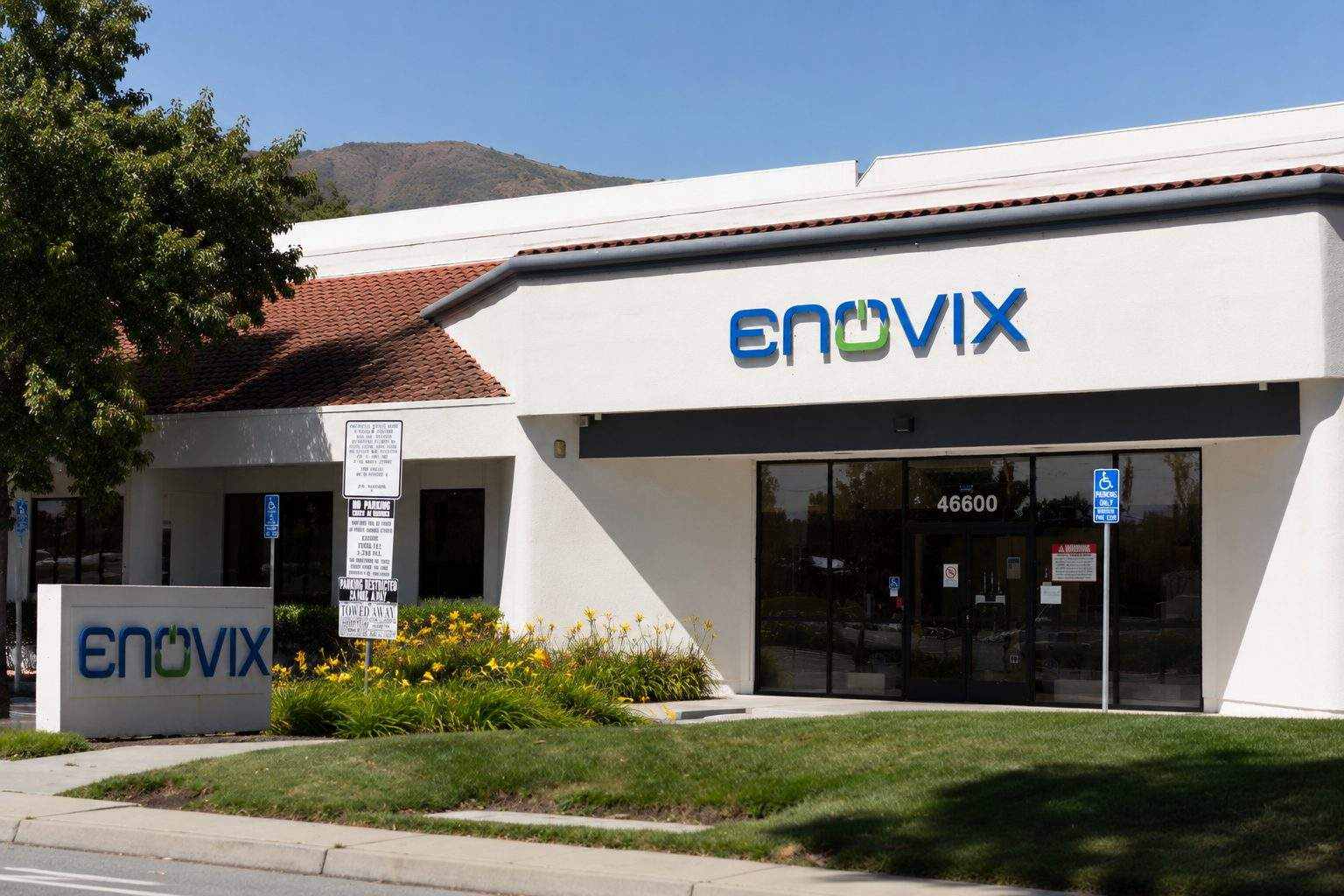
Enovix stock tumbled 12.9% to $6.35 in after-hours action Wednesday, according to Google Finance, despite the battery maker turning in first-quarter numbers that topped estimates. Earlier, shares had gained 4.6% to finish the session at $7.29. Investors, though, didn’t get a firm timeline on when Enovix’s smartphone batteries would be cleared for use.
That’s Enovix’s challenge at this point. The Fremont, California company pulls in revenue from defense and industrial contracts, but the big question driving its valuation is whether it can land its silicon-anode batteries inside smartphones at scale.
Enovix reported a 49% jump in first-quarter revenue, hitting $7.6 million—beating both its internal forecast and Wall Street’s target. According to Investing.com, the company logged an adjusted loss of 14 cents per share, which came in slimmer than analysts’ 16-cent estimate. Revenue also cleared the $6.95 million consensus.
“Smartphones remain our priority,” Chief Executive Raj Talluri told investors as Enovix continues with qualification for its lead customer. Talluri acknowledged the process “has taken longer than we originally anticipated,” a point that hit investors who’ve been looking for evidence that the technology can pass customer tests and actually get to production. GlobeNewswire
The company reached a deal with its top smartphone customer to use a silicon-specific testing setup. Simply put, Enovix says these new tests are more suited to how its silicon-anode batteries perform, instead of relying on older standards made for graphite cells. C-rate measures the speed of charging or discharging based on a battery’s capacity. Lower C-rate tests run longer, but Enovix argues they capture real-world phone usage better.
Progress, but no finish line yet. Chairman T.J. Rodgers said in a note that Enovix has met 72 out of 75 specifications for its top smartphone client—an improvement from 70 last quarter—though two cycle-life tests and a subzero power test remain. Rodgers, who leads the board, added the company regularly hits 500-cycle life, still short of the 800-cycle mark smartphones demand now.
Enovix, stepping away from the smartphone sector, flagged the start of early commercial production on a silicon-anode battery tailored for smart eyewear, aiming for around 50,000 units in 2026. The company’s latest investor presentation also showed a global pipeline worth roughly $130 million for Korea-made products—most of that pegged to drone applications. One highlight: its MX1-B01 drone cell, rated at 360 watt-hours per kilogram, measuring how much energy can be stored per kilo of battery.
The financial picture was a patchwork. Enovix wrapped up the quarter holding $582.7 million in cash, cash equivalents and marketable securities. Still, operating cash burn reached $33.1 million, while free cash flow landed in the red at minus $36.3 million. Looking ahead to the second quarter, the company is projecting revenue in the $8 million to $9 million range, with a non-GAAP per-share loss forecast between 13 and 17 cents.
Enovix’s drone ambitions drop it right into the thick of the high-performance battery competition. Over in Silicon Valley, rival Amprius Technologies is making moves too—this week, the company brought on Intralink to break into South Korea’s drone and robotics sector. Here, every gram counts: battery weight, flight duration, and payload are key for buyers.
There’s a risk here: smartphone qualification deadlines keep getting pushed back, while established battery suppliers and competitors are catching up fast. Last week, JPMorgan’s Bill Peterson cut his rating on Enovix to Underweight, pointing to worries over smartphone market pressures and delays in commercialization. According to Investing.com, even with some progress on qualification, JPMorgan still expects the ramp in volume to slip further.
Enovix topped quarterly expectations, yet the shares slid. Defense, drone, and eyewear sales offer some support, but the market’s focus hasn’t budged—investors are still waiting on a phone battery that clears tests, ships, and scales up.
Related articles: Earnings Reports