
COLLEGE PARK, Md., May 10, 2026, 12:11 EDT
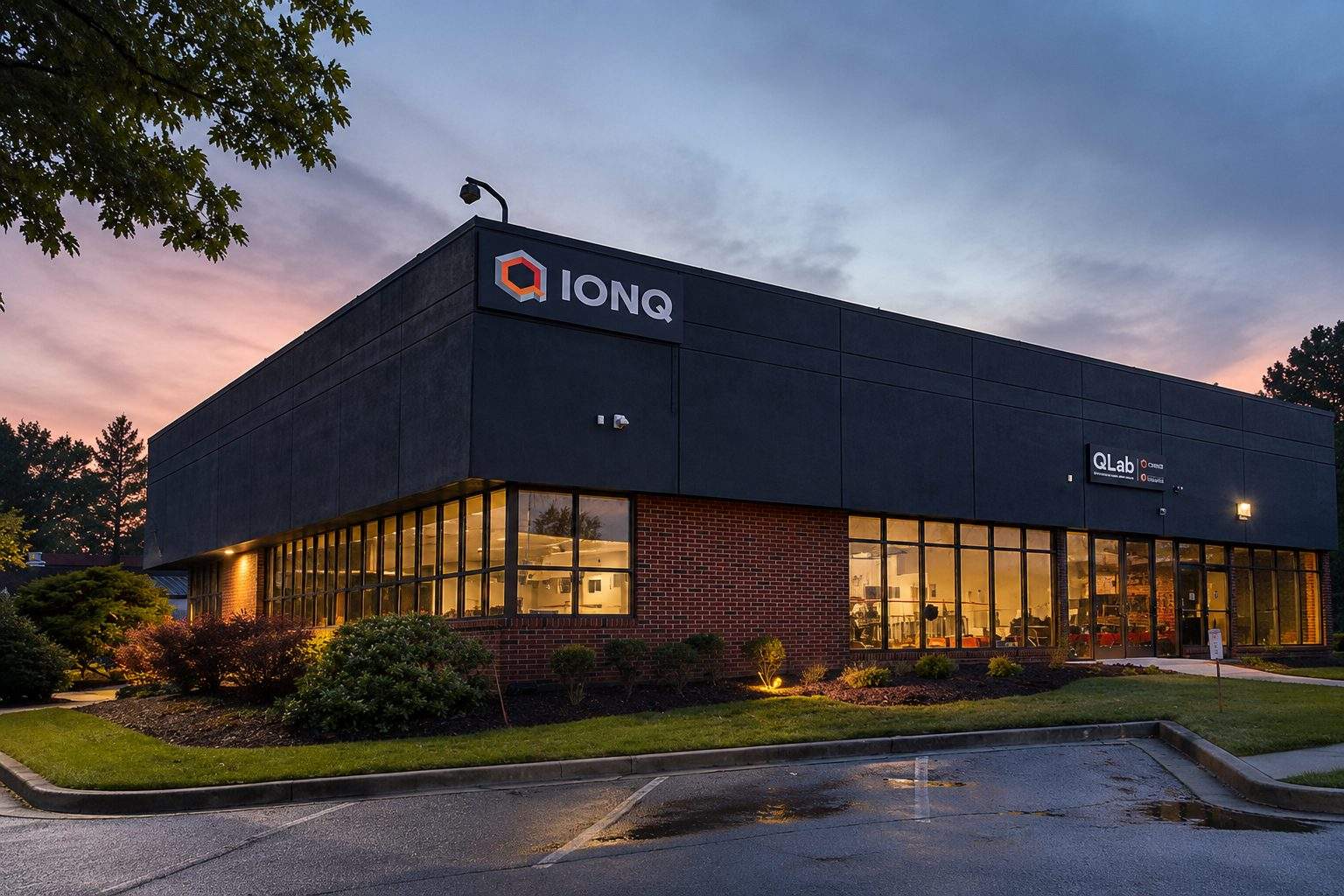
SkyWater Technology investors signed off on the merger with IonQ Inc, removing a key obstacle from the quantum-computing company’s proposed $1.8 billion acquisition of the U.S. chip foundry. According to a SkyWater filing, roughly 32.6 million shares backed the deal, with just about 405,000 votes against.
This vote comes at a critical juncture for IonQ, which is shifting focus from simply selling early-stage quantum systems and services to gaining tighter control over the hardware underpinning those machines. To put it simply, quantum computers operate with qubits—these handle information in ways regular computer bits can’t, though manufacturing, scaling, and stabilizing qubits remains a tough challenge.
The week’s already been packed for quantum stocks. Honeywell’s Quantinuum put out its U.S. IPO filing on Friday. A few days before that, IonQ bumped up its full-year revenue forecast, sharpening attention on the key question for investors: can quantum firms really translate their breakthroughs into steady sales? Reuters
SkyWater expects the deal to wrap up sometime in Q2 or Q3 of 2026, pending regulatory sign-off and the usual closing steps. The company describes itself as the biggest pure-play semiconductor foundry based in the U.S.
SkyWater shareholders stand to get $15 cash plus $20 worth of IonQ stock per share under the January deal, though the stock portion is adjustable based on IonQ’s share price. The companies valued the equity at roughly $1.8 billion.
IonQ isn’t only chasing more revenue here. Management says teaming up with SkyWater brings embedded access to a trusted U.S. foundry—and trims wafer iteration times, which matters when hardware designs have to run the testing gauntlet before scaling up manufacturing.
Back in January, IonQ Chief Executive Niccolo de Masi said the deal would “materially accelerate” the company’s quantum-computing roadmap and lock in a domestic supply chain. SkyWater CEO Thomas Sonderman described the move as a “pivotal moment” for his firm, adding that SkyWater would continue to serve its foundry customers. SEC
IonQ shareholders signed off just after the company’s first-quarter numbers hit on May 6. Revenue soared to $64.7 million—up 755% from last year. Management lifted its 2026 revenue target, now calling for $260 million to $270 million, but left the adjusted EBITDA loss range unchanged at $310 million to $330 million. Adjusted EBITDA excludes interest, taxes, depreciation and specific charges, and isn’t a standard profit metric.
IonQ reported its inaugural sale of a 256-qubit system and confirmed it has received its first ion-trap chip samples from the fab, describing this as a “pivotal shift toward commercial scale.” The company’s trapped-ion technology relies on charged atomic particles, manipulated by lasers and electromagnetic fields within a vacuum. IonQ
Skepticism still lingers. D.A. Davidson’s Alex Platt, speaking to Reuters after the earnings, said IonQ entered the report with “high expectations”—but doubts persist over whether its trapped-ion strategy will pay off. “Profitability is not a key focus this year,” De Masi told Reuters. Reuters
The roster of players remains in flux. According to Reuters Breakingviews, IonQ, D-Wave, Rigetti and Xanadu together went through roughly $500 million in operating cash during their latest fiscal years. The analysis points out that, unlike large language models which hit a monetization spark with ChatGPT, quantum computing hasn’t yet had a comparable breakthrough.
The catch? Approvals might get delayed, and integrating operations could turn out to be tougher than IonQ hopes—potentially undermining the manufacturing boost driving the deal. In its merger filing, IonQ flagged risks: missing out on regulatory sign-offs, closing holdups, trouble extracting the anticipated value, and possible fallout for business ties.
IonQ ended Friday at $49.24, a gain of $1.54 on the day. That move puts the quantum computing firm’s market cap around $18.3 billion.