
New York, May 12, 2026, 14:03 EDT
- Venture Global surged roughly 16% in intraday trading after the company boosted its guidance, topped earnings estimates, and announced fresh LNG supply deals with both TotalEnergies and Vitol.
- Investors are favoring the pivot toward contracted 2026 volumes over riskier spot cargoes, but they’re not ignoring the execution and commodity-price risks baked into the story.
- Cheniere, NextDecade, and Sempra also saw gains across the wider U.S. LNG sector, though Venture Global popped much more sharply—driven by a direct shift in its earnings outlook.
Venture Global jumped Tuesday, with investors responding to fresh catalysts: new cargo contracts, firmer pricing forecasts, and a 2026 earnings outlook that handily topped earlier estimates. Shares were last seen at $13.49, gaining $1.87 for the session after an intraday high of $13.54, with volume climbing past 26 million shares.
There’s more to the story than just a first-quarter revenue beat. Venture Global squeezed gains from a constrained global LNG market. Revenue jumped 59% year over year to $4.6 billion; net income saw a 23% lift, now at $488 million. Management raised its full-year adjusted EBITDA target, moving the range to $8.2 billion–$8.5 billion from a previous $5.2 billion–$5.8 billion. Adjusted EBITDA strips out interest, taxes, depreciation and amortization—standard shorthand for capital-intensive energy firms tracking operating cash muscle.
The guidance shift sent the chart higher. Venture Global reported it’s now sold 84% of its 2026 cargoes—up from 69% disclosed on its last quarterly call—and is projecting a $9.50 to $10.50 per MMBtu liquefaction fee for what’s left. That liquefaction fee, the company’s revenue for converting natural gas to LNG, is critical. A $1 bump there swings 2026 adjusted EBITDA by $300 million to $350 million, so repricing was swift.
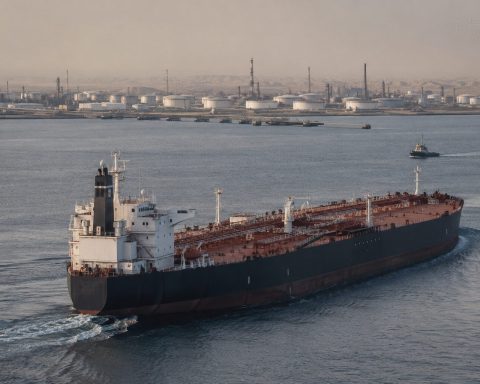
Those new contracts made a difference, cementing part of the scarcity trade. Venture Global struck a five-year agreement to supply TotalEnergies with roughly 0.85 MTPA—million tonnes a year—and bumped up Vitol’s deal to 1.7 MTPA from the earlier 1.5. Both agreements kick in for 2026 deliveries, drawing from the company’s own portfolio, according to the firm.
On the call, management struck a notably confident—at times blunt—tone. CEO Michael Sabel said the company’s contracted position had “markedly” risen to 84%. He added that Calcasieu Pass had shipped out over 150 contracted cargoes since entering commercial service, all without a single missed schedule. Sabel said CP2, the next big Louisiana project, remains on track for first LNG in the back half of 2027. The Motley Fool
Confidence found traction, lining up neatly with broader macro conditions. According to Reuters, Venture Global’s latest agreements push its total new LNG sales since the Iran conflict past 3 MTPA. Demand for U.S. shipments has picked up, with the Strait of Hormuz closure disrupting Middle East supply. On the call, Sabel said the five-year contracts let them “blend out” risk at prices well above what’s typical for 20-year terms. Reuters
Prediction markets aren’t offering much clarity either. On Polymarket, traders put just a 33% probability on Strait of Hormuz traffic getting back to normal by the end of June—$4.7 million has already changed hands on that question. This isn’t a view from energy analysts, but it does shed light on why U.S. LNG optionality is drawing buyers now: the prevailing market expectation is that a rapid return to normal is unlikely.
Bulls see a clear path. Venture Global has extra LNG available now, just as buyers are seeking flexible options, and it’s monetizing Plaquemines’ commissioning capacity instead of holding out for longer-term volume. UBS analyst Manav Gupta praised the “Excellent execution” on the call, then pushed management to clarify whether their cost advantage could keep driving new contracts. The Motley Fool
The bear argument leans on those same numbers. Much of the potential hinges on pricing moves, which can swing quickly. The company acknowledged that lower LNG sales prices—after accounting for feed gas—chipped away at the boost from higher shipping volumes in Q1. Adjusted EBITDA inched up just 2% from a year ago, despite a steep jump in revenue. Simply moving more cargo doesn’t guarantee fatter margins.
Project risk, not fine print, is the real concern here. Venture Global is pushing Plaquemines toward Phase I commercial launch in the fourth quarter, with Phase II lined up for mid-2027. CP2? Still being built—first LNG isn’t expected before the back half of 2027. Large-scale LNG projects like these come loaded with risks: timing, costs, permitting, contractors. The company itself listed capital requirements, construction setbacks, regulatory delays, lawsuits, and debt among its main potential headaches.
Peer moves help put the stock’s outperformance in context. Cheniere—the established U.S. LNG player—added roughly 2%. Shares of NextDecade, a smaller LNG developer, were up almost 3%. Sempra, which combines LNG with its broader utilities portfolio, climbed around 1%. The sector is clearly drawing real buying interest, but Venture Global’s 16% surge points to a catalyst unique to the company.
The key question now: is this sustainable repricing or just a war-premium pop? Venture Global has mitigated some risk by locking in more cargoes, though the share surge has already priced in plenty of optimism in a single day. Right now, investors are betting on a straightforward narrative—U.S. LNG supply secured, customers committing to medium-term contracts, and a 2026 profit forecast that’s finally shifted in a material way.
Related articles: Energy Markets