
DETROIT, May 15, 2026, 10:10 EDT
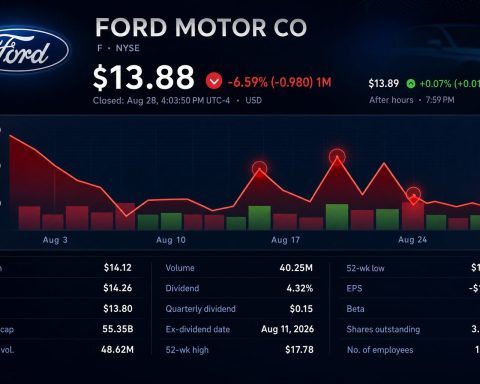
Ford Motor dropped roughly 7% in early New York action Friday, pulling back after a rapid surge that briefly aligned the Detroit automaker with the energy-storage buzz linked to AI data centers. Shares last traded at $13.43, down from Thursday’s $14.48 close.
Investors are wrestling with how to value a company that hasn’t shipped a product yet. Ford’s new energy arm could sidestep some risk by tapping battery plants originally set up for its expensive EV rollout, offering a fallback. Still, the market is ahead of the fundamentals—contracts, profit margins, and delivery timelines all lag behind investor optimism.
Ford rolled out Ford Energy this week, launching it as a fully owned arm focused on selling battery energy storage systems (BESS) built in the U.S.—basically, hefty stationary batteries designed to stash power and discharge it when usage spikes. The automaker said it’s eyeing utilities, data centers, and big industrial players as customers, shooting for a minimum of 20 gigawatt-hours per year. First shipments are penciled in for late 2027.
Once Wall Street zeroed in on those specifics, Ford shares surged 13% Wednesday—the stock’s largest single-day advance in nearly six years. The move followed a Morgan Stanley note pointing to Ford’s energy-storage unit along with its licensing deal with China’s CATL, according to Reuters.
Morgan Stanley’s Andrew Percoco sees a “fairly high likelihood” Ford will nail down an energy-storage supply deal with major commercial players—potentially hyperscalers, the powerhouse cloud operators running vast data-center networks. Percoco described Ford’s relationship with CATL as an “underappreciated strategic competitive advantage.” Ford Energy, he figures, could command a $10 billion valuation, per Bloomberg reporting in The Star. The Star
Jim Farley, Ford’s chief executive, stoked things at the virtual annual meeting this Thursday. Speaking to shareholders, Farley pointed to “tremendous interest” from customers and said Ford was “in the contracting phase” for early capacity deals with a number of clients, according to the Financial Times. Financial Times
Lisa Drake, who’s spent years climbing the ranks at Ford, is in charge of the operation. “Ford Energy allows us to maximize the value of our battery manufacturing capabilities,” Drake said after being tapped as president. The first priority: rolling out utility-scale battery storage aimed at big clients, though the business is also set to supply cells for home storage. Business Wire
Ford’s growth narrative remains messy. In the last month, the automaker bumped up its 2026 adjusted EBIT outlook by $500 million, crediting much of that to an anticipated $1.3 billion refund from tariffs. Still, executives flagged rising materials costs—aluminum for F-150 trucks in particular. For the first quarter, Ford reported $2.5 billion in net income on $43.3 billion in sales.
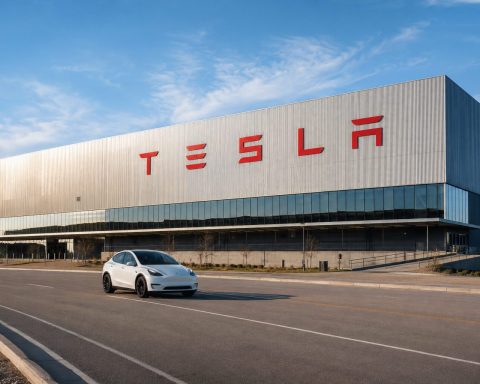
Rivals aren’t idle. Tesla rolled out 46.7 GWh of energy storage in 2025, tacking on another 8.8 GWh in Q1 of 2026—levels Ford hasn’t matched. General Motors, along with its battery collaborators, has also begun shifting some EV battery production to stationary storage, as carmakers search for markets outside the core auto business.
The risks, though, are hard to ignore. Barclays’ Dan Levy figures Ford Energy might deliver $3 billion in revenue and between $300 million and $500 million in EBIT. Still, he flagged concerns about Ford’s ability to execute and scale. And with Tesla still leading the energy-storage pack, Levy says the upside has limits.
Ford has managed to grab attention, but not yet the orders to make the trade work. The coming tests are more concrete: actual signed customer contracts, specific guidance on domestic-content rules, and evidence that its Kentucky battery plant can turn a profit in grid storage ahead of 2027 deliveries.
Related articles: NYSE:F