New York, May 15, 2026, 18:30 EDT
- Broadcom dropped 3.3% as some investors took profits in AI chip stocks after a strong run-up.
- Oil prices climbed and Treasury yields moved higher, putting fresh pressure on worries that inflation may keep rates elevated.
- There was no confirmed company-specific shock behind the move. The pressure hit the whole sector.
Broadcom shares slipped Friday, with investors pulling back from AI chip names after a rally sent top U.S. indexes to new highs.
The stock fell 3.3% to $425.19. That was a worse fall than the S&P 500, which lost 1.2%, with semis weaker across the board. Nvidia closed down 4.4%. Advanced Micro Devices fell 5.7% and Marvell Technology was off 3.1%. Broadcom sat mid-pack in the AI-chip move, with the drop looking more like part of the wider pullback in the group than a Broadcom-specific move.
Timing is key for Broadcom as it’s now a major AI infrastructure play on Wall Street. The company’s valuation leans on demand for custom AI accelerators—chips made for certain AI tasks—as well as networking kit for data centers. If investors get uneasy about how fast or profitable that spending might be, Broadcom usually trades in step with Nvidia, AMD and other chip names.
Stocks dropped as macro forces took over. Global equities slipped, and U.S. Treasury yields climbed, with inflation fears mounting after oil prices rose. That raised concerns the Fed may keep rates up. The S&P 500 and Nasdaq had just closed at new highs, helped by AI, before turning lower, according to Reuters. “There’s a realization that the market had gotten way ahead of itself,” said Kenny Polcari, chief market strategist at Slatestone Wealth. Reuters
Fed hike odds rise as session goes on. Reuters said CME FedWatch had investors pricing in about a 60% chance of a 25 basis point increase in the Fed’s key rate by the January meeting, while a December move looked like a coin toss. A basis point is one-hundredth of a percentage point.
Prediction markets echoed the same direction, but not as strongly. Polymarket priced in a 67% chance of zero Fed cuts for 2026 and put odds of a hike this year at 32%. Kalshi interest-rate markets also had “exactly 0 cuts” as the top option for 2026 with 68%. Polymarket
Broadcom hasn’t posted any new earnings or filings in the last day that would explain the drop. Its last update was back in March. That’s when Broadcom reported first-quarter revenue up 29% to $19.31 billion, with AI revenue jumping 106% to $8.4 billion. CEO Hock Tan then said AI revenue was “accelerating.” The company gave guidance for $10.7 billion in AI semiconductor revenue for the second quarter. Broadcom Inc.
The stock can drop even if the business story hasn’t changed. Broadcom now trades less like a safe chip name and more like a hyperscale AI spending play. The market treats it as a signal on how much big cloud firms—the hyperscalers—are spending on chips and data center gear.
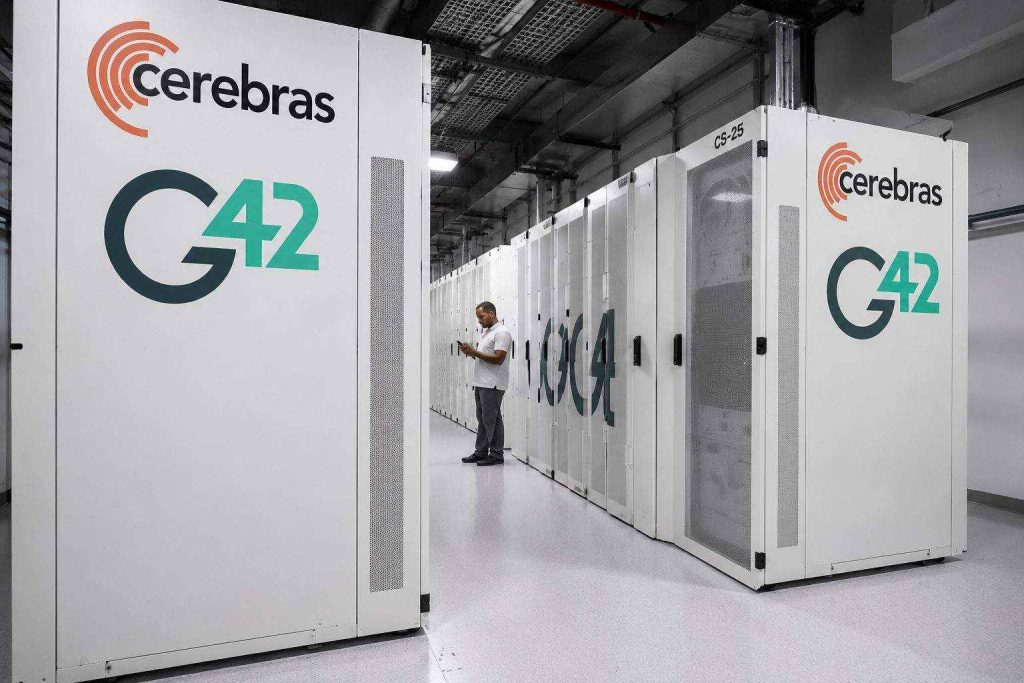
The race among AI chipmakers is still intense. Cerebras Systems pulled in $5.55 billion with its Nasdaq IPO on Thursday, according to Reuters, and shares started trading up 89% from the listing price. Big demand like this helps the long-term AI narrative, but it can also make investors nervous about crowded trades and quick profit grabs.
Bullish bets are still on the table. Back in March, Reuters reported Tan expects Broadcom to supply 1 gigawatt of TPUs for Anthropic in 2026 and 3 gigawatts in 2027, while also planning to ship OpenAI’s first AI chip in 2027. D.A. Davidson’s Gil Luria called Broadcom’s guidance “very encouraging.” Tan told analysts Meta’s custom accelerator roadmap was “alive and well.” Reuters
The risk is showing up as the market wants proof instead of just backlogs and forecasts. If oil keeps driving up inflation, yields might stay high and that could weigh on price-to-earnings multiples for chip stocks. Broadcom’s premium could face more pressure if cloud buyers push back orders or if custom AI chips end up with slimmer margins than investors hope.
Broadcom shares fell Friday as AVGO joined a larger AI-chip pullback. The slide picked up steam with yields moving higher and investors worried about inflation, leaving popular trades like AVGO out of favor.