
Sao Paulo, May 24, 2026, 18:03 (BRT)
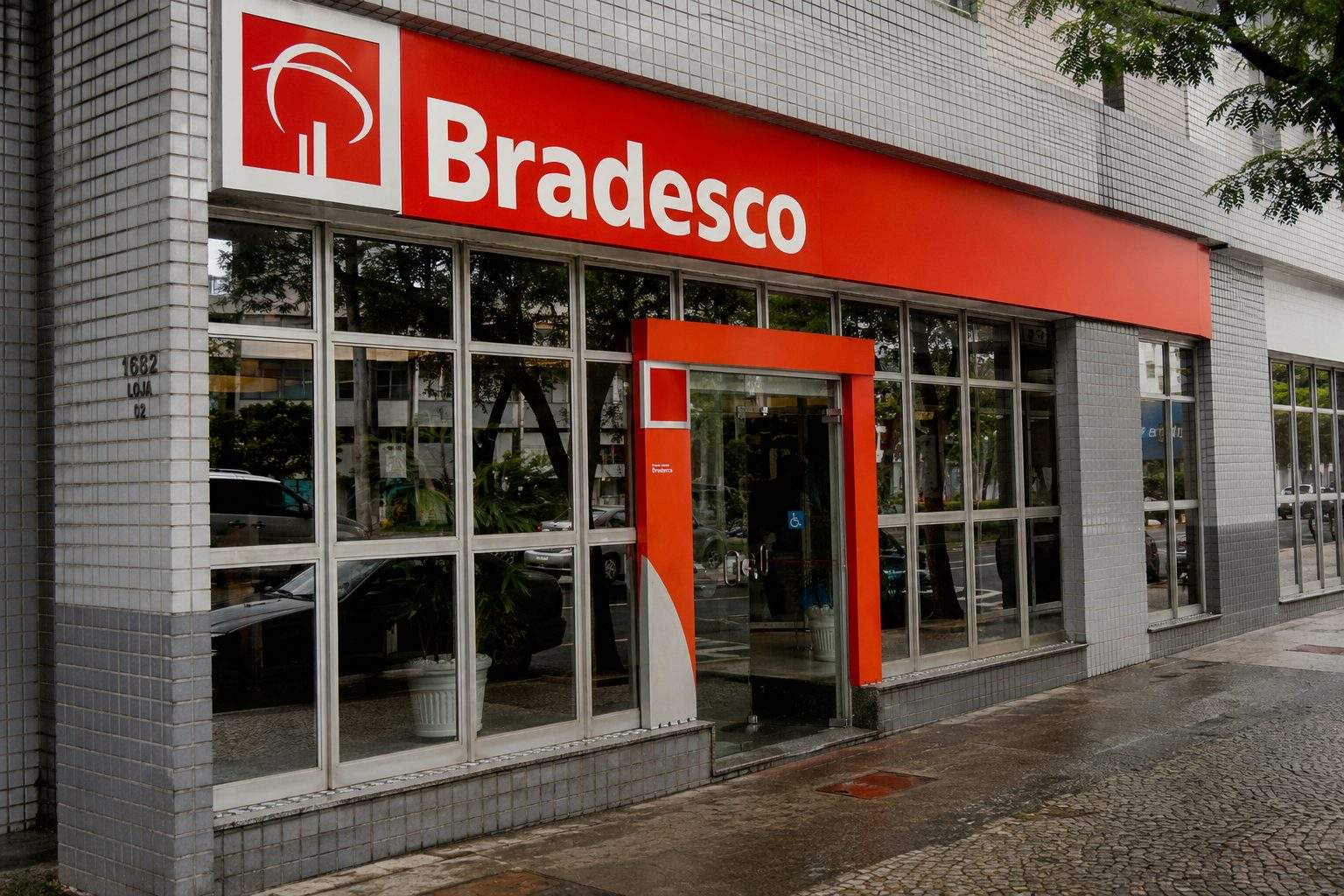
Banco Bradesco S.A.’s preferred shares stumbled into the weekend, with BBDC4 closing Friday down 1.56% at 17.62 reais in Sao Paulo. The bank’s New York-listed ADR last traded at $3.47, and B3’s Bovespa market, based in Sao Paulo and on GMT-03 time, lists Monday-to-Friday trading hours, leaving Friday’s close as the latest regular-session mark.
The move matters because the selling looked sector-wide, not Bradesco-specific. The Ibovespa, Brazil’s benchmark stock index, fell 0.81% to 176,209.61 on Friday and was down 0.61% over five days; among big lenders, Itaú Unibanco lost 1.7% and Santander Brasil fell 1.8%, while Banco do Brasil rose 0.6%.
For the week, BBDC4 slipped only about 0.4%, but the path was messy. It closed at 17.69 reais on May 15, dipped Monday and Tuesday, jumped 2.70% on Wednesday, edged up Thursday, then gave back ground Friday on volume of about 20.08 million shares.
The week ahead brings a cleaner test: Brazil’s official first-quarter GDP report is due May 29. Central bank activity data showed the economy grew 1.3% in the quarter, but March fell 0.7% from February, with services — the main engine of activity — down 0.8%.
Rafael Perez, an economist at Suno Research, wrote that the economy “remained resilient in the quarter” and projected official GDP growth of 1.0% from the previous three months. For Bradesco, that matters because loan demand, fee income and bad-loan formation tend to move with the business cycle. Reuters
Bradesco’s own backdrop is still the first-quarter recovery story. The bank reported recurring net income of 6.811 billion reais, up 16.1% from a year earlier, and ROAE — return on average equity, a measure of profit made from shareholder capital — of 15.8%; net interest income, the spread a bank earns between lending and funding costs, rose 16.4% year on year, while expanded loan-loss provisions climbed 26.5%.
CEO Marcelo Noronha has tried to draw a line between caution and retreat. After the results, he said the bank’s more conservative stance “doesn’t mean we’re hitting the brakes,” with Bradesco still seeking loan growth in segments backed by stronger guarantees.
Investor relations director André Carvalho put it as a “slight shift in tone” in a tougher macro setting. He said “this caution is not a barrier to growth,” adding that the bank was leaning toward safer credit lines and working down its restructured portfolio.
That is the share-price argument in miniature: investors want the recovery, but they want it clean. Carvalho said client net interest income rose 2.0% quarter on quarter and 16.3% year on year, and that adjusted for fewer working days, sequential growth would have been 5%; in his words, the “trend points to growth.”
Rates remain the harder brake. Brazil’s Finance Ministry last week raised its 2026 inflation forecast to 4.5%, citing oil and fuel pressure from the Middle East conflict, and said it now expects the Selic — Brazil’s benchmark interest rate — to end the year at 13%, with market economists seeing 13.25%; the rate currently stands at 14.5%.
Fiscal risk also stayed on the tape late Friday. Brazil announced a fresh 22.1 billion reais spending block to meet its fiscal framework, while the Finance and Planning ministries projected a 60.3 billion reais primary deficit before allowed exclusions.
But the downside scenario is plain. If GDP undershoots, inflation keeps rate cuts shallow, or stress in agribusiness and credit-card books worsens, Bradesco may have to trade loan growth for asset quality; Fitch said Bradesco’s profitability still lagged peers despite the Q1 improvement, and Bradesco’s own recent material pointed to agribusiness and some card segments as areas of concern.
For traders, Monday’s first question is whether BBDC4 can hold near Friday’s 17.60-real low. The bigger one comes Friday, when GDP data either helps the bank-recovery trade breathe again — or gives sellers another reason to stay with the group-wide bank short.
Related articles: Stock Market