
New York, June 12, 2026, 10:03 AM EDT
- Bank of America moved up early Friday, beating the broader S&P 500 tracker as bank and financial-sector funds also gained.
- The next key event is the Federal Reserve’s June 24 bank stress-test results. Bank of America is set to report Q2 earnings on July 14.
- The stock trades near fair value with a slight bullish bias, but ongoing regulatory scrutiny and credit cycle risk stop it from being a low-risk setup.
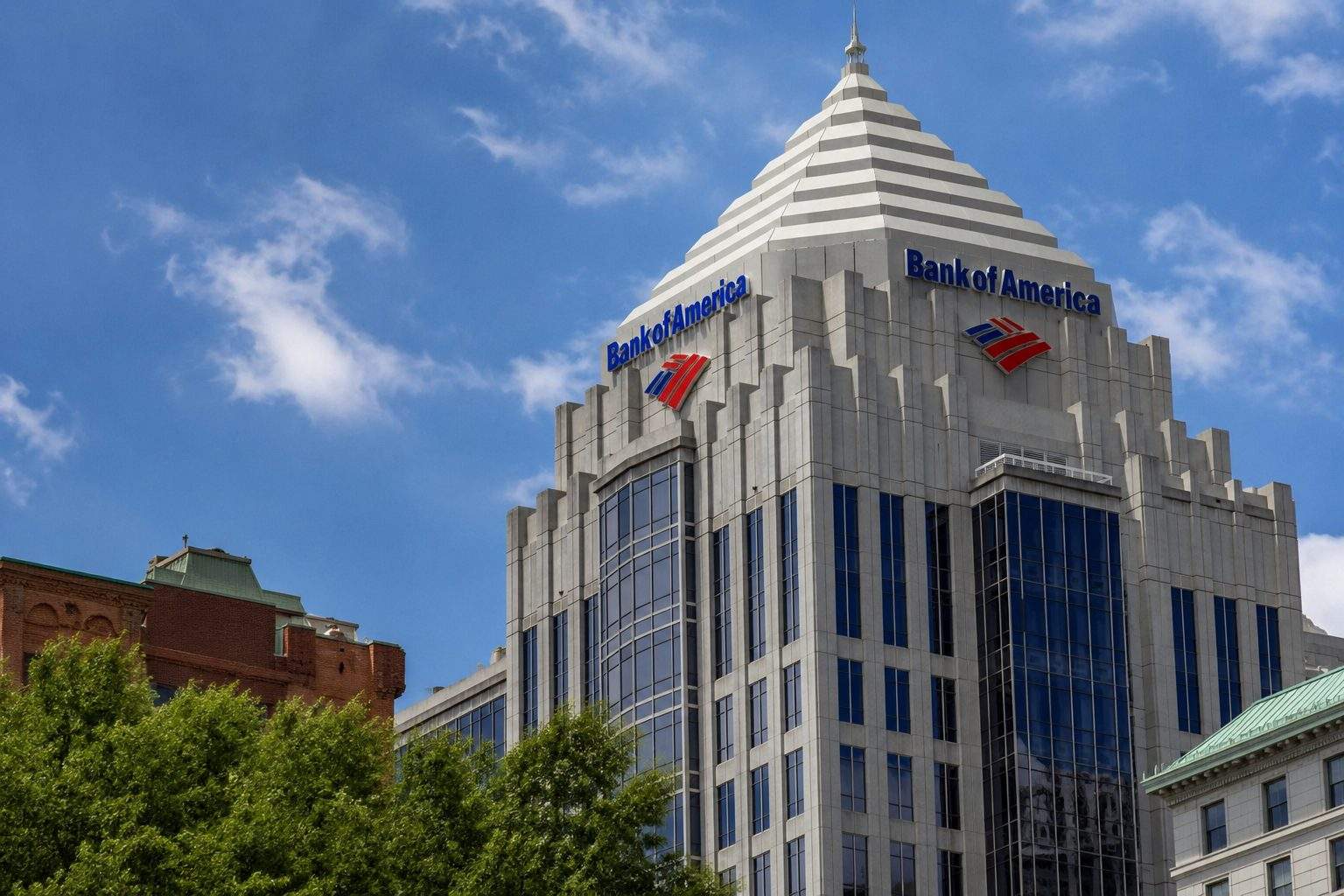
Bank of America Corporation shares pushed higher early Friday, with BAC up around 0.7% at $55.56. The stock opened at $55.60 and has traded from $55.14 to $55.79. The Financial Select Sector SPDR Fund added about 0.7%. Invesco KBW Bank ETF climbed roughly 1.1%. SPDR S&P 500 ETF Trust eased off, down about 0.2%. Bank stocks often trade on the outlook for earnings, capital returns and credit—not just where the overall market is headed.
Bank of America said late Thursday its board has approved regular cash dividends on several preferred stock series, with payments set for July and August. The update was routine, and the dividends apply to preferred stock, which sits ahead of common stock for payouts. The news doesn’t indicate any change to dividends for common shareholders. But investor focus remains on the bank’s capital levels, as some are watching for signs of capacity for future payouts.
BofA’s stock strength also brings up the question of whether its trading and investment-banking push can keep up in the second quarter. Reuters reported this week that Co-President Jim DeMare told a Morgan Stanley conference BofA might top its original call for 15% growth in second-quarter markets revenue, with equities leading. “While credit spreads and the like have remained firm, a lot more of the activity and revenues have been coming from the equity business,” DeMare said, per Reuters. Markets revenue comes from bank work with institutional clients trading equities, bonds, currencies, or commodities. It tends to give a boost to earnings when client volumes are up. Reuters
Bank of America heads into earnings with some key numbers on its side. The bank posted $30.3 billion in revenue net of interest expense in Q1, booked $8.6 billion net income, and reported $1.11 in diluted EPS. Reuters reported the bottom line topped analyst forecasts, with trading and investment banking giving a lift. Net interest income climbed 9% to $15.7 billion as higher-yielding assets showed up in results. Investors will be watching to see if that trend holds.
The risk for the stock is the environment. Reuters said Wednesday the U.S. Justice Department sent subpoenas to big banks like JPMorgan Chase and Bank of America over so-called “debanking.” That term covers banks shutting or limiting customer accounts. Bank of America and Wells Fargo did not give Reuters a comment. Regulatory headlines can hit bank shares—legal costs, extra rules, or reputational dents can all show up before any formal outcome. Reuters
Traders are watching for the Federal Reserve’s annual bank stress-test results, due June 24 at 4 p.m. EDT. The stress tests gauge whether large U.S. banks have enough capital to keep lending during a scenario with sharp downturns in commercial and residential real estate and corporate debt. According to the Fed, 32 big banks are in the test this year, but the results won’t change capital requirements, since current stress capital buffer rules will stay in effect through 2027. Stress capital buffers require big banks to hold extra equity over the minimum.
Next up is Bank of America’s second-quarter earnings, due out before the bell on July 14. BAC isn’t expensive, but doesn’t look like a bargain, either: the stock traded at about 13.8 times earnings in the morning session, with a 2.01% dividend yield, and a 52-week range from $43.66 to $57.55, according to Google Finance. Analyst calls on Google show 14 buys, three holds, and nothing on the sell side out of 17 tracked, with an average 12-month target price of $61.32—roughly 10% above BAC’s quote. That points to BAC as fairly valued with modest upside; investors may stick around if revenue lines or capital return get better, but shares could get hit if regulation, bad loans or slow deals drag on the results.
Related articles: NYSE:BAC