
NEW YORK, June 22, 2026, 12:02 EDT
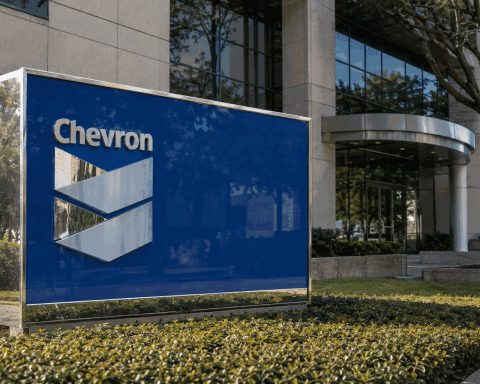
- Chevron has agreed to supply natural-gas power to Microsoft’s upcoming data center in Pecos, Texas under a 20-year deal, highlighting how the focus in AI is moving from growing software needs to securing energy.
- Microsoft MSFT shares slipped near midday. The company reported Azure grew 40% and AI revenue hit a $37 billion yearly pace.
- One market detail flying under the radar: contracted demand lines up with physical supply. Microsoft’s commercial remaining performance obligation—booked revenue the company hasn’t recognized yet—was $627 billion.
Microsoft pressed its push to secure AI growth on Monday, as Chevron took on a 20-year power deal for a West Texas data center that Microsoft says will get about 2 gigawatts of extra capacity.
That’s become relevant as the market shifts its stance on Microsoft. Instead of a pure software name, investors have started splitting on what comes next—some bullish on Microsoft’s push as an enterprise AI play, others leaning bearish, with software stocks in general possibly setting up for a “massive topping pattern,” according to Kevin Dempter at Renaissance Macro Research in comments to Barron’s. Seeking Alpha
Microsoft’s new deal is sharpening that debate. If it can convert more energy into cloud power than rivals, the main driver for the stock may shift from Copilot takeup or Azure pricing to sheer megawatts. That’s become the under-the-radar factor: now, contracted demand in cloud is really a question of how fast it can turn infrastructure into capacity.
Chevron plans to supply electricity from Project Kilby to Microsoft’s Pecos campus, eventually reaching about 2.67 gigawatts, with first power expected in 2028. GE Vernova turbines will provide most of the generation. Caterpillar’s Solar Turbines will handle extra capacity. Chevron’s Jeff Gustavson said they can deliver power with “certainty, speed and at a competitive cost.” Microsoft’s Noelle Walsh said the company needs energy that can “scale quickly and reliably” to keep up with AI and cloud demand. Business Wire
Microsoft is calling the Pecos campus one of its biggest capacity builds ever. The company said it plans to spend several billion dollars on the site, developing it over five to seven years. Construction could hit 6,000 workers at the peak. Power will be generated on site for direct use, not pulled from the public grid.
That’s part of why using just price-to-earnings ratios can miss some of the trade. Simply Wall St’s Monday valuation note pointed to Microsoft’s trailing 12-month free cash flow at about $93.7 billion, and said its proprietary fair P/E ratio sits higher than the current figure, so the stock looks undervalued on that metric. But the market is also factoring in the cash outflow that has to happen before seeing that revenue.
Microsoft’s third-quarter results kept bulls happy. Revenue jumped 18% to $82.9 billion. Net income came in at $31.8 billion, up 23%. CEO Satya Nadella said the AI business has hit a $37 billion annual run rate, up 123% from last year. Azure and other cloud services revenue rose 40%.
Microsoft’s cash-flow statement is feeling the squeeze. Cash paid for property and equipment hit $30.9 billion last quarter, with finance leases adding $4.7 billion. Free cash flow landed at $15.8 billion, down as the company ramped capital spending. CFO Amy Hood said demand is still running ahead of capacity in workloads, regions and customer groups.
Microsoft Cloud posted $54.5 billion in revenue for the quarter, putting it at about $218 billion a year. At the same time, commercial remaining performance obligation stood at $627 billion. The two aren’t a direct match, since the backlog includes contracts over various periods. But the gap shows why power supply is key—Microsoft has a booked demand line. Markets want to know what it will cost to fulfill that.
Big tech companies all deal with the same data-center power issues, but their business models differ. Amazon’s AWS and Google Cloud from Alphabet both need data-center power to offer AI infrastructure to their clients. Meta focuses its AI spending on its own products and ads. Morgan Stanley noted that leading tech companies, Microsoft included, have laid out more than $700 billion in capital spending for 2026, which is a 69% jump from 2025. That jump has sparked investor worries about building too much.
Risks remain for Project Kilby. The project is waiting on a final investment decision by year-end. First power is not due until 2028. A gas-fired campus could attract questions about Microsoft’s carbon promises. Shareholders have sued Microsoft in Seattle federal court, saying the company misled investors about Azure growth and costs tied to AI infrastructure. Microsoft said the suit has no merit.
Microsoft faces a straight test in the near term. Azure needs to keep growth close to 40%, Copilot seat numbers have to move up, and cloud margins should hold steady as more power comes online. That’s when the “AI utility” pitch gets firmer. If capital spending keeps outpacing clear revenue gains, the stock could keep behaving more like an infrastructure project than a software play, with margins still under the microscope.
Related articles: NYSE:CVX
![US Stock Market Today 08/23/2026 [UPDATE: 08:13 EDT] [Nvidia and PCE Face a Bond-Stressed Market: Weekly Recap and Week Ahead]](https://ts2.tech/wp-content/uploads/2026/08/US-market-dashboard-2026-08-23-0810-480x384.jpg "US Stock Market Today 08/23/2026 [UPDATE: 08:13 EDT] [Nvidia and PCE Face a Bond-Stressed Market: Weekly Recap and Week Ahead]")