
WASHINGTON, June 23, 2026, 16:01 EDT
U.S. to Offer $17.5 Billion in Loans for Nuclear Reactors, Energy Dept. Says
The Trump administration said Tuesday it’s putting up $17.5 billion in conditional loans to boost orders for 10 big nuclear reactors, aiming to revive U.S. nuclear construction as AI and data centers add pressure to the power grid. The Energy Department said the funding would back up to five projects, each using two Westinghouse AP1000 reactors.
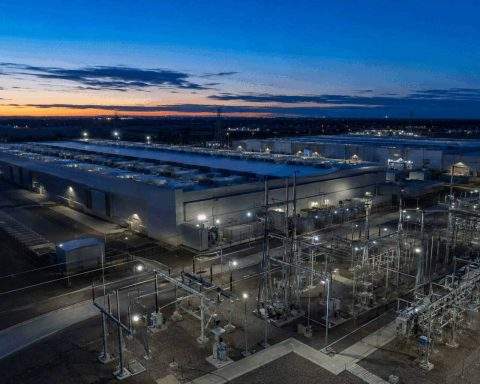
U.S. power demand is picking up now after a long stretch of flat growth, driven in part by data centers running cloud and AI. These big facilities are among the top new pressures on regional grids. Energy Secretary Chris Wright told reporters that loans got strong interest from data-center “hyperscalers”, as well as utilities and energy firms. Reuters
New government and industry figures are pushing Washington to act. The Energy Department points to Electric Power Research Institute data showing U.S. data centers could use up to 9% of total electricity by 2030—over double their estimated 4% share in 2023. A separate analysis, backed by Lawrence Berkeley National Laboratory, puts the 2030 range between 9.5% and 15%.
DOE loans aren’t full construction financing. The money is for “long-lead” gear like reactor vessels and steam generators, equipment that can take years to build and ship, ahead of when actual plant construction scales up. The department said this setup could shorten deployment timelines by up to three years. The Department of Energy’s Energy.gov
Westinghouse is teaming up with utilities or energy firms on each planned project. DOE said both Westinghouse and each partner would each need to commit $500 million in equity—or $1 billion for each project—before they could access federal loan money. Westinghouse has signed letters of intent with seven possible partners, all of whom have picked project sites, but DOE isn’t naming them.
The AP1000 is a 1.1 GW large reactor. DOE has said 10 of these could power almost 10 million U.S. homes. But the administration’s focus is now on reliable, constant power for things like AI, manufacturing, and sectors with rising demand. Reuters reported Wright called the projects “economic for utility shareholders, ratepayers and hyperscalers.” Reuters
The program gives the federal government deeper connections to Westinghouse, owned by Brookfield Asset Management and Cameco. Reuters said the loan plan follows an $80 billion deal with Westinghouse’s owners, where the government would help get financing and permits for Westinghouse reactors in exchange for part of future profits. Brookfield CEO Connor Teskey called the loans a “catalyst for nuclear.” Reuters
The move follows tough results for big U.S. reactors. Georgia Power’s Plant Vogtle’s newest units ended up years behind schedule and billions over budget. AP said only two large reactors went up from scratch in the U.S. in recent decades before this current momentum. Wright said batch building at several sites could help set up a supply chain and gain construction know-how that Vogtle didn’t have.
Westinghouse isn’t alone chasing an AI-driven surge in nuclear. TerraPower, Kairos Power and X-energy are pushing ahead with small advanced-reactor efforts that get federal cost sharing. Reuters Events said these companies have signed supply or offtake deals with Google, Meta, Tennessee Valley Authority, and Dow Chemical. The new DOE loan program only covers big conventional reactors, not the small modular kind.
The risk is still on the numbers not working. Nuclear projects need heavy upfront spending, slow permits and complex supply chains. Delays can hit utilities, ratepayers or taxpayers hard if demand changes or costs run up. Travis Fisher, energy and environmental policy director at the Cato Institute, said the government pushes too hard on picking energy winners, writing that firms should build plants that “pass the market test.” AP News
Policy hurdles remain. DOE said its conditional commitment signals intent to lend, but the projects still have to meet technical, legal, environmental, and financial conditions before any loans are finalized or funds go out. The department didn’t lay out a timeline for picking the five projects.
Trump’s plan is to use the loans to hit a big nuclear goal—10 big reactors started by 2030, aiming for 400 gigawatts of U.S. capacity by 2050. For utilities and data-center firms, the pressure is sharper: can they order, get approval for, and finish these reactors before the next AI-driven jump in power demand? Reuters
Related articles: NASDAQ:META