Washington, July 7, 2026, 08:22 EDT
- U.S. regular markets were still closed at dateline. USPS July 12 price files are final.
- First-Class Mail volume dropped by 691 million pieces in the last quarter, and revenue fell too, even though prices were up.
- Investors are watching direct mail, billing mail, postage tech and parcel-rate competition.
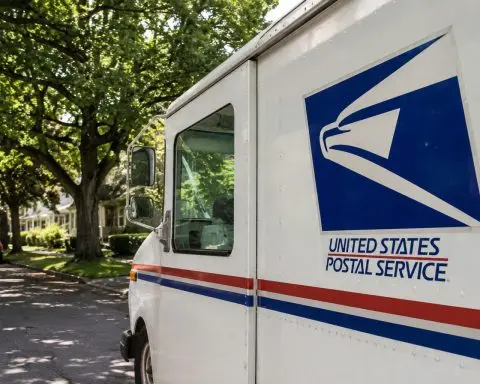
USPS stamp prices are back in focus for U.S. households in North Carolina and Arizona, according to local media this week. Investors may be watching a steeper figure: 691 million fewer First-Class Mail pieces were handled in USPS’s fiscal second quarter. Even after lifting prices, revenue in the segment dropped 0.5%.
USPS’s Postal Explorer says the July 2026 price change takes effect July 12. Final price files are dated June 17, with the last Notice 123 posted July 2. Postal Regulatory Commission records show a May 27 order on price changes for First-Class Mail, USPS Marketing Mail, Periodicals, Package Services and Special Services.
Forever stamps will go up to 82 cents from the current 78 cents. Domestic postcard rates are getting a bigger percentage increase, up 6.6%. USPS said the proposed price hike for mailing services will bring an average increase of about 4.8% across products.
| Selected USPS prices | Current | July 12 price | Change |
|---|---|---|---|
| First-class letter, 1 oz | $0.78 | $0.82 | +5.1% |
| Metered mail, 1 oz | $0.74 | $0.78 | +5.4% |
| Domestic postcard | $0.61 | $0.65 | +6.6% |
| Postcard sent abroad | $1.70 | $1.75 | +2.9% |
| Letter sent abroad, 1 oz | $1.70 | $1.75 | +2.9% |
| Each extra ounce, letter | $0.29 | $0.29 | 0.0% |
This matters for investors since postage is a direct expense for things like financial statements, insurance mailings, election mail, catalogs, and retail campaigns. That exposure hits mail and communications providers like Pitney Bowes NYSE:PBI, Quad/Graphics NYSE:QUAD, Broadridge Financial Solutions NYSE:BR, and Deluxe NYSE:DLX, where demand changes fast when clients send fewer mailings or switch jobs to digital.
USPS numbers point to higher pricing, even as volume slips. Data from the latest quarter show average revenue per piece went up in every key category, but overall volume dropped 3.4%.
| USPS fiscal Q2 category | Revenue change | Volume change | Implied revenue per piece change |
|---|---|---|---|
| First-Class Mail | Revenue fell 0.5% | Volume dropped 6.3% | Revenue per piece rose 6.2% |
| Marketing Mail | Revenue up 5.7% | Volume slipped 0.9% | Revenue per piece added 6.6% |
| Shipping and Packages | Revenue climbed 4.5% | Volume declined 1.4% | Revenue per piece increased 6.0% |
| Periodicals | Revenue declined 4.7% | Volume off 11.6% | Revenue per piece up 7.9% |
| Total operating revenue and volume | Total revenue rose 2.3% | Total volume slipped 3.4% | Revenue per piece improved 6.0% |
First-Class Mail is still the soft spot. Its implied revenue per piece moved up to around 64.5 cents from 60.7 cents, but the volume drop was big enough that total revenue fell by $31 million. Marketing Mail did better, revenues up $210 million despite only a small dip in pieces. Shipping and Packages brought in $348 million more revenue, even with a decline in package numbers.
Chief Financial Officer Luke Grossmann called the quarter a “slight improvement,” but also said, “management actions alone are not enough.” USPS reported a net loss of $1.95 billion for the quarter and a controllable loss of $642 million. USPS
Postmaster General David Steiner told lawmakers in prepared remarks that if USPS keeps meeting its current obligations, it will run out of cash in under 12 months. Steiner said the Postal Service covers over 170 million addresses six days a week, and 71% of its delivery routes are unprofitable. He added 58% of its post offices are not covering their operating costs.
USPS has paused its bi-weekly FERS payments, saying the move will save $200 million each pay period, about $2.5 billion through the rest of fiscal 2026. Last month, Reuters reported Steiner told Congress the agency was tapping retirement funds to keep running.
USPS is also pushing up prices on the parcel side. Back in March, the Postal Service announced an 8% temporary increase on Priority Mail Express, Priority Mail, USPS Ground Advantage, and Parcel Select. First-Class stamps aren’t included in that surcharge. That puts USPS fees back on the radar for United Parcel Service NYSE:UPS, FedEx NYSE:FDX, and Amazon.com NASDAQ:AMZN, all of which rely on postal delivery capacity for some of their parcels and last-mile costs.
The PRC rate-cap numbers look tight after the July filing. Before the case, First-Class Mail, USPS Marketing Mail, Package Services and Special Services had 4.803% rate authority, Periodicals had 6.803%. After the May 27 order, the PRC’s June release put remaining max authority at 0.935% for First-Class Mail and 1.024% for USPS Marketing Mail.