New York, July 16, 2026, 18:12 (EDT)
Shares of three U.S. pure-play space companies dropped an average of 10.3% on Thursday, while two listed New Horizons heritage affiliates slipped only 0.5%.
The gap is what interests investors. The successful reactivation of the probe demonstrates robust engineering for extended missions. It does not establish a new precedent.
Communications capacity represents the more pronounced commercial implication. NASA’s Deep Space Network is operating under current limitations.
U.S. regular trading concluded at 4 p.m. EDT, with late trading still underway. The Nasdaq finished down 1.47%, and the S&P 500 dropped 0.51%.
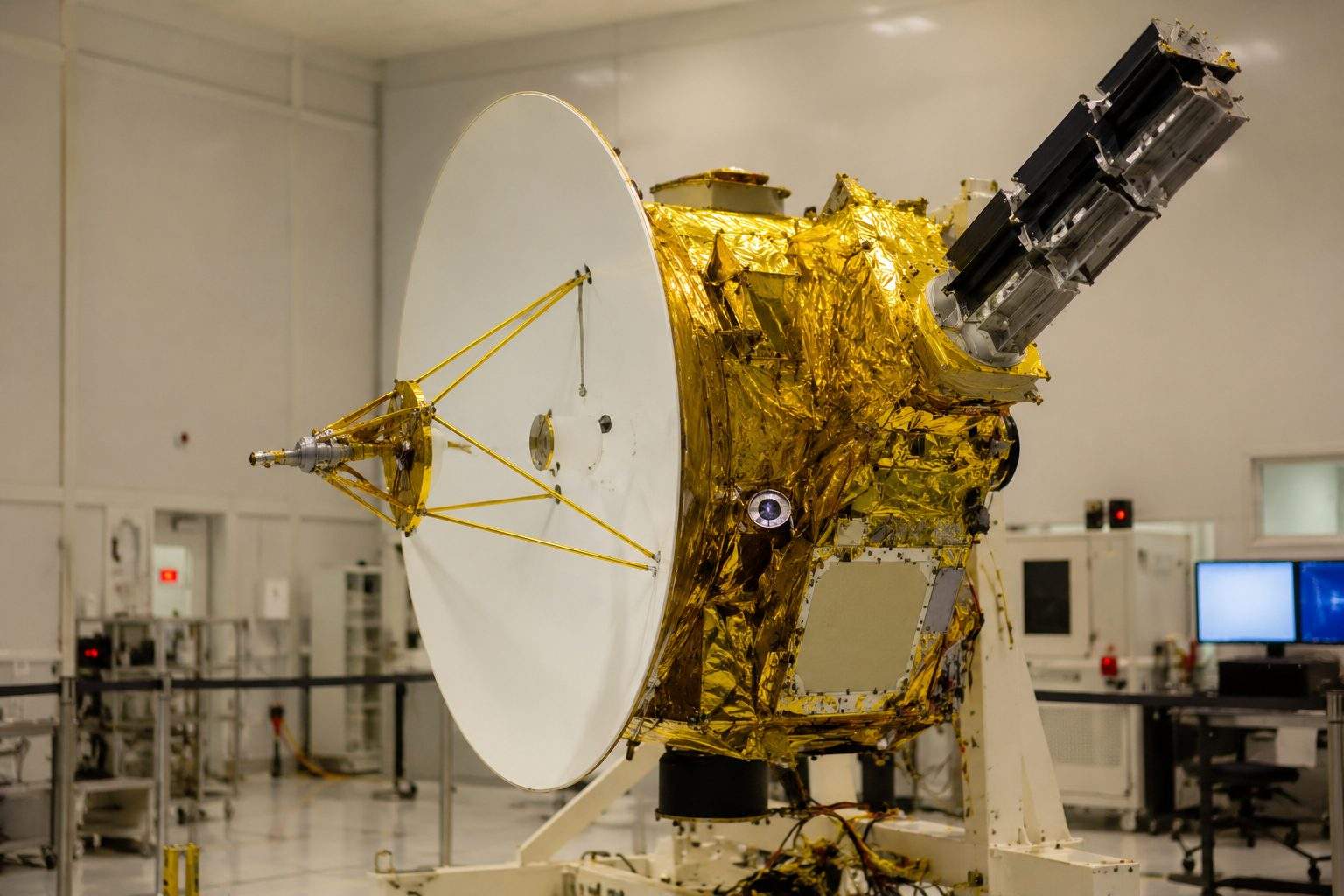
Controllers reported New Horizons awakened on June 23, following 321 days in hibernation. The spacecraft was located approximately 5.9 billion miles from Earth.
The confirmation was received after 8 hours and 52 minutes. Operations manager Alice Bowman said, “Every status report through this hibernation period was ‘green.’” NASA Science
The team intended to first retrieve health data, then collect science readings. NASA stated that the Alice spectrograph would conduct its observation around three weeks post July 7.
The pure-play basket included Rocket Lab NASDAQ:RKLB, Redwire NYSE:RDW, and Intuitive Machines NASDAQ:LUNR. L3Harris Technologies NYSE:LHX and Lockheed Martin NYSE:LMT made up the heritage basket.
Lockheed’s Atlas V rocket carried New Horizons into space in 2006. According to NASA, the MR-103 thruster responsible for attitude control comes from Aerojet Rocketdyne. That division is currently owned by L3Harris, which is set to sell a controlling stake before year-end.
| Equal-weight basket | July 16 | July 10–16 |
|---|---|---|
| Listed mission heritage: LHX, LMT | -0.5% | -2.0% |
| Public space pure plays: RKLB, RDW, LUNR | -10.3% | -16.9% |
| Underperformance of pure-play stocks | 9.7 points | 14.9 points |
Returns reflect close-to-close performance during regular trading hours. Thursday returns are based on July 16 closing levels, with July 10 figures as the weekly reference point.
The weekly range was notably narrow, with each pure play slipping between 16.7% and 17.1%. Heritage names averaged a decline of around 2%.
Commercial infrastructure remains earthbound. Demand for the Deep Space Network has, at times, outstripped capacity by as much as 40%. NASA anticipates a tenfold surge in demand by the early 2030s.
New Horizons was one of the missions that received between 8,500 and 15,000 fewer tracking hours than it had requested across five years. When it resumed operations in June, the mission relied on the network’s Madrid facility.
NASA has selected Intuitive Machines for assignments involving near-space, aiming to reduce network strain near the Moon. The broader contract allows for a cumulative maximum of $4.82 billion, though this total is distributed and represents the contract’s maximum value rather than promised income.
Intuitive Machines dropped 16.7% last week, as investors assessed risks related to deployment, funding, and converting task orders.
Lockheed’s earnings report, scheduled for July 23 before market open, is the next dated market test. NASA’s New Horizons update revealed no new contract award.
Significant risks persist. NASA’s antenna expansion project experienced a delay of almost five years and projected costs rose by 68% to $706 million. Commercial networks also need capital and must achieve successful deployment.
New Horizons stands out as a mark of reliability. Within equities, limited communications capacity provides a tougher test for sustaining revenue.