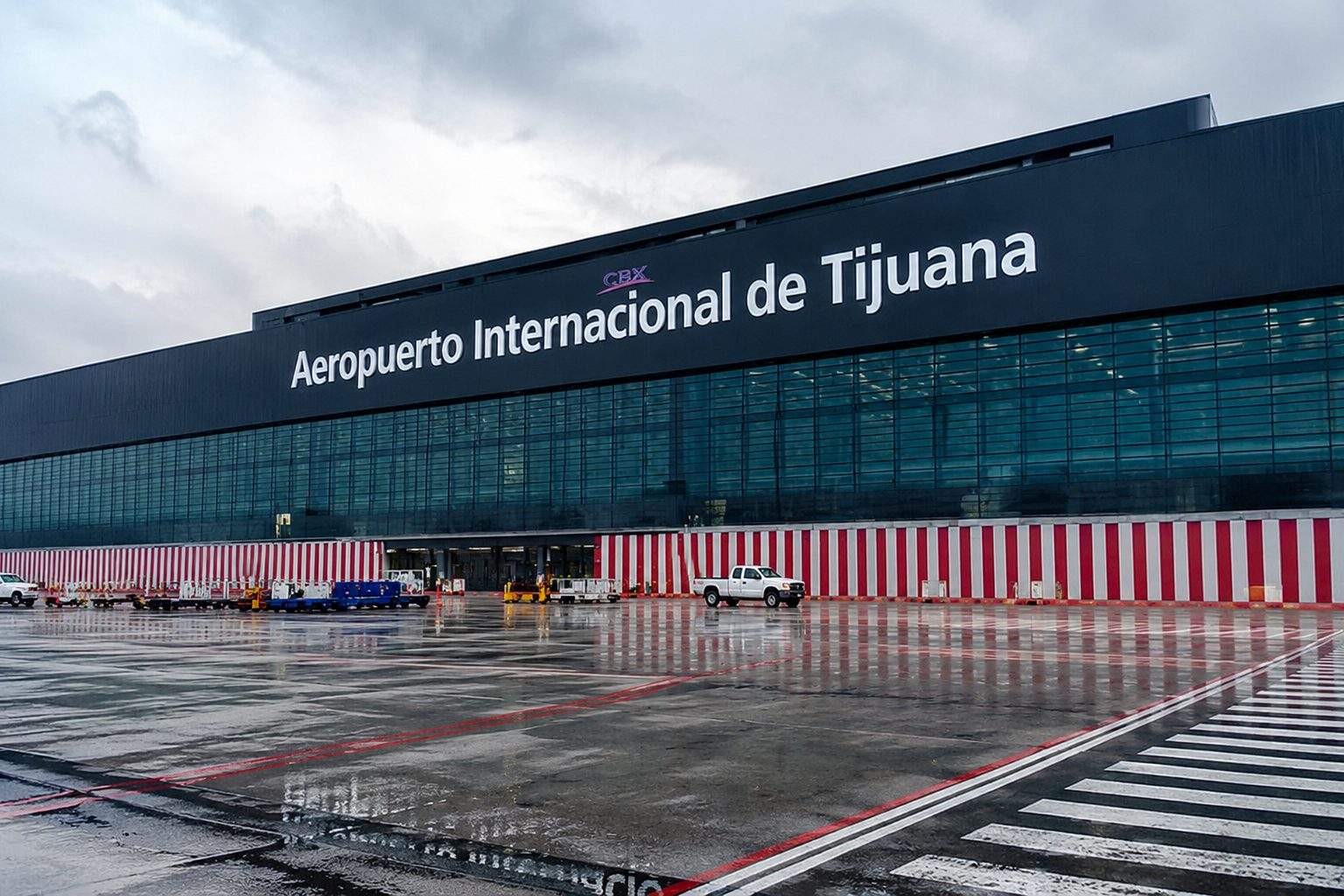
TIJUANA, August 3, 2026, 01:23 PDT — The volume of cancelled flights at Tijuana Airport has fallen since a review of code-share practices, but longer-term traveler numbers are expected to offer a clearer picture of underlying trends.
- After excluding a code-share duplicate, two aircraft movements were reflected in three cancellation entries.
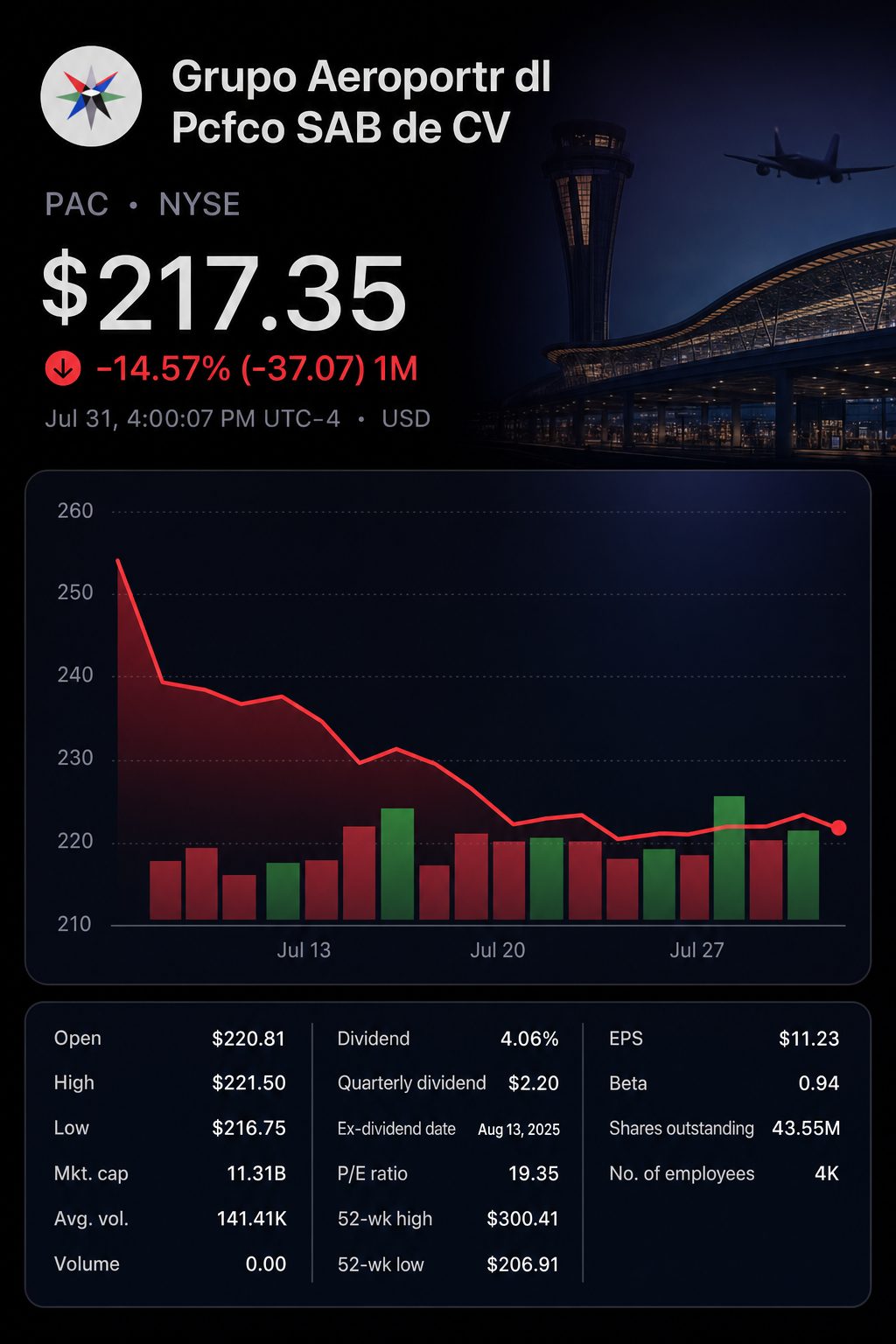
- In June, 19.9% of Grupo Aeroportuario del Pacífico’s NYSE:PAC network passengers traveled through Tijuana.
- Volaris NYSE:VLRS rose 2.8% over the past week, while PAC increased by 0.5%.
A late Sunday update from Tijuana showed three cancelled flight numbers, with one appearing twice. Avianca’s AV6830 was listed as the code-share for Viva’s cancelled VB7401.
This narrows the number of aircraft movements to two, resulting in a one-third reduction. The change lessens the apparent disruption compared to the unadjusted total.
Both August 2 updates reviewed roughly 200 flight logs. The more recent version retained three cancellations, with the number of recorded delays increasing to five.
The reports provided in the links were initial summaries.
| August 2 revision | Records reviewed | Cancelled entries | Reported delays |
|---|---|---|---|
| Initial report | About 200 | 3 | 1 |
| Subsequent report | About 200 | 3 | 5 |
Flight records link AV6830 with VB7401 on the Monterrey–Tijuana route. Another Viva service, VB4087, was cancelled on Tijuana–Monterrey.
Updating the released list to account for code-share duplication.
| Listed flight | Role | Route | Aircraft movements |
|---|---|---|---|
| VB7401 | Flight operated by Viva | Monterrey–Tijuana | 1 |
| AV6830 | Avianca codeshare with VB7401 | Monterrey–Tijuana | No extra |
| VB4087 | Flight operated by Viva | Tijuana–Monterrey | 1 |
| Adjusted total | — | — | 2 |
Both of the physical cancellations were managed by Viva. Volaris was not listed among those canceled flights. The July 27 report, however, identified Volaris flight Y4186 as arriving in Tijuana with a 27-minute delay.
The available evidence suggests the one-day disruption had a minor operational impact. For investors, the ongoing trend in passenger numbers remains more significant.
In June, Grupo Aeroportuario del Pacífico managed 976,800 passengers through Tijuana, marking a decrease of 4.6%. This figure represented 19.9% of the company’s total passenger traffic across its network, based on preliminary data provided by the company.
Initial passenger figures for June 2026.
| Metric | Passengers | Year-on-year | Calculated ratio |
|---|---|---|---|
| Tijuana domestic | 637,500 | -3.4% | — |
| Tijuana international | 339,400 | -6.8% | — |
| Tijuana total | 976,800 | -4.6% | 19.9% of GAP network |
| Cross Border Xpress users | 333,000 | -6.6% | 34.1% of Tijuana total |
| GAP network total | 4,916,500 | -5.1% | 100% |
Cross-border demand contributes a larger share to earnings. GAP finalized the acquisition of full ownership of Cross Border Xpress in May. From May to June, CBX generated revenue of 468.1 million pesos, equal to $26.8 million.
This amounts to about $42.80 for each passenger reported. CBX’s revenue covers tickets, parking, and additional services related to Tijuana traffic.
The airport operator maintained financial strength in the second quarter. Non-aeronautical revenue climbed by 23.9%, as aeronautical revenue declined by 3.2%. EBITDA rose 8.4%, resulting in a 69.3% margin excluding construction accounting.
Volaris presents another perspective. Passenger numbers in June increased by 11.2% to reach 2.68 million. The load factor was 83.6%, down 30 basis points.
Revenue increased by 24% in the second quarter, while average fuel expenses jumped 70%. The airline reported a net loss of $127 million. Chief Executive Enrique Beltranena stated that “every flight we operated in the second quarter generated positive cash contribution.” SEC
At the dateline, New York cash trading was yet to start. PAC closed last week with a 0.5% rise, and Volaris advanced 2.8%.
ADR results from the prior week.
| ADR | July 24 close | July 31 close | Weekly change | Friday change |
|---|---|---|---|---|
| PAC | $216.28 | $217.35 | up 0.5% | down 1.0% |
| VLRS | $7.62 | $7.83 | rising 2.8% | falling 1.5% |
Focus this week is on the upcoming release of July traffic figures. As of early Monday, both investor portals continued to display June as their most recent monthly data.
For GAP, the focus is on whether the declines in Tijuana and CBX have moderated. For Volaris, investors will weigh capacity expansion against ongoing fuel cost challenges.
Risks: Flight-status updates are provisional and subject to rapid revision. Ongoing disruption may continue to impact airport spending, CBX traffic and airline profitability.