
NEW YORK, August 11, 2026, 06:29 EDT
- Berkshire Hathaway Inc. NYSE:BRK.B bought back $4.5 billion worth of shares during the second quarter.
- Operating profit climbed 16% to $12.98 billion, as revenue grew by 10%.
- Cash decreased by $15.5 billion, but remained at $364.7 billion at the end of June.
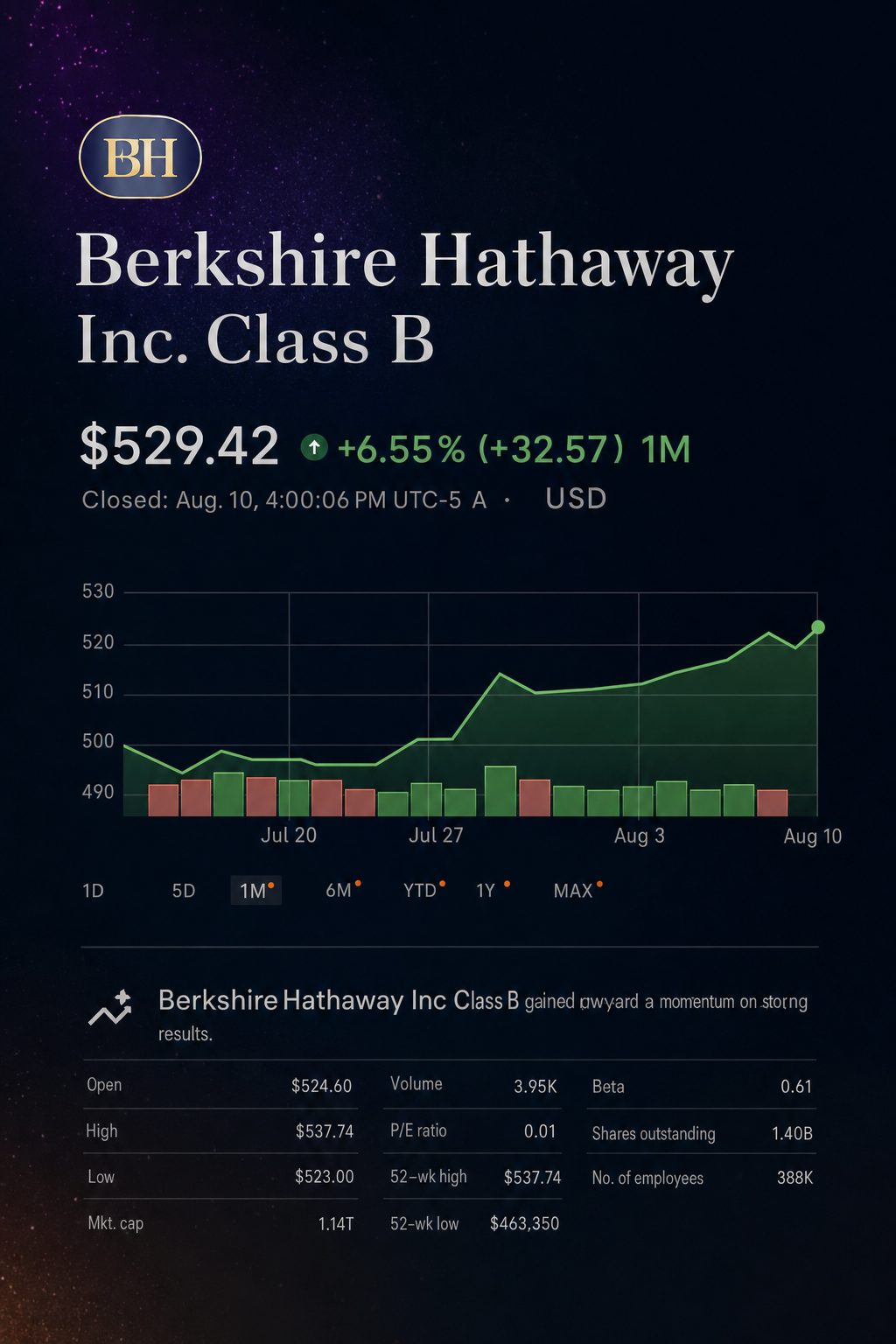
- The Class B stock climbed up to 3.1% on Monday.
Berkshire Hathaway Inc. NYSE:BRK.B is deploying its cash reserves at a faster pace since Chief Executive Greg Abel took the helm. The conglomerate repurchased $4.5 billion worth of its shares last quarter and acquired $23.5 billion in equity stakes of other companies.
The change is more significant than total expenditure. Equity investments and share repurchases together represented roughly 7.7% of cash on hand at the close of the quarter, company data shows. Berkshire’s reserves remained at $364.7 billion as of June 30.
The balance sheet is still massive. However, the quarter ended a streak of 14 consecutive quarters as a net seller of stocks. It was also the most notable shift in capital allocation since Abel took over from Warren Buffett in January.
| Q2 measure | 2026 | Comparison |
|---|---|---|
| Operating profit | $12.98 billion | 16% higher than previous year |
| Net income | $25.67 billion | More than twice as much |
| Revenue | $101.81 billion | 10% rise from prior year |
| Cash at period end | $364.7 billion | Fell by $15.5 billion since March |
| Share repurchases | $4.5 billion | Buybacks restarted significantly |
| Other stock purchases | $23.5 billion | Included $10 billion invested in Alphabet |
The table is based on Berkshire’s quarterly filing and capital-allocation data provided by the company. Because net income includes unrealized investment gains, operating profit offers a clearer perspective on the businesses.
Investors responded positively to the shift. On Monday, Class B shares climbed up to 3.1% to reach $537.74. Class A shares advanced as much as 3.3% to $806,102.81, the highest point since May 2025.
The preceding week concluded ahead of Saturday’s outcomes. As a result, Monday marked the initial comprehensive market reaction to Abel’s choices for the second quarter. Standard U.S. trading remained shut into early Tuesday.
The quarter’s results were driven by growth outside of insurance. Profit increases were led by Berkshire Hathaway Energy and the manufacturing, service and retail division. BNSF posted gains as well.
| Operating segment, after tax | Q2 2026 | Q2 2025 | Change |
|---|---|---|---|
| Insurance underwriting | $1.731 billion | $1.992 billion | -13.1% |
| Insurance investment income | $3.059 billion | $3.367 billion | -9.1% |
| BNSF | $1.558 billion | $1.466 billion | +6.3% |
| Berkshire Hathaway Energy | $891 million | $702 million | +26.9% |
| Manufacturing, service and retailing | $4.470 billion | $3.601 billion | +24.1% |
Berkshire’s filing reflects a varied performance across segments. Energy profits climbed 26.9%, and manufacturing, service and retailing earnings grew by 24.1%. Income from insurance underwriting declined 13.1%.
Berkshire continued to deploy cash after the quarter, investing at least $10.1 billion more in July on repurchasing shares and the acquisition of Taylor Morrison. In the second quarter, gross stock purchases featured $10 billion of Alphabet Inc. NASDAQ:GOOGL.
Valuation discipline takes priority in the stock story with this sequence. While Berkshire purchased assets and its own stock, its cash balance dropped by less than the $28 billion in total equity outlays during the second quarter. Liquidity was replenished by ongoing contributions from operating units.
| Firm | Analyst | Recommendation | Current view |
|---|---|---|---|
| UBS | Brian Meredith | Buy | Cash use was “meaningful” and showed a disciplined approach to allocation |
| Keefe, Bruyette & Woods | Meyer Shields | Underperform | A “very solid” quarter, but weighed down by macroeconomic and insurance pricing risks |
| CFRA | Cathy Seifert | View not disclosed | Growth in revenue and share buybacks supported investor sentiment; insurance factors limited optimism |
Valuation remains a point of contention among analysts. UBS maintained its Buy recommendation, while KBW continued with Underperform, even as it increased its outlook. CFRA’s Cathy Seifert commented that “margin expansion at several key units is also commendable.” Reuters; Investopedia
The buyback serves as a signal about valuation. Berkshire engages in share repurchases only when management considers the stock price to be under intrinsic value and sufficient liquidity is available. The rise in shares on Monday reduces this discount, which may limit additional buybacks.
Risks continue. Insurance prices are decreasing, Geico is experiencing increased accident claims and advertising expenses, and investment profits may be lost. A wider market downturn could impact the sizeable equity portfolio as well.
The upcoming near-term update comes this week. Berkshire’s quarter-end Form 13F must be filed by August 14, per the SEC calendar. The filing will display how reported stock purchases affected the portfolio holdings, but it won’t cover transactions that took place in July.
For investors, the key question is if July’s spending momentum will persist following Monday’s price increase. There is still available cash on hand. The more difficult issue is whether fresh investments can surpass declining insurance margins.
Related articles: NYSE:BRK-B