

SÃO PAULO, August 14, 2026, 09:13 BRT — U.S. stocks traded ahead of the open.
- Nu achieved over $1 billion in quarterly profit for the first time.
- Risk-adjusted margin increased by 290 basis points compared with the previous quarter.
- The stock rose roughly 10% in premarket trading on Friday.
Nu Holdings Ltd. NYSE:NU jumped 10.1% in premarket action following the digital lender’s announcement of its first quarterly profit surpassing $1 billion. Shares were indicated at $15.33 compared to the previous close of $13.93 on Thursday.
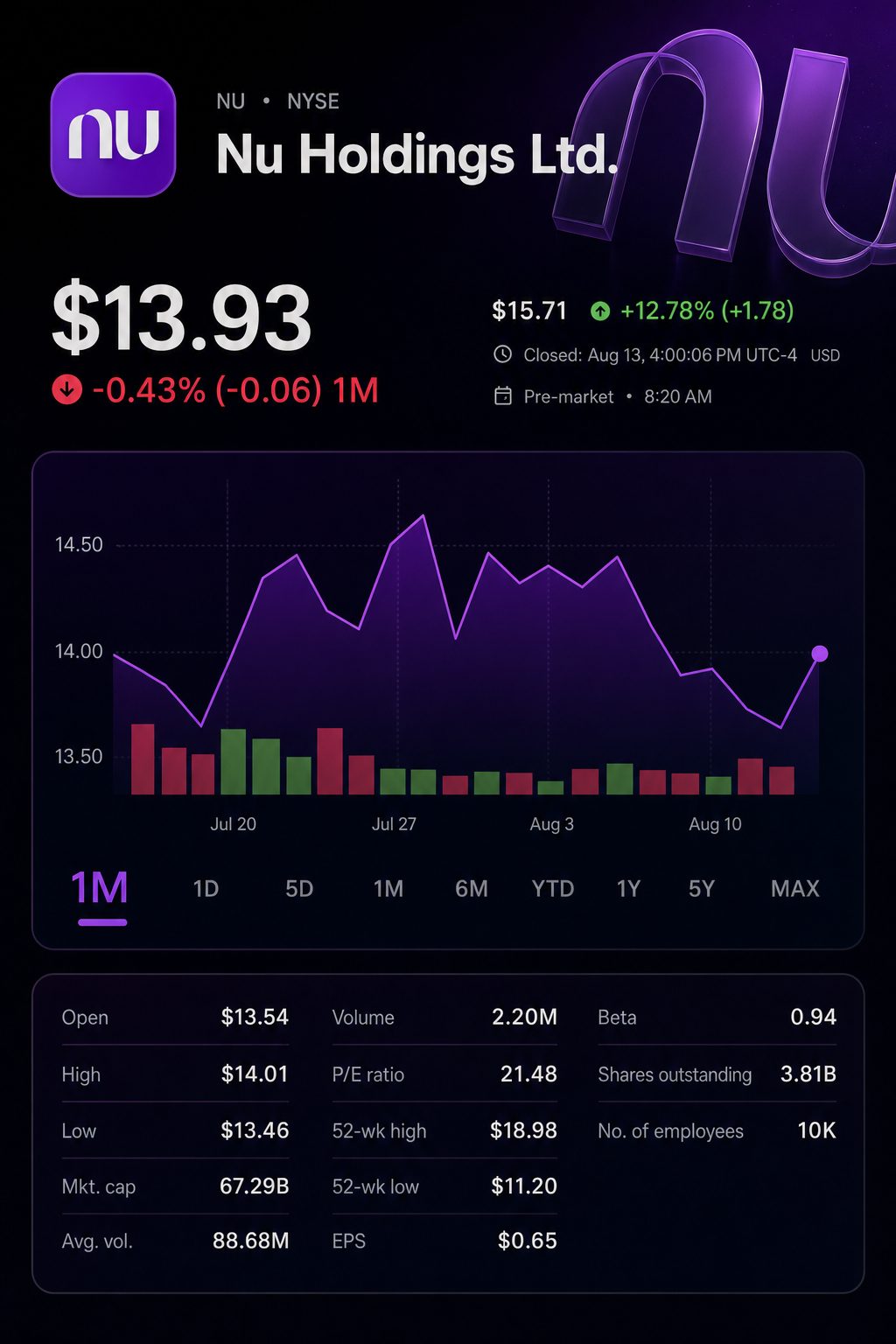
The magnitude of the earnings surprise was significant. Net income amounted to $1.06 billion, which is 9.6% higher than the Visible Alpha forecast. Revenue also exceeded the consensus, coming in 5.0% above estimates.
| Q2 2026 measure | Reported | Estimate / reference | Variance |
|---|---|---|---|
| Net income | $1.06 billion | $967.2 million | +9.6% |
| Revenue | $5.88 billion | $5.60 billion | +5.0% |
| Premarket share price | $15.33 | $13.93 prior close | +10.1% |
The bigger surprise was found beneath the headline. The risk-adjusted net interest margin climbed to 12.4%, up from 9.5% in the previous quarter. According to JPMorgan analysts, even optimistic investors were anticipating around 11%.
The 290 basis point recovery shifted the conversation around earnings. Credit costs dropped by $100 million from the prior period, and early delinquencies improved by 20 basis points. The loan portfolio continued to expand by almost 6%.
| Credit and margin indicator | Q2 2026 | Q1 2026 | Sequential change |
|---|---|---|---|
| Risk-adjusted NIM | 12.4% | 9.5% | +290 bps |
| Credit costs | $1.69 billion | $1.79 billion | -5.6% |
| 15–90 day delinquency | 4.8% | 5.0% | -20 bps |
| Credit portfolio | $39.4 billion | $37.2 billion | +5.9% |
Chief Financial Officer Rob Livingston described the current margin level as sustainable over the near term. He noted that Brazil’s Desenrola refinancing program accounted for just around 5% of credit costs. He also stated that seasonal improvements would have happened even without the program.
A trade-off was evident. The credit portfolio reached $39.4 billion, marking a 5% increase from the previous quarter, but the growth pace was slower than in the first quarter. Livingston attributed the slower growth to an unusually robust expansion in the prior period.
| Scale measure | Q2 2026 | Q1 2026 | Change |
|---|---|---|---|
| Customers | Almost 139 million | 135.2 million | Increase of around 3.8 million |
| Net income | $1.06 billion | $871.4 million | Rise of 21.6% |
| Revenue | $5.88 billion | $5.32 billion | Up 10.6% |
| Credit portfolio | $39.4 billion | $37.2 billion | Growth of 5.9% |
Nu maintained solid customer growth, serving almost 139 million individuals in Brazil, Mexico, and Colombia. This figure was up by around four million compared to the end of March.
Nu’s second-quarter performance bolsters its capital case. In June, the board approved share buybacks of as much as $1 billion within a 12-month period. Managers stated that funding for expansion into new markets and regulatory capital cushions are intact.
| Analyst / firm | Recommendation | Price target | Latest listed action |
|---|---|---|---|
| JPMorgan NYSE:JPM | Buy | $20 | Target increased, July 7 |
| Needham | Buy | $17 | Started coverage, June 26 |
| Citi NYSE:C | Hold | $13 | Cut rating, June 15 |
| Susquehanna | Hold | $13 | Cut rating, June 3 |
| BofA Securities NYSE:BAC | Sell | $10 | Cut rating, June 2 |
Analysts were split ahead of the earnings report. Five of the latest price targets ranged from $10 to $20. The highest target suggested a 30% potential gain from the premarket price Friday, while the lowest pointed to a 35% potential drop.
Friday’s action does not resolve that range. Instead, it places emphasis on whether a risk-adjusted margin above 12% can be maintained as loan growth returns to normal levels.
Risks: Early-stage delinquencies stayed 30 basis points higher than the previous year. Credit costs climbed 60%. Fluctuations in currencies, the Brazilian economy, and a scheduled U.S. rollout could weigh on returns.
Execution is the next challenge. Investors benefit from a broader margin cushion, yet they have lower tolerance for further credit weakness.
Related articles: NYSE:NU