
DUBAI, August 18, 2026, 01:04 GST — US cash markets did not open following the Monday session.
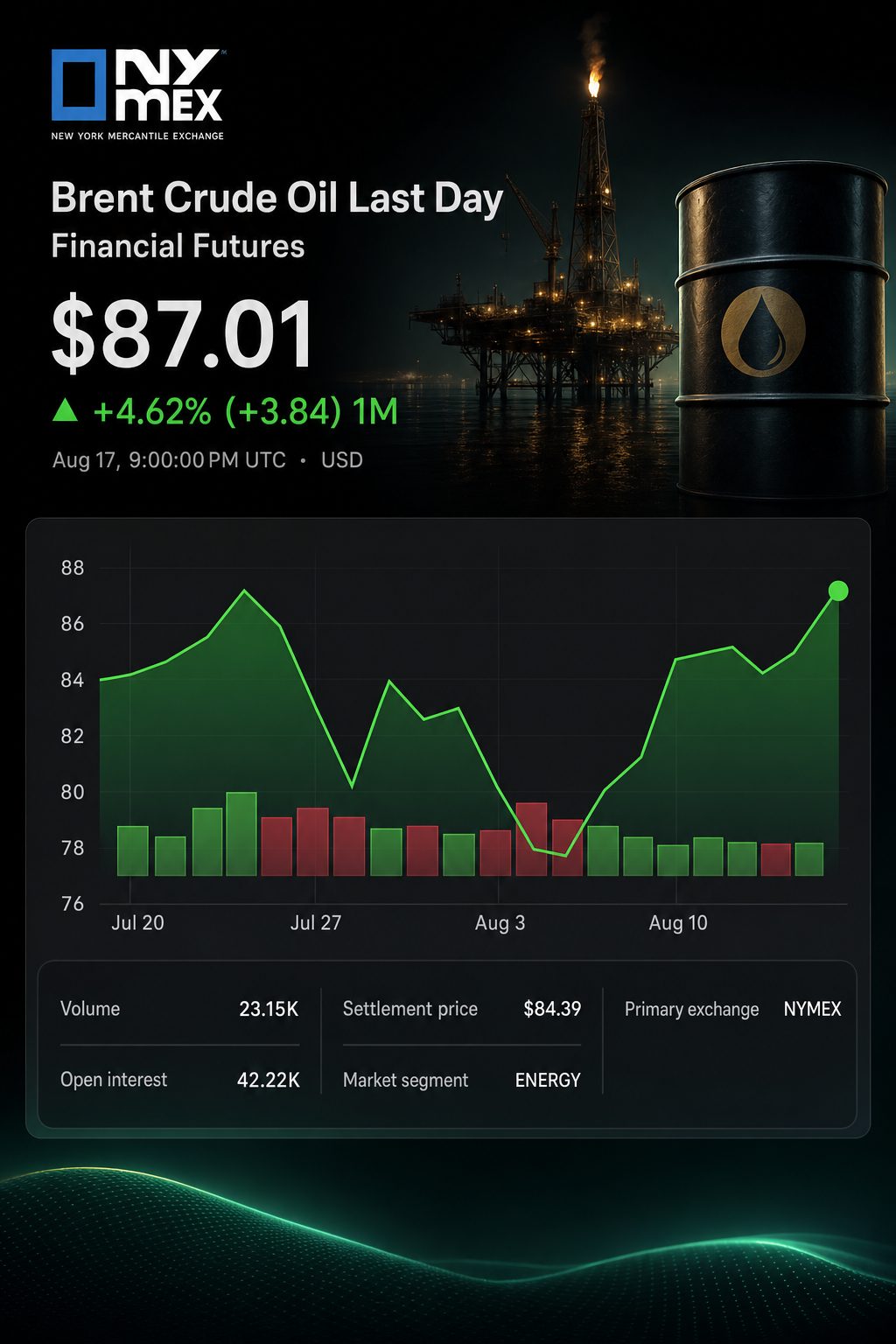
- Brent closed up 2.65% at $90.87 per barrel.
- Commodity vessel traffic through Hormuz over the weekend dropped 84% compared to the previous week.
- As much as 22% of Brent pricing could reflect a geopolitical premium in a no-deal scenario.
Brent crude climbed $2.35 on Monday after Iran issued a threat of a “fully offensive” approach. The statement came after US negotiations reached an impasse and traffic through the Strait of Hormuz saw a further significant decline. West Texas Intermediate advanced $2.10 to $84.50. Reuters oil-market report
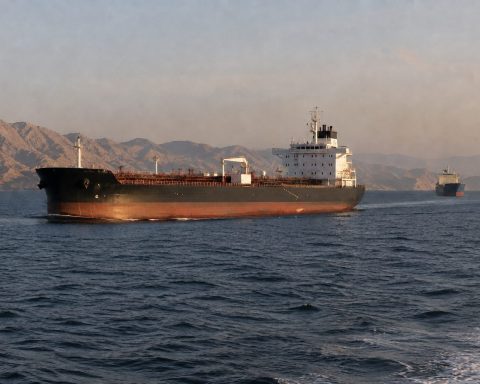
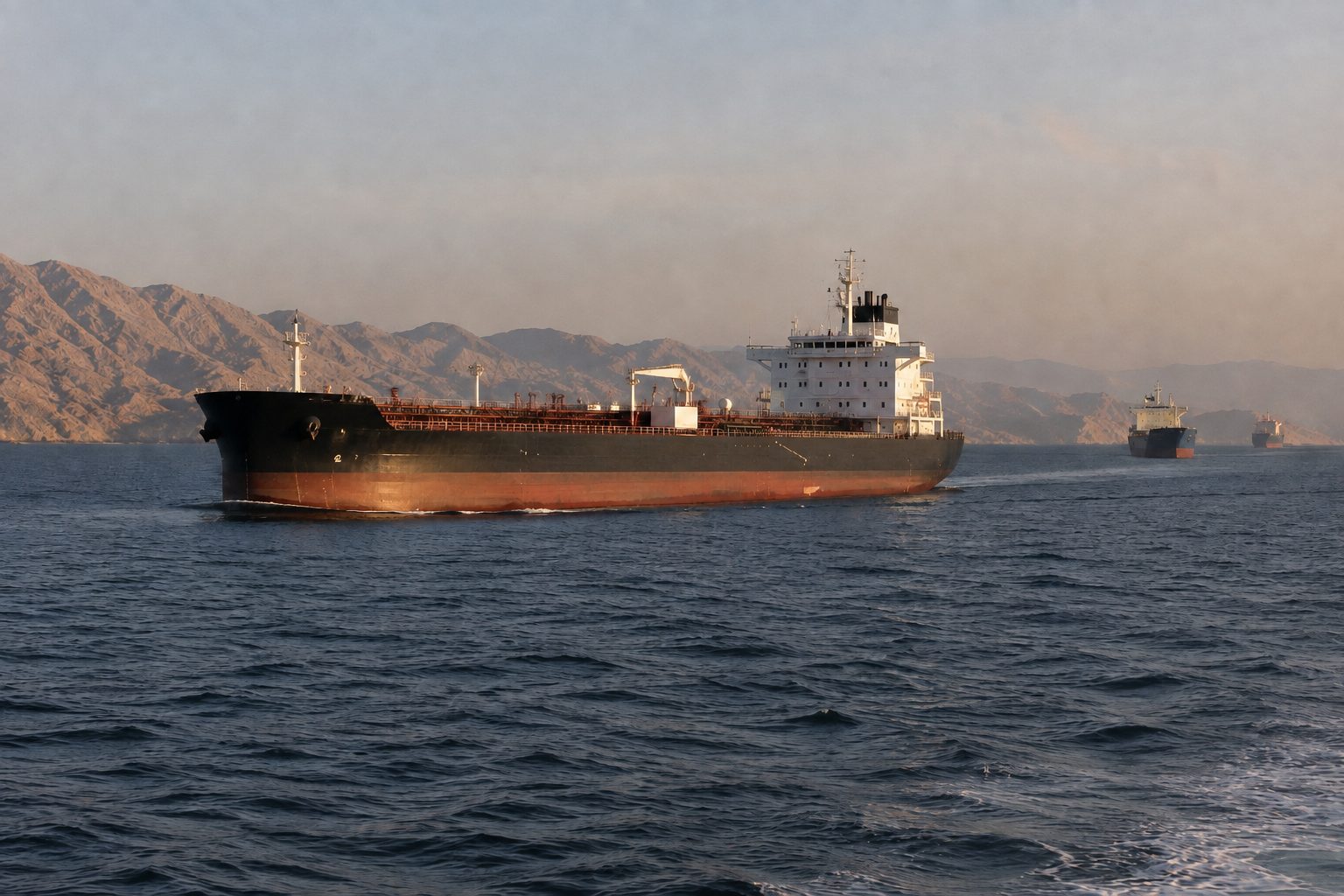
Physical data has taken precedence over rhetoric. According to Kpler, five commodity vessels were counted on Saturday and zero on Sunday. The weekend before saw 31 transits, meaning the newest count is down 83.9%.
| Hormuz traffic measure | Latest weekend | Prior weekend | Change |
|---|---|---|---|
| Commodity ships on Saturday | 5 | Not separately reported | — |
| Commodity ships on Sunday | 0 | Not separately reported | — |
| Total for weekend | 5 | 31 | -83.9% |
Iran’s agreement with Washington in June established a 60-day period for negotiating a wider accord, which ended on Monday. A high-ranking Iranian official stated Tehran was ready to take military action if the temporary arrangements were not fulfilled in the coming weeks.
In early 2025, 20.9 million barrels per day passed through the strait, representing nearly 20% of global petroleum liquids consumption. Saudi Arabia and the UAE have pipeline capacity to redirect around 4.7 million barrels per day, but this still leaves 16.2 million barrels without comparable alternative routes.
| Flow benchmark | Million barrels per day | Share of historic Hormuz flow |
|---|---|---|
| Total oil passing through Hormuz | 20.9 | 100% |
| Saudi and UAE alternative routes | 4.7 | 22.5% |
| Volume lacking alternative route | 16.2 | 77.5% |
The bottleneck accounts for the uneven pricing. Rystad Energy projected a $5 to $10 premium if a limited agreement is reached. In the event of no agreement, a premium of $10 to $20 could persist. Based on Brent’s Monday close, the higher estimate represents 22.0% of the barrel’s value.
| Scenario | Estimated risk premium | Implied Brent without premium | Premium share of $90.87 |
|---|---|---|---|
| Narrow agreement | $5–$10 | $80.87–$85.87 | 5.5%–11.0% |
| No deal | $10–$20 | $70.87–$80.87 | 11.0%–22.0% |
SEB Research analyst Bjarne Schieldrop outlined the two-sided risk: “For now, prices are trading close to $90 as traders weigh the risk of deeper disruption and shortages against the possibility of a resolution,” he said. Reuters
Equities tied to oil advanced alongside crude prices. Chevron Corporation NYSE:CVX, ConocoPhillips NYSE:COP and Occidental Petroleum Corporation NYSE:OXY all closed in positive territory. ConocoPhillips underperformed compared to Chevron and Occidental, even with its significant focus on upstream operations.
| Company | August 17 close | Daily move | After-hours move |
|---|---|---|---|
| Chevron | $202.70 | up 1.35% | up 0.07% |
| ConocoPhillips | $127.56 | rose 0.62% | down 0.12% |
| Occidental | $59.04 | increased 1.17% | added 0.03% |
ConocoPhillips continues to offer analysts the highest average potential upside. Chevron leads in buy recommendations, with 13 out of 17 analysts rating the stock a buy. Occidental has more hold ratings than buys—nine compared to six—indicating analysts remain more cautious on the company, even as oil prices climb.
| Company | Buy / Hold / Sell | Average target | Implied upside |
|---|---|---|---|
| Chevron | 13 / 4 / 0 | $216.00 | 6.56% |
| ConocoPhillips | 14 / 2 / 0 | $147.06 | 15.29% |
| Occidental | 6 / 9 / 0 | $65.67 | 11.23% |
The recommendation snapshot reflects ratings published over the last three months on Google Finance. Target figures shown are averages and do not predict upcoming trading moves. Implied returns are based on Monday’s closing prices and do not include dividends.
Risks: Prompt resumption of both daytime and nighttime traffic could swiftly erase the premium. Conversely, a stoppage in residual crude shipments or disturbances at Bab el-Mandeb could amplify the supply shock, extending the impact past Hormuz.
The following indicator to watch is vessel traffic, rather than any new headlines. With just five transits over the weekend, flexibility in the schedule is slim. A steady return to the earlier level of 31 vessels would undermine the bullish outlook for oil.
Related articles: Commodities