
SAN JOSE, California, August 19, 2026, 07:30 EDT — US cash markets remained closed as premarket trade began.
- The midpoint of Super Micro’s fiscal-2027 revenue forecast indicates a 75% increase.
- The stock finished the session 1.1% under the consensus analyst price target.
- First-quarter margin outlook signals a significant adjustment from June.
Shares of Super Micro Computer, Inc. NASDAQ:SMCI ended Tuesday down 2.3% at $37.41, bringing the stock nearly in line with the consensus Wall Street price target of $37.81—a difference of just $0.40.
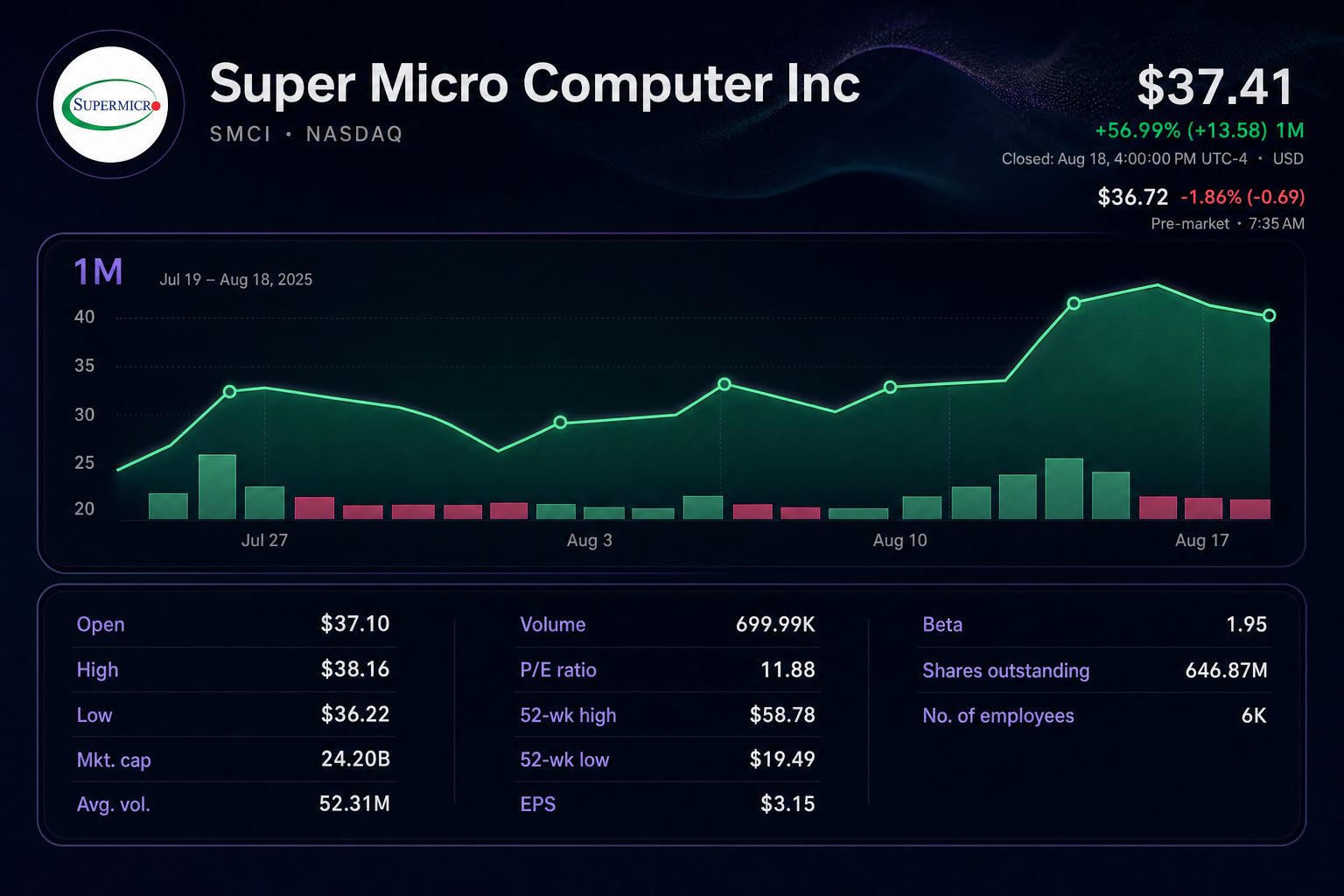
The slim margin is significant following a strong earnings rally. Investors have already factored in Super Micro’s ambitious revenue outlook. The key question now is if margins hold up as volume scales up.
The stock declined for a second consecutive session. Trading volume on Tuesday reached 50.9 million shares, staying under the average of the past 50 days. Climbing long-term Treasury yields weighed on AI hardware and chip stocks broadly.
| Market measure | August 18 close | Reference | Gap |
|---|---|---|---|
| SMCI stock price | $37.41 | $37.81 consensus analyst target | -1.1% |
| SMCI stock price | $37.41 | $58.78 52-week peak | -36.4% |
| Trading volume | 50.9 million | 61.5 million 50-day mean | -17.2% |
The operating figures are remarkable. Revenue for the fiscal fourth quarter nearly doubled compared to the same period last year. GAAP gross margin climbed by eight percentage points, and net income was up sixfold.
| Fiscal Q4 measure | Q4 2026 | Q3 2026 | Q4 2025 |
|---|---|---|---|
| Net sales | $11.1 billion | $10.2 billion | $5.8 billion |
| GAAP gross margin | 17.5% | 9.9% | 9.5% |
| Net income | $1.178 billion | $483 million | $195 million |
| Diluted EPS | $1.62 | $0.72 | $0.31 |
Super Micro CEO Charles Liang said the company had “generated more than $60 billion in new orders” and began fiscal 2027 with a backlog at an all-time high. Liang also highlighted an improved enterprise mix. The numbers are still unaudited. Company statement
Management projects first-quarter revenue between $14.5 billion and $15.5 billion, with the midpoint representing a 35% increase over June-quarter sales. Its full-year forecast of $65 billion to $72 billion suggests growth of 66% to 84% compared to fiscal 2026.
| Forward measure | Company outlook | Comparison base | Implied change |
|---|---|---|---|
| Fiscal Q1 2027 sales | $14.5-$15.5 billion | $11.1 billion in Q4 2026 | Increase of 30.6% to 39.6% |
| Fiscal 2027 sales | $65-$72 billion | $39.1 billion in fiscal 2026 | Up 66.2% to 84.1% |
| Q1 gross margin | 10.4%-10.8% | 17.6% non-GAAP in Q4 | Down by 6.8 to 7.2 points |
The margin guidance serves as the primary limitation. Super Micro’s outlook for the first quarter would give up much of the mix-driven advance seen in June. Factors such as customer timing, working capital needs, and concentration may fluctuate significantly when major AI cluster shipments occur.
| Analyst | Recommendation | Target | Target vs $37.41 |
|---|---|---|---|
| Rosenblatt | Buy | $51 | +36.3% |
| Needham | Buy | $46 | +23.0% |
| Bernstein SocGen | Hold | $42 | +12.3% |
| Mizuho | Hold | $35 | -6.4% |
| Goldman Sachs | Sell | $34 | -9.1% |
The recommendations highlight the disagreement. Rosenblatt projects an increase of over 36% from Tuesday’s closing price, while Goldman Sachs anticipates a decline of roughly 9%. Overall, following the results, analysts issued five buy, eleven hold, and three sell ratings.
Super Micro reported $7.5 billion in cash at the end of June. Total bank debt and convertible notes amounted to $8.7 billion. The company generated $747 million in operating cash flow for the quarter, providing additional resources to address its backlog.
Risks: Export restrictions, reliance on a limited customer base, and aggressive server pricing may postpone orders or squeeze margins. Elevated bond yields could put pressure on AI-related stocks with high valuations.
For investors, revenue is no longer the missing evidence. Super Micro has delivered on that front. The next move for the stock relies on translating record orders into cash flow, while avoiding another margin setback.
Related articles: NASDAQ:SMCI