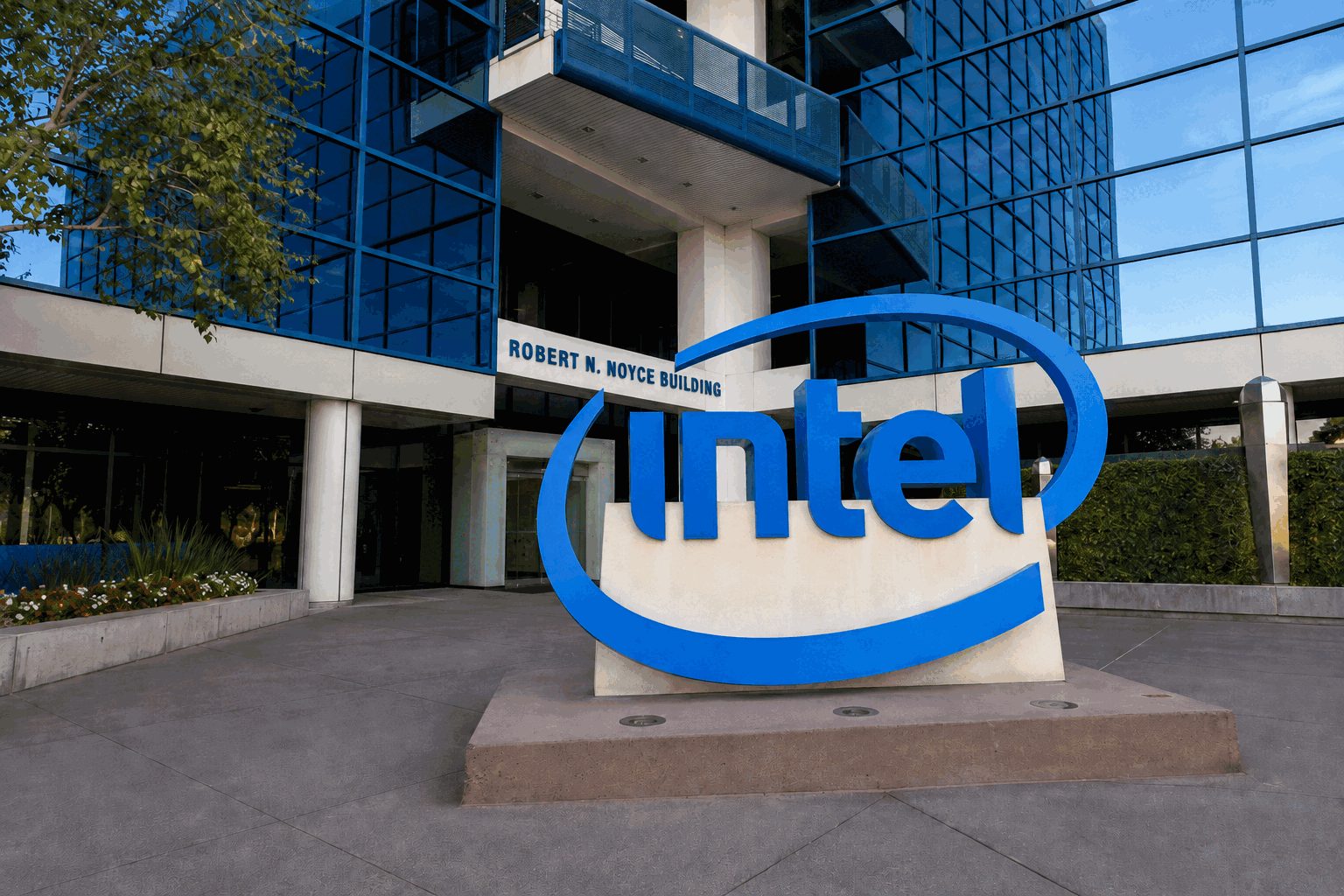

SANTA CLARA, California, August 19, 2026, 11:38 EDT — U.S. cash trading was ongoing.
- Intel was last at $93.13, roughly 2.0% under its $95 offer price.
- The $20 billion transaction increases the share count by 210.5 million prior to the underwriters’ option.
- Robust quarterly growth now faces an apparent dilution risk and a challenge in execution.
Shares of Intel Corporation NASDAQ:INTC dropped 3.7% to $93.13 on Wednesday, trading beneath the level reached in last week’s $20 billion stock offering. With the decline, investors are assessing shares at approximately $1.87 under the $95 offering price. The price was recorded at 11:38 EDT.
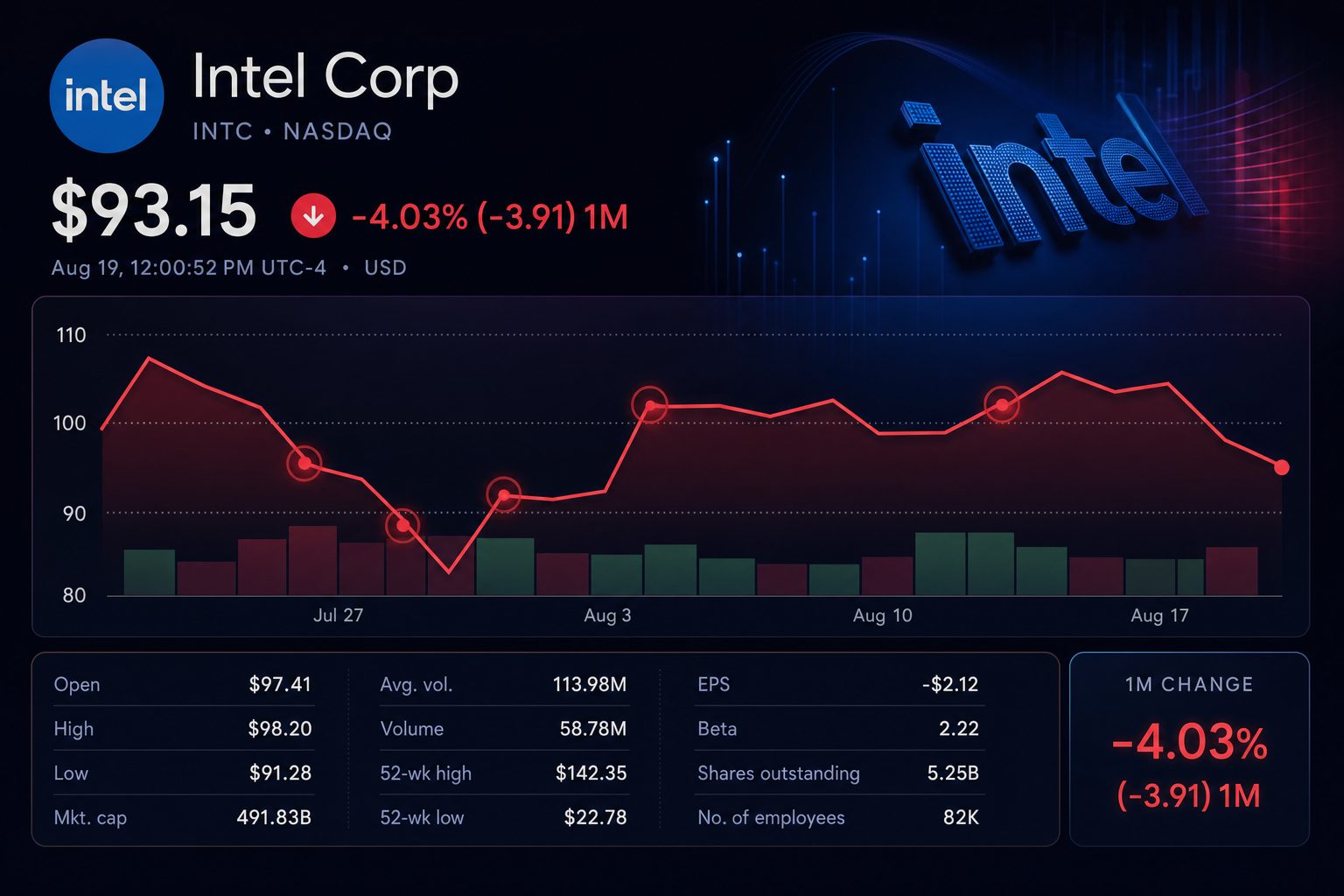
The discount may be minor, but the message is clear. Intel secured funding after its shares almost tripled in 2026. The firm now faces the task of converting those funds into foundry bookings, expanded capacity, and improved returns before dilution overtakes as the main narrative.
| Market snapshot | Intel | AMD | Nvidia |
|---|---|---|---|
| Price at 11:38 EDT | $93.13 | $466.25 | $219.13 |
| Change on the day | -3.68% | -3.74% | -0.28% |
| Range during session | $91.30–$98.03 | $462.88–$489.64 | $216.83–$222.29 |
Intel offered 210,526,315 shares priced at $95 apiece. Underwriters were granted a 30-day option to purchase up to an additional 31,578,947 shares. The company anticipated net proceeds around $19.7 billion.
| Offering math | Base deal | With full option |
|---|---|---|
| New shares | 210.5 million | 242.1 million |
| Gross proceeds | $20.0 billion | About $23.0 billion |
| New shares compared to roughly 5.04 billion pre-offering shares | 4.18% | 4.80% |
| Offer price compared to $93.13 in the market | Shares are trading 1.97% under the offer | |
The base offering raises the share count by approximately 4.2% compared to the pre-transaction total. The proportionate ownership of current shareholders decreases by close to 4.0% once the new shares are issued. If the option is fully exercised, the overall number of new shares would approach 242.1 million.
Intel reported a better business environment. Revenue in the second quarter climbed 25% to $16.1 billion. Non-GAAP earnings amounted to $0.42 per share. The company forecast third-quarter revenue between $15.8 billion and $16.8 billion.
| Operating measure | Q2 2026 | Year-on-year change |
|---|---|---|
| Revenue | $16.1 billion | +25% |
| GAAP gross margin | 40.4% | Gain of 12.9 points |
| Non-GAAP EPS | $0.42 | Rebounded from a $0.10 loss |
| Foundry revenue | $5.8 billion | +31% |
| Foundry operating result | -$2.1 billion | Deficit reduced from $3.2 billion |
The foundry figures highlight both the potential and the funding requirements. Revenue increased and the segment’s operating loss decreased. However, the $2.1 billion quarterly loss means the unit still needs external clients and consistent factory use to support additional capacity.
Chief Executive Lip-Bu Tan acquired 105,263 shares, each at $95, making the transaction close to $10 million. This matching buy-in offers investors a straightforward reference price. Shares traded approximately 2% lower than this level on Wednesday.
| Analyst opinion | Recommendation / price target | Potential change from $93.13 |
|---|---|---|
| MarketBeat overall | Hold / $107.46 | +15.4% |
| Investing.com overall | Neutral / $114.88 | +23.4% |
| Bank of America, June 11 | Buy / $135 | +45.0% |
The analyst range is broad, reflecting two possible scenarios. Improved server demand and successful foundry performance could boost both revenue and margins. If external adoption lags, Intel may face high costs for underused plants.
Risks: The $20 billion fundraising boosts liquidity, but does not demonstrate demand for foundry services. Should significant external clients postpone decisions, Intel might deploy these funds without securing sufficient returns. Additional share sales through the option would increase dilution, as AMD NASDAQ:AMD, Nvidia NASDAQ:NVDA, and Taiwan Semiconductor Manufacturing Company NYSE:TSM continue to apply competitive pressure in both products and manufacturing.
The key metric to watch is if Intel can maintain gross margins above 40% as it works to reduce foundry losses. In the meantime, the $95 offering price serves as more than just a procedural point—it is the market’s closest gauge of sentiment on the capital raise.
Related articles: NASDAQ:INTC
The $95 funding benchmark
U.S. cash market open · prices in USD
The stock is down $1.87, or 1.97%, from the price in Intel’s $20 billion offering.
Impact of the offering
Operational gains need to offset dilution
The funding supports capacity. The rationale for investment continues to rely on demand and utilization at external foundries.
Analyst price targets continue to vary widely
The consensus rating is Hold/Neutral. Target samples vary and do not guarantee specific returns.
Case for a bull market
Margins and foundry utilization rise. Growth in data-center demand, increased server market share and external manufacturing clients could translate new capital into stronger earnings potential.
Downside scenario
Capital comes in ahead of customer demand. Postponed outside commitments may result in Intel shouldering expenses for costly factories, with AMD, Nvidia, and TSMC continuing to apply competitive pressure.