
TOULOUSE, August 20, 2026, 13:14 CEST
- Airbus aims to increase monthly production of A320-family aircraft to 70–75 by the end of 2027, up from the current rate of around 60.
- With production at 75 per month, the current narrowbody backlog represents about 8.3 years of deliveries.
- The primary obstacles are engine supply and a significant delivery target in the second half.
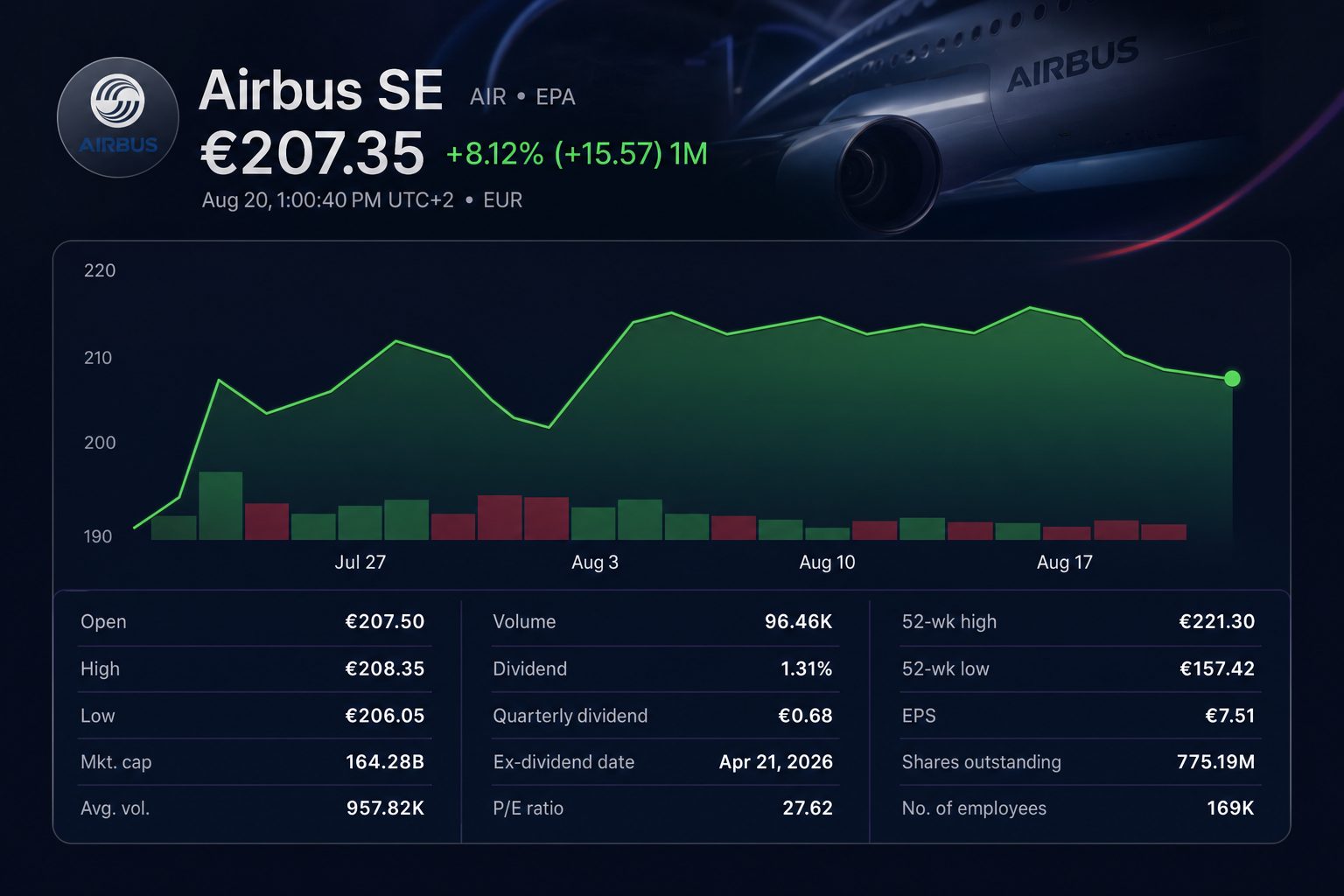
Airbus SE EPA:AIR is seeking investor support for a 25% increase in output of its A320-family, while suppliers continue to control production rates. Shares were last at €207.25, slipping 0.36% at 13:11 CEST on Thursday, as the market considered the proposed ramp-up against risks in execution.
The company plans to raise monthly A320-family output from about 60 aircraft to between 70 and 75 by the end of 2027. This would boost annual production by up to 180 jets once the higher rate is sustained. This is the primary factor drawing investor focus to the current A320-family trend.
Even at the highest output, scarcity would persist. By the end of May, Airbus’s backlog for A320-family jets stood at 7,499. Without additional orders, that represents 8.3 years of production at a monthly rate of 75 aircraft.
| Monthly A320-family production | Yearly output | Years needed to clear 7,499-jet backlog |
|---|---|---|
| 60 | 720 | 10.4 |
| 70 | 840 | 8.9 |
| 75 | 900 | 8.3 |
The backlog figures illustrate how adding even one more aircraft can accelerate revenue. They also clarify that increasing production rates does not necessarily lead to excess supply in the short term. Airbus reported that A321neo models accounted for 5,615 orders, representing nearly 75% of the backlog.
The bigger challenge comes this year. Airbus handed over 351 commercial planes in the first half and maintained its outlook of around 870 by 2026. That means it must deliver 519 in the second half, an increase of nearly 48% compared to the first-half figure.
| 2026 delivery bridge | Aircraft | Monthly average |
|---|---|---|
| Delivered in first half | 351 | 58.5 |
| Guidance for full year | About 870 | 72.5 |
| Needed in second half | 519 | 86.5 |
Cash conversion faces an identical back-end challenge. In the first half, free cash flow before customer financing stood at negative €1.17 billion. Meeting the €4.5 billion full-year goal demands a €5.67 billion turnaround in the second half.
Airbus reported that the outflow in the first half was partly a result of inventory accumulation for the ramp. Revenue climbed 12%, with adjusted operating profit up 24%. Margins strengthened even as working capital weighed.
| First-half metric | 2026 | 2025 | Change |
|---|---|---|---|
| Revenue | €33.18bn | €29.61bn | +12% |
| Adjusted EBIT | €2.73bn | €2.20bn | +24% |
| Net income | €2.24bn | €1.53bn | +47% |
| Commercial deliveries | 351 | 306 | +15% |
| FCF before customer financing | −€1.17bn | −€1.61bn | €0.44bn improvement |
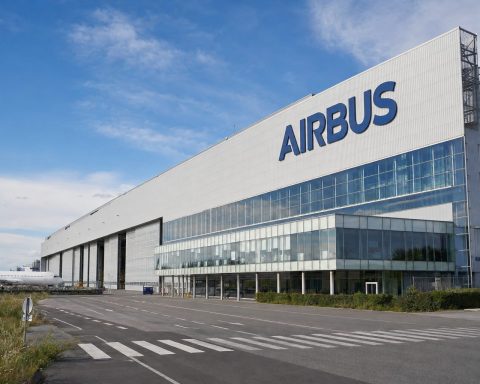
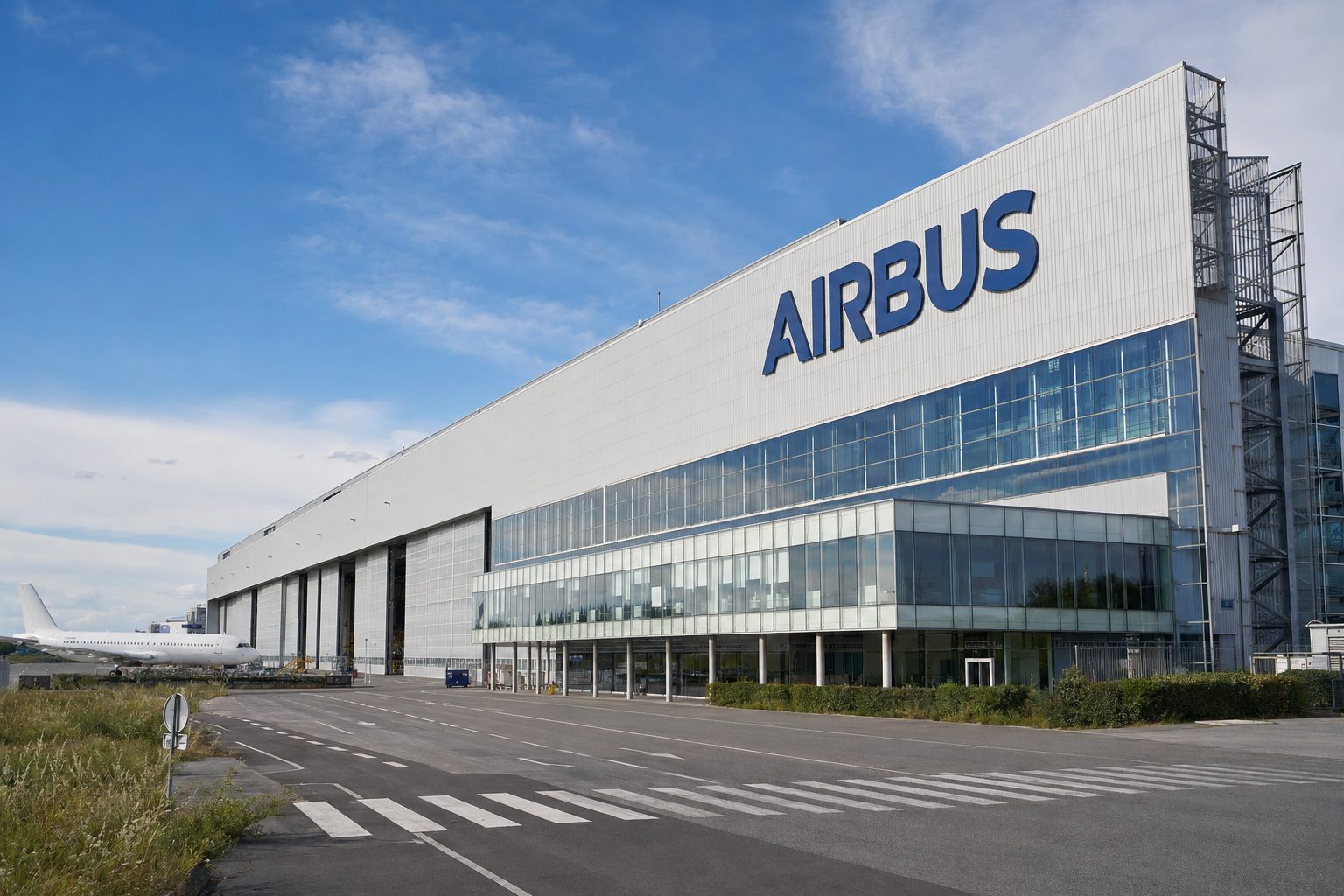
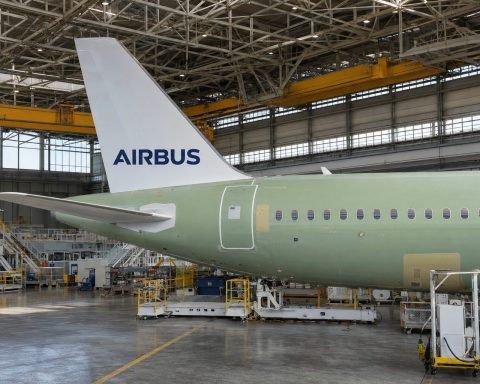
Production capacity has been established. Airbus launched a second upgraded final-assembly line in Toulouse in June. The company now operates ten A320-family assembly lines between Toulouse, Hamburg, Mobile, and Tianjin.
Engine management is still challenging. Major U.S. airlines saw maintenance costs climb 68% from 2019 to 2025, a Reuters review found. Ongoing engine supply shortages and repair needs continue to drive this trend across fleets.
Chief Executive Guillaume Faury stated alongside the half-year results, “We are ramping up across all businesses to meet the growing demand for our civil and military solutions.” His remarks shifted the focus to execution rather than orders.
Analysts hold a positive outlook. In an S&P Global survey conducted in August, 18 out of 24 analysts rated the stock as Buy or Strong Buy. The mean target price of €229.74 is roughly 10.8% higher than Thursday’s intraday level.
| Analyst | Firm | Recommendation | Target | Date |
|---|---|---|---|---|
| Milene Kerner | Barclays | Buy | €260 | Aug. 3 |
| Kenneth Herbert | RBC | Buy | €250 | July 29 |
| Ian Douglas | UBS | Buy | €240 | Aug. 3 |
| Douglas Harned | Bernstein | Buy | €240 | July 30 |
| Chloe Lemarie | Jefferies | Hold | €200 | July 29 |
Risks: Engine shortages may result in finished airframes awaiting components. Labour pressures, delays in cabin equipment, and problems with supplier quality could also postpone deliveries and cash flow.
Monthly deliveries are the next key indicator. Consistent growth would help reduce customer waiting times and underpin the 2029 profit outlook. If deliveries stall, it would highlight the extent of the ramp-up dependent on suppliers beyond Airbus’s plants.
Related articles: EPA:AIR


Airbus A320 ramp: capacity meets constraint
| Metric | YoY |
|---|---|
| Revenue | +12% |
| Adjusted EBIT | +24% |
| Net income | +47% |
| Commercial deliveries | +15% |
*Calculated against the stated market snapshot. Sources: Airbus H1 2026, Airbus Toulouse FAL, S&P Global analyst poll via StockAnalysis, Welt market snapshot. Backlog-duration figures are static calculations.