
NEW YORK, August 24, 2026, 17:00 EDT — Oil prices slid 2.4% as gaps in the enforcement of Iran sanctions raised concerns in the market.
- Brent and WTI crude fell 2.35% at settlement, snapping six-session winning streaks.
- Brent remains up 5.9% from its level prior to that rally.
- The $92.17 settlement is 8.4% higher than the EIA’s projected average for the third quarter.
Oil prices dropped over $2 on Monday, even as the U.S. expanded sanctions targeting Iran. Brent ended at $92.17 per barrel, while West Texas Intermediate finished at $85.01. Both crude benchmarks declined by 2.35%, breaking a run of six consecutive gains.
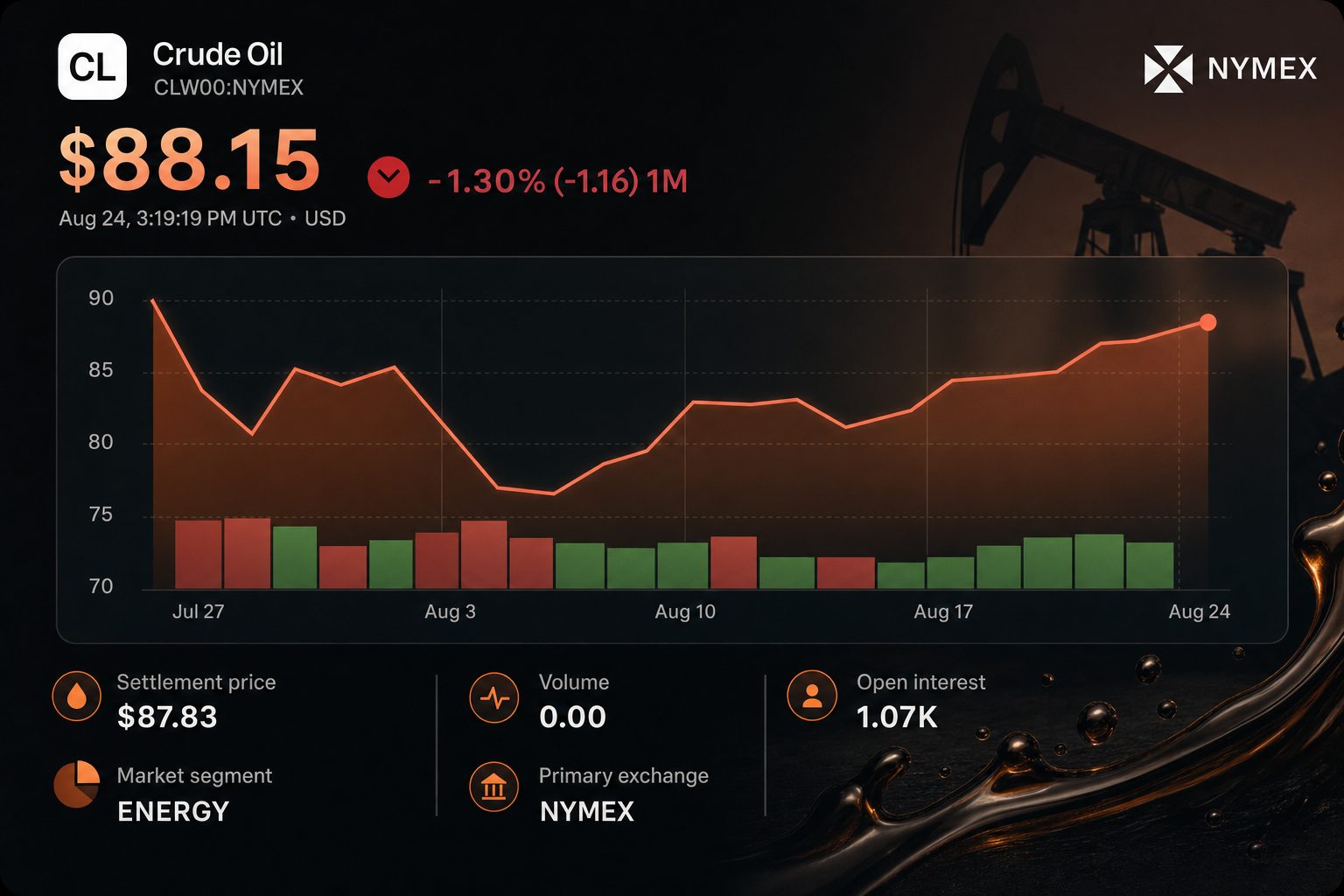
The drop suggests a discount related to enforcement. Traders previously priced in supply risk during the last rally. The announcement on Monday expanded the threat, though it did not instantly take more barrels off the market.
| Benchmark or exposure | Aug. 24 level | Daily move | Market signal |
|---|---|---|---|
| Brent crude | $92.17/bbl | -2.35% | Worldwide benchmark |
| WTI crude | $85.01/bbl | -2.35% | Primary U.S. indicator |
| Brent-WTI spread | $7.16/bbl | Derived | Global pricing gap |
| United States Oil Fund NYSEARCA:USO | $132.21 | -1.80% | Exposure to futures prices |
Treasury Secretary Scott Bessent has named the effort “Operation Economic Outcast.” He stated its aim is to cut Iran’s main economic channels. The operation focuses on oil revenue, along with shipping, gold, technology, aviation, and digital assets. The Guardian
Secondary sanctions are effective only when buyers and banks adhere to them. China, which has traditionally been the leading importer of Iranian exports, is still a key focus. The decline in the market indicates that investors are waiting for proof of lower purchases before factoring in another supply premium.
A significant buffer remains. In the six sessions leading up to Monday, Brent increased by 8.4%. Factoring that percentage onto Friday’s $94.39 close results in an initial value of approximately $87.08. Monday’s closing price is still 5.9% higher than that.
| Oil-market reference | Price | Gap versus Aug. 24 Brent | Interpretation |
|---|---|---|---|
| Brent settlement | $92.17 | — | Latest market settlement |
| EIA 3Q26 forecast average | $85.00 | Brent is 8.4% above | Reflects ongoing geopolitical risk |
| EIA 2027 forecast average | $69.00 | 25.1% under Brent | Scenario with supply returning |
The chokepoint continues to pose the main threat. According to the EIA, 4.9 million barrels per day moved through Hormuz during the second quarter. This figure is 77% less than the late 2025 level of 21.6 million barrels per day.
On Monday, Iran heightened tensions by adding 45 tankers to its blacklist. The country warned of possible fines, ship detentions and seizure of cargoes over claimed violations of transit regulations. Reuters said about 8 million barrels a day currently move through the area, which remains significantly less than levels prior to the conflict.
Physical discounts make assessing the headline price more challenging. TotalEnergies SE NYSE:TTE CEO Patrick Pouyanne stated that crude from Iraq and Qatar was being offered between $50 and $60. These price reductions can offset approximately $10 per barrel in additional shipping expenses.
| Listed exposure | Aug. 24 close | Daily move | Sensitivity |
|---|---|---|---|
| United States Oil Fund NYSEARCA:USO | $132.21 | -1.80% | Tracks crude futures directly |
| Energy Select Sector SPDR Fund NYSEARCA:XLE | $63.11 | -0.83% | Includes integrated energy companies |
| SPDR S&P Oil & Gas E&P ETF (NYSEARCA:XOP) | $186.24 | -1.74% | Focuses on production companies |
| Exxon Mobil Corporation NYSE:XOM | $164.05 | -0.64% | Integrated oil major |
| Chevron Corporation NYSE:CVX | $203.09 | -1.06% | Integrated oil major |
Energy stocks declined less sharply than oil-linked funds. XLE dropped 0.83%, amounting to 46% of USO’s loss. Integrated oil majors’ downstream and chemicals operations can cushion a single-day upstream price swing.
Risks: A confirmed decline in Chinese buying would make sanctions tighter on supply. Moves by Iran targeting tankers could push up shipping and insurance expenses initially. On the other hand, continued normal Hormuz shipping or successful diplomatic efforts could draw Brent closer to the EIA’s $85 average for the quarter.
The upcoming key U.S. supply update is scheduled for Wednesday at 10:30 a.m. EDT, when the EIA is set to release its weekly crude stockpile figures. Additional sanctions targeting a major financial entity, which Bessent indicated may be announced this week, will be the next immediate assessment of enforcement efforts.
Related articles: Commodities