
CHICAGO, August 24, 2026, 17:34 EDT
- October live cattle futures dropped 1.97% on Monday, settling at $2.1362 per pound.
- The suggested quota of 300,000 tonnes represents approximately 11% of expected yearly imports.
- However, this represents just about 3% of yearly U.S. beef consumption.
- Ground beef prices rose 9.0% in July compared with the same month a year earlier.
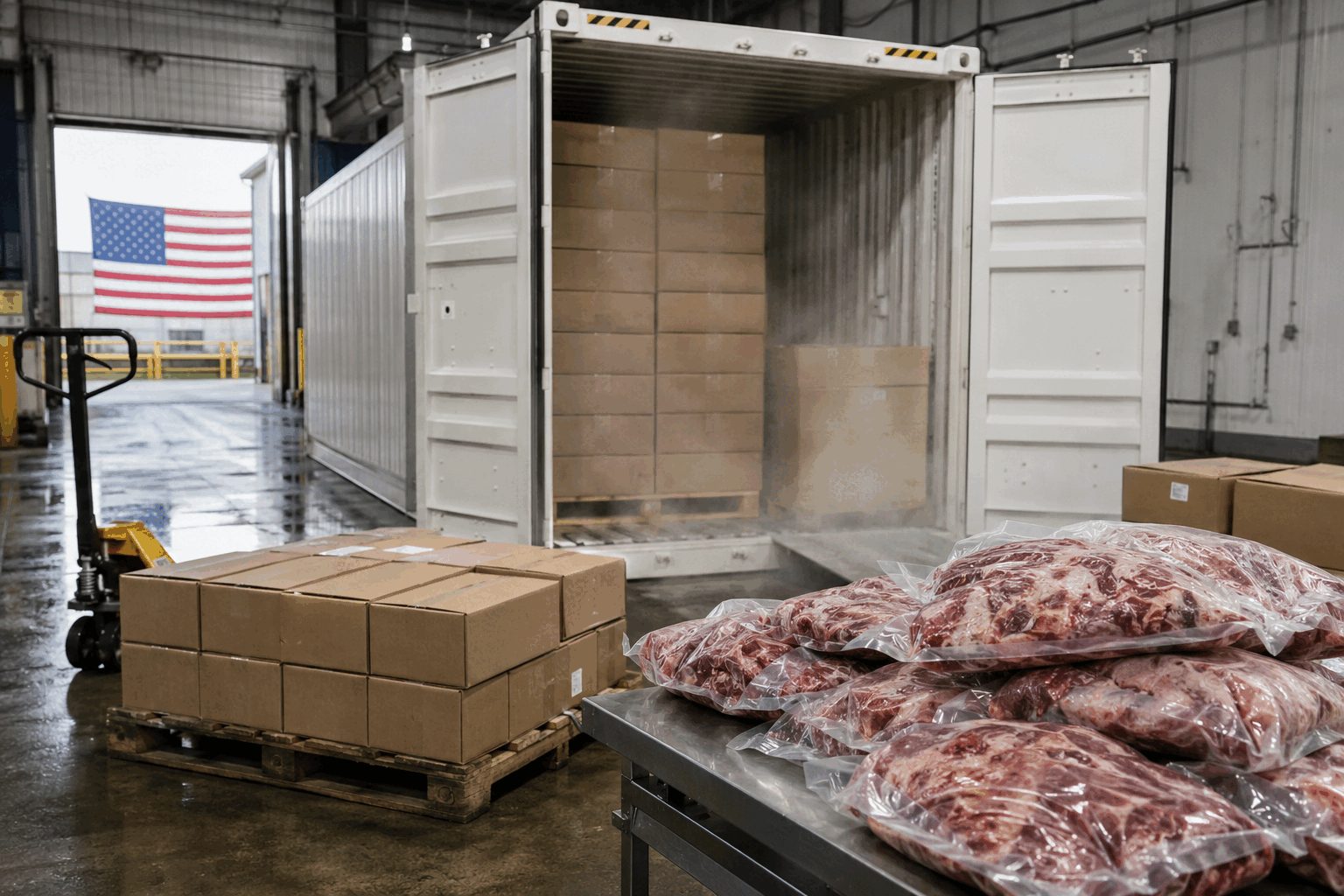
U.S. cattle futures fell on Monday following President Donald Trump’s proposal for a 90-day, tariff-free import period for 300,000 metric tons of ground beef materials. The initiative is aimed at tackling persistent food inflation. The move’s size suggests rancher profits could face a larger impact than any reduction seen in grocery store prices.
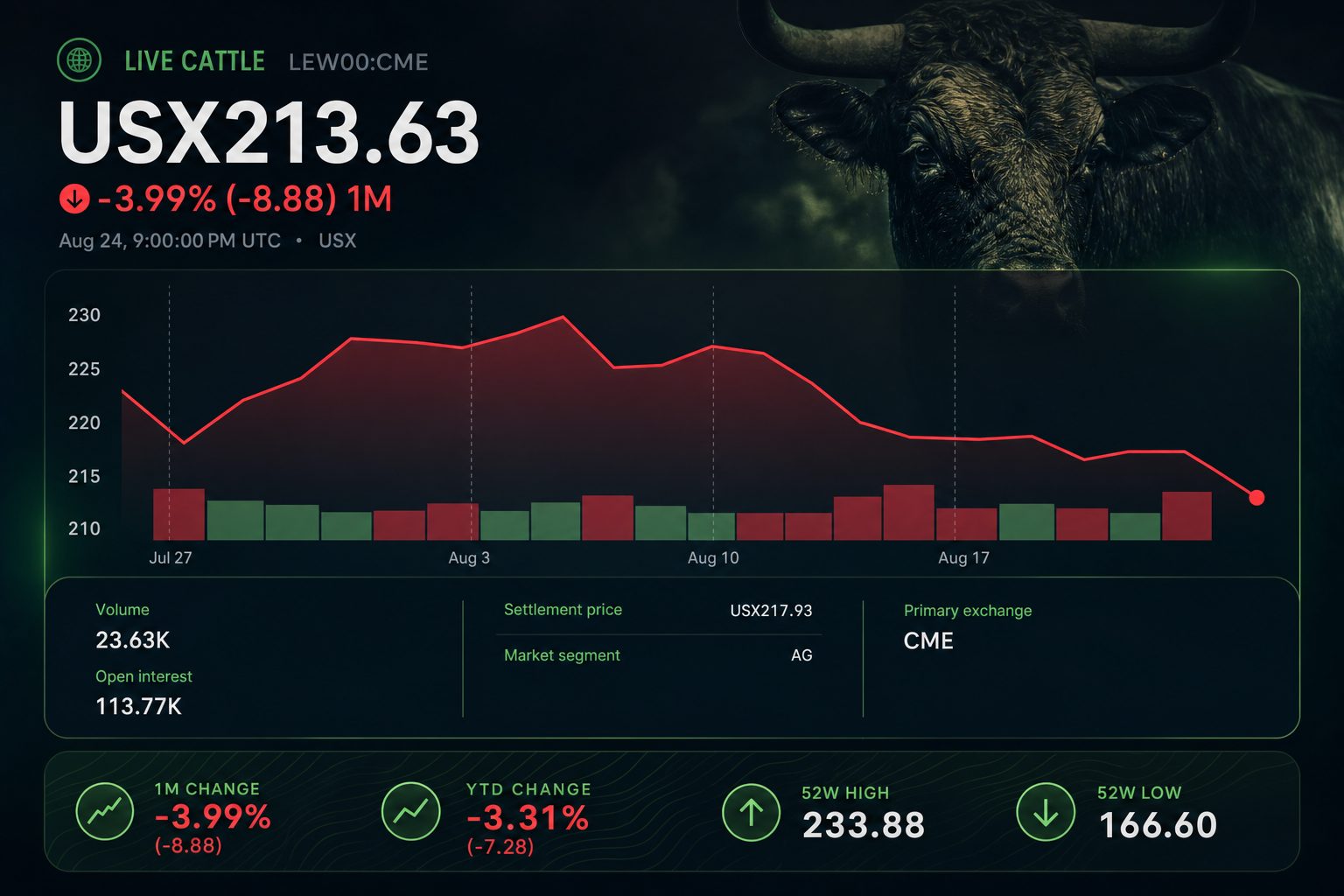
October live cattle ended down 4.30 cents at 213.62 cents per pound. September feeder cattle dropped 4.87 cents, finishing at 324.15 cents. Both contracts were trading close to record highs prior to the announcement.
The breakdown clarifies the division. The suggested quota amounts to about 661 million pounds, representing nearly 11% of the U.S. Department of Agriculture’s anticipated 2026 beef imports, but just 2.6% of expected domestic output.
| Supply measure | Volume | New quota as share |
|---|---|---|
| Suggested duty-free quota | 300,000 metric tons / 661 million lb | 100% |
| USDA import projection for 2026 | 6.059 billion lb | 10.9% |
| USDA production projection for 2026 | 24.967 billion lb | 2.6% |
| Projected annual usage | About 22 billion lb | About 3% |
| Previous Argentina quota | 80,000 metric tons per year | New proposal is 3.75 times higher |
The difference is significant. The quota might replace imports that are already subject to tariffs, rather than increasing supply by the full 661 million pounds. As a result, the overall impact on national retail prices is likely to be less than what the headline figure indicates.
Trump stated that overseas suppliers had agreed to offer products at prices 25% lower than the current market rate. The specific nations involved were not named, and the proposal is still under development. An executive order is anticipated within the next two weeks, the Associated Press reported.
“The relative magnitude we are talking about is pretty small,” Kansas State agricultural economist Glynn Tonsor told the AP. He put the volume at around 3% of yearly U.S. consumption.
| Indicator | August 21 | August 24 | Change |
|---|---|---|---|
| October live cattle | 217.925 cents/lb | 213.620 cents/lb | -1.97% |
| September feeder cattle | 329.025 cents/lb | 324.150 cents/lb | -1.48% |
| Ground-beef CPI, July | Annual comparison | +9.0% | |
| Beef and veal CPI, July | Annual comparison | +9.4% | |
The policy follows several years of limited supply. According to USDA, the number of beef cows as of July 1 was 28.5 million, a 1% decrease from 2025. The agency projected the calf crop at 32.5 million head, down 2%. These reductions restrict the pace of any rebound in domestic production.
| Structural indicator | Latest reading | Year-over-year |
|---|---|---|
| Beef cows, July 1 | 28.5 million head | -1% |
| 2026 calf crop forecast | 32.5 million head | -2% |
| 2026 beef production forecast | 24.967 billion lb | — |
| 2026 per-capita availability | 60.0 lb | — |
| 2027 per-capita availability | 59.2 lb | -1.3% from 2026 |
Consumers continue to experience significant pressure. In July, the average price for uncooked ground beef hit approximately $7.14 per pound. Prices for beef and veal climbed 9.4% compared to the previous year, outpacing the increase in the broader food-at-home index.
The latest quota would significantly surpass a previous allowance. In February, the White House established a yearly 80,000-tonne quota for Argentine lean-beef trimmings. The suggested 90-day quota is 3.75 times larger.
Ranchers warn that abrupt imports may disrupt efforts to rebuild herds. John Williamson, President of the Florida Cattlemen’s Association, described government intervention as “not sound policy.” Maintaining heifers and increasing herd size requires producers to see consistent returns over multiple years. CBS Miami
For investors, the direct impact is seen in livestock prices. A drop in cattle prices may reduce processor input expenses. But retailers might feel the effects quickly through lower wholesale prices. The most pronounced negative effect falls on ranch and feedlot margins.
The USDA projects beef production at 24.967 billion pounds for 2026 and 24.980 billion pounds for 2027, indicating little change year over year. Per-capita supply is anticipated to drop from 60.0 pounds to 59.2 pounds in the coming year.
Risks: The definitive order might be reduced, involve alternative suppliers or be delayed. Shipment volumes could also be constrained by disease management measures, logistical challenges, or export capacity. Should herds recover at a faster pace, cattle prices may drop further, while renewed drought could restrict supplies once more.
Related articles: Commodities