
NEW YORK, August 27, 2026, 09:34 (EDT)
- Mercer traded 59.8% higher at 66 cents shortly before Thursday’s opening bell.
- The shares then fell back toward Wednesday’s 41.30-cent close in regular trading.
- Canada’s US$14 million package is 95% repayable and starts amortizing in 2031.
- Volume reached 56.0 million shares, about 41 times the 65-day average.
Mercer International’s 60% premarket surge disappeared after Thursday’s opening bell. The reversal showed how quickly a US$14 million funding headline met the company’s much larger balance-sheet problem.
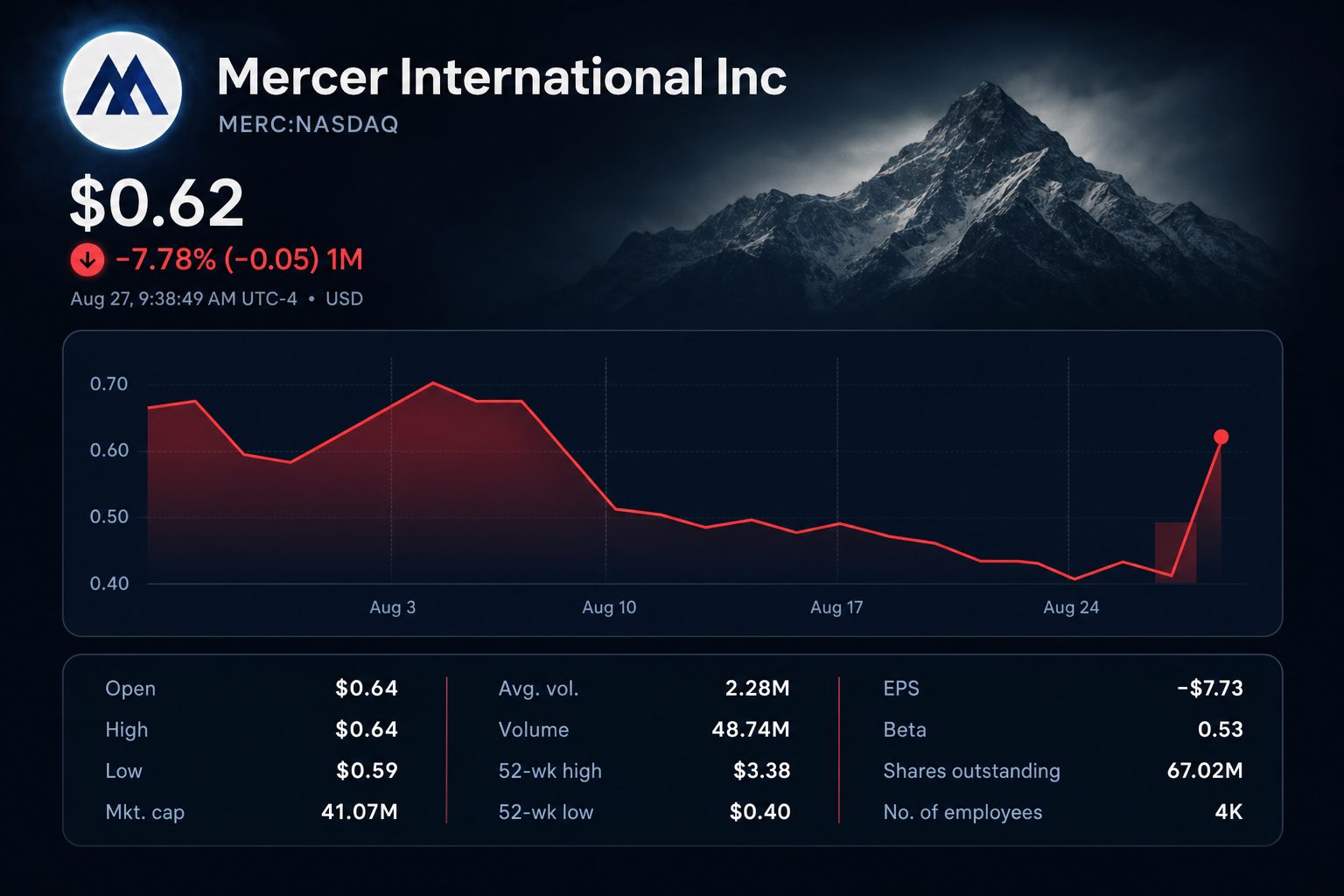
Mercer International Inc. (NASDAQ:MERC) reached 66 cents at 09:28 EDT. That was 59.8% above Wednesday’s 41.30-cent close. Regular-session trades then ranged from 40.21 to 44.15 cents by 09:34 EDT MarketWatch quote.
The premarket move briefly added an estimated US$16.6 million in equity value. That equaled 1.18 times the government support. The regular-session high implied a gain of only US$1.9 million.
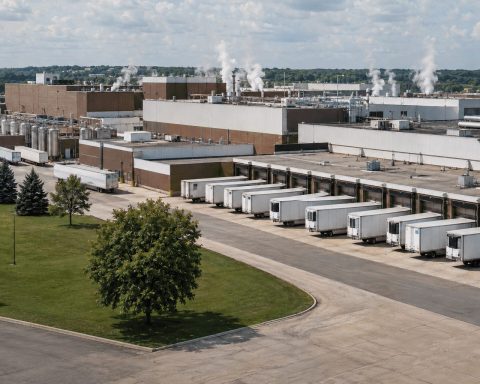
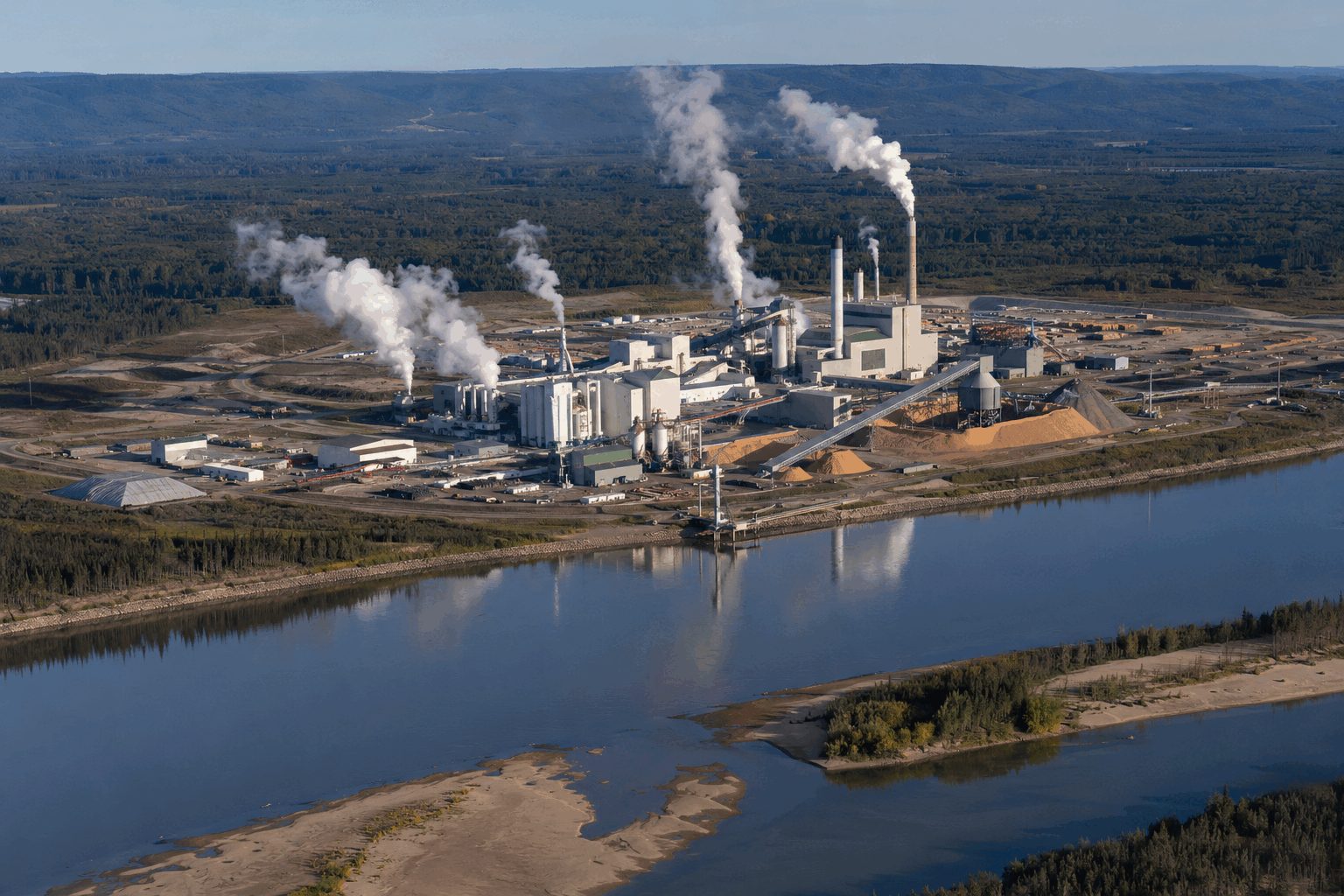
Canada committed C$20 million through its Regional Tariff Response Initiative. Mercer valued the package at about US$14 million. The money supports productivity, bioenergy and carbon-capture preparations at the Peace River mill company release filed with the SEC.
| Investor measure | Verified amount | Scale |
|---|---|---|
| Canada support | C$20.0 million / about US$14.0 million | 50.6% of Wednesday equity value |
| Non-repayable portion | C$1.0 million | 5% of package |
| Repayable portion | C$19.0 million | 95%; repayment starts in 2031 |
| Premarket equity-value gain | About US$16.6 million | 1.18 times total support |
| Q2 aggregate liquidity | US$191.7 million | Support equals 7.3% |
| Enterprise value | About US$1.60 billion | Support equals 0.9% |
The financing mix matters. Only C$1 million is non-repayable. The remaining C$19 million carries repayment starting in 2031, subject to the contribution agreement August 26 Form 8-K.
Chief Executive Juan Carlos Bueno called the support “an important step” in the mill’s modernization. It can preserve cash for work Mercer planned anyway. It does not recapitalize the parent company.
Mercer ended June with US$78.8 million of cash. Available revolvers lifted aggregate liquidity to US$191.7 million. Shareholders’ equity was negative US$98.0 million second-quarter results.
Second-quarter operating EBITDA was negative US$21.0 million. Net loss reached US$76.0 million. Mercer has engaged advisers and noteholders over financing and other liquidity-enhancing transactions.
The Peace River investment still targets useful operating levers. Mercer said it would improve productivity and prepare expanded bioenergy production. Energy and chemical revenue rose 17% to US$21.7 million last quarter.
The wider pulp business remains strained. Segment revenue fell 2.2% to US$325.1 million. Segment operating EBITDA was negative US$12.7 million. A US$26 million inventory impairment reflected weak pulp pricing and high fiber costs.
Trading activity was extraordinary. Volume reached 56.0 million shares by 09:34 EDT. MarketWatch put that near 4,051% of the 65-day average. Mercer had 67.0 million shares outstanding at June 30.
Analyst caution predates the grant. Four analysts carry a Sell consensus and a US$1.38 average target, according to Public’s August 27 compilation. The target sits well above Thursday’s range, but Mercer remains a sub-dollar stock.
Risks: The government money could accelerate measurable productivity gains. Stronger pulp prices would also improve cash generation. The downside is heavier: 95% of the package is repayable, quarterly EBITDA is negative and capital-structure talks have no assured outcome.
The market’s first reaction priced the aid almost dollar for dollar. The opening reversal applied a tougher test. Investors are valuing the package against Mercer’s obligations, not just its depressed equity capitalization.
Related articles: Stock Market