
SÃO PAULO, August 28, 2026, 05:30 (BRT) — Braskem shares climbed 10.8% following news that Petrobras has expanded a credit line for the company to R$2.35 billion.
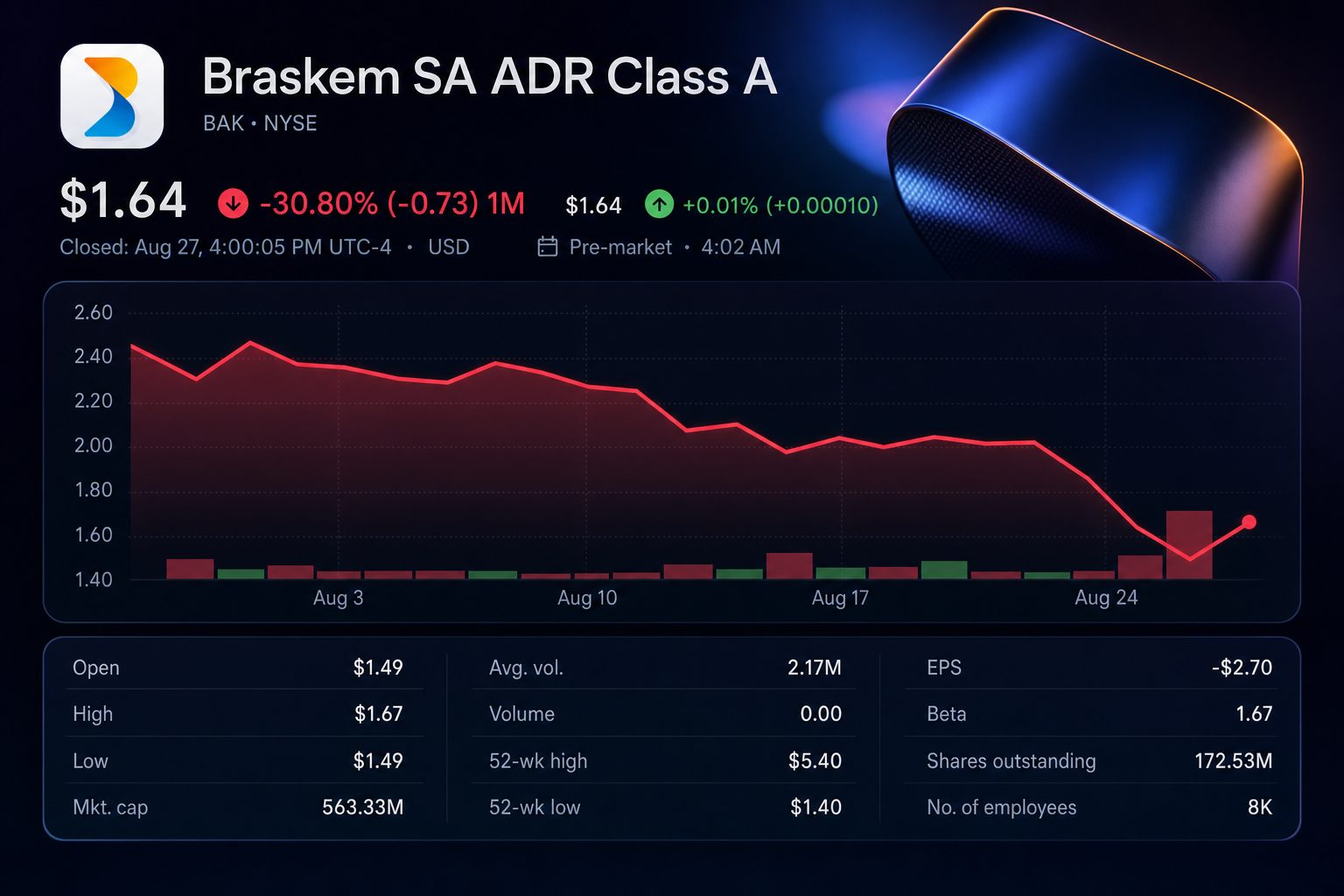
- Braskem’s U.S. ADR ended trading at $1.64, rising 10.8%, with 8.04 million shares exchanged.
- Petrobras raised Braskem’s supplier-credit limit to R$2.35 billion.
- The cap increased from R$350 million and remains in effect until December 2026.
- Braskem is reorganizing approximately $10.9 billion in unsecured debt.
Braskem S.A. (NYSE: BAK) ADRs surged 10.8% to hit $1.64 on Thursday. Trading volume soared to 8.04 million shares, significantly higher than the 2.51 million share average. The rally came after shareholder Petróleo Brasileiro S.A. (NYSE: PBR) expanded supplier credit sevenfold market activity.
Petrobras increased the limit from R$350 million to R$2.35 billion. Braskem is allowed to access the facility for purchasing petrochemical feedstock from the oil producer. The payment term continues to be 30 days.
The deal ensures operations continue, rather than addressing solvency concerns. It provides Braskem with additional working capital as the company seeks to resolve about $10.9 billion in unsecured debt. State oil firm Petrobras holds a 47% stake in the petrochemical producer.
The additional R$2 billion is roughly equivalent to seven times Braskem’s U.S. equity value of $283 million at Thursday’s market close. Due to currency conversion and ADR-share distinctions, this figure is an approximation. Nonetheless, the comparison highlights the limited residual value the market attributes beyond the debt layers.
The facility imposes tight restrictions. Braskem is required to deposit roughly R$1 billion in customer receivables every month into a designated account. Under the setup, a minimum of R$300 million must remain in the account before any excess cash is released back to the company agreement terms.
The line will become active once those accounts are established and have a balance of R$150 million. Petrobras may halt the limit if the required minimum monthly receivables are not met. The facility is set to expire at the close of 2026.
| Measure | Before / current | Investor meaning |
|---|---|---|
| Petrobras credit ceiling | R$350M / R$2.35B | Additional R$2B available for feedstock |
| Payment term | 30 days | Temporary liquidity aid |
| Linked receivables | About R$1B monthly | Cash collateral managed by Petrobras |
| June net working capital | Negative R$8.70B | Severe liquidity tightness continues |
| Restructuring obligations | About US$10.9B | Credit line remains limited compared to debt |
As of June 30, Braskem’s consolidated net working capital was negative R$8.70 billion. The company’s borrowings and debentures stood at R$49.34 billion, while Braskem Idesa’s financing contributed an additional R$13.87 billion June financial statements.
The jump in the ADRs signaled relief following a steep drop. Braskem was still off 44.4% year-to-date and down 52.9% on an annual basis. Thursday’s closing price was 69.6% lower than the $5.39 52-week peak valuation and trading data.
Leverage continues to skew Braskem’s valuation. The company’s U.S. market capitalization stood at roughly $283 million, compared to an enterprise value of approximately $12.24 billion. Braskem posted a trailing net loss close to $978 million, with an operating margin of 0.76%.
Sell-side sentiment is wary. JPMorgan shifted to Neutral in June. Citigroup downgraded the ADR to Sell, and Bank of America rates it Underperform. These ratings were issued before the supplier-credit increase but reflect ongoing balance-sheet worries.
Risks: The deal may be paused if collateral requirements are not met. It does not resolve creditor demands or create lasting equity. Weak currencies, unfavorable petrochemical margins, and additional defaults could challenge the improved flexibility.
The following trial is now underway. Investors are advised to monitor if the associated accounts receive funds and if feedstock shipments are maintained. The durability of Thursday’s rally will depend on creditor backing throughout the 90-day restructuring period.
Related articles: Energy