
LOS GATOS, California, August 30, 2026, 18:31 (EDT)
- Season 2 of “Stranger Things: Tales From ’85” debuts on September 17.
- Netflix recorded a 2% increase in first-half viewing hours, reaching 97 billion.
- Revenue for the second quarter rose 13%, reaching $12.56 billion.
- Netflix forecasts advertising revenue of about $3 billion in 2026.
Netflix is set to debut new episodes of “Stranger Things: Tales From ’85” on September 17. The rapid arrival of the show’s second season offers the streaming service a new opportunity to gauge audience engagement ahead of its autumn programming lineup.
The animated series builds on one of Netflix’s most recognized franchises following the conclusion of the original show. Its launch coincides with viewership growth easing to 2%.
Investors are focused on retention instead of a single spike during premiere week. Increased viewing may help reduce cancellations and boost advertising inventory.
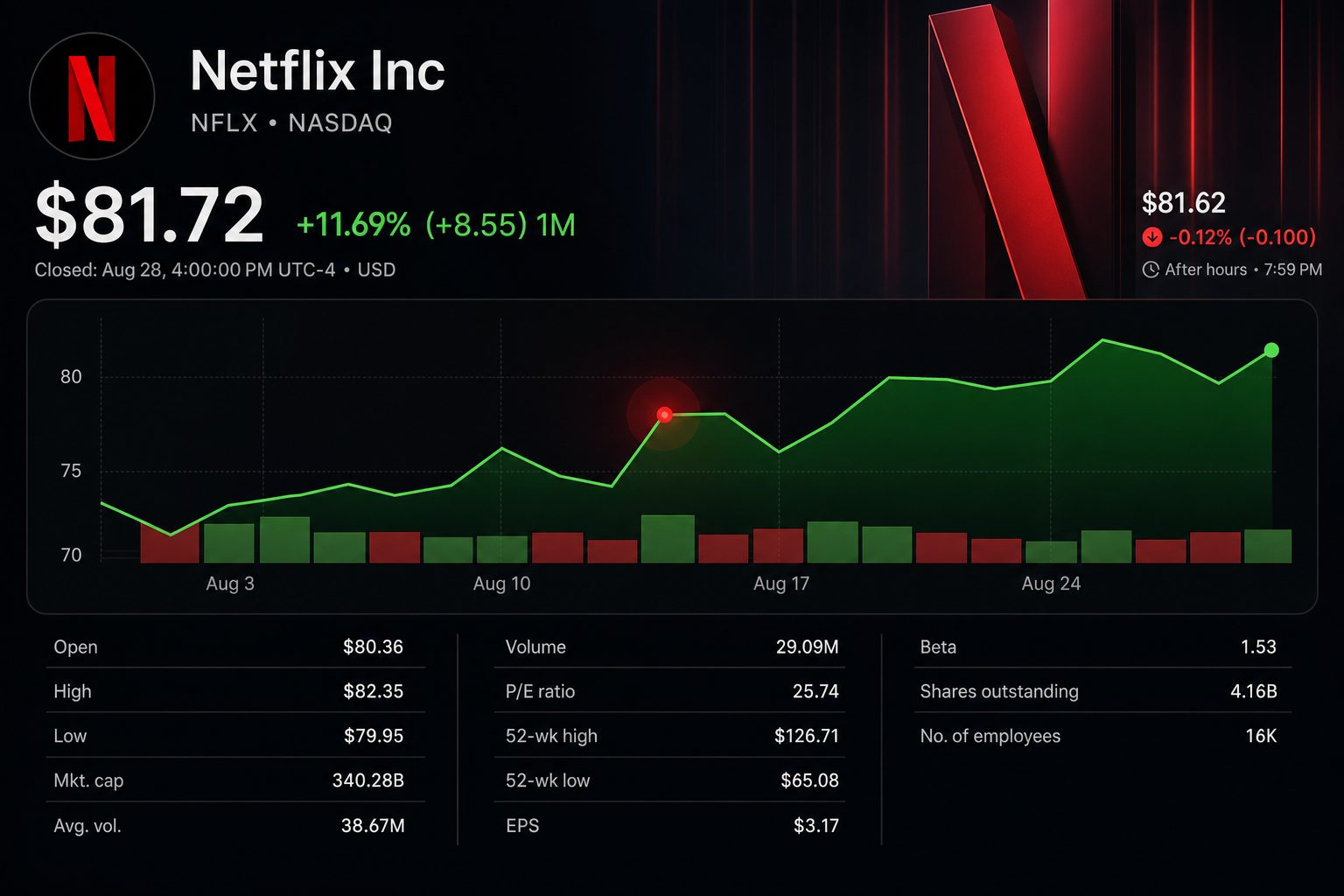
Shares of Netflix Inc. finished Friday at $81.72, rising 2.35%, putting the company’s market capitalization at $340.3 billion NASDAQ: NFLX.
The show is back less than five months after it first premiered in April. According to Netflix, the plot takes audiences back to Hawkins in the winter of 1985 Netflix Tudum.
The Hawkins Investigators Club encounters danger connected to deserted silver mines. This approach maintains ties to the original franchise without revisiting the finished live-action storyline.
| Investor measure | Latest reading | Relevance to the release |
|---|---|---|
| H1 viewing hours | 97 billion | Year-over-year growth limited to 2% |
| Q2 revenue | $12.56 billion | Up 13% from a year earlier |
| Q2 operating margin | 33.4% | Supports ongoing spend on content |
| 2026 ad-revenue outlook | About $3 billion | Drives benefit from lasting engagement |
| 2026 free-cash-flow outlook | About $12.5 billion | Reflects focus on profitability of content |
Netflix reported second-quarter revenue of $12.56 billion, a rise of 13%. Operating profit totaled $4.19 billion, resulting in a margin of 33.4% Netflix investor relations.
The margin enables Netflix to capitalise on existing intellectual property. Bringing back familiar universes can lower marketing costs compared to launching a new title.
Nevertheless, viewers watched 97 billion hours in the first half. Viewing rose 2%, trailing behind Netflix’s 13% quarterly revenue rise.
Advertising drives the significance of the gap. Netflix anticipates its advertising division will bring in about $3 billion this year, making repeated viewing key to boosting both inventory and targeting value Reuters.
The company projects roughly $12.5 billion in free cash flow for 2026. Securing franchise extensions is expected to safeguard that cash production and maintain engagement.
Analysts overall maintain a positive outlook. The average price target stands at $93.66, suggesting a 14.6% increase from Friday’s closing price.
Risks: Animation could fail to attract the entire audience of the flagship show. A brief surge in interest at launch might have limited impact on churn, advertising rates or sustained viewership.
September 17 marks a straightforward test. Netflix requires the Upside Down to generate lasting engagement, rather than relying solely on nostalgia.
Related articles: NASDAQ:NFLX