
MEXICO CITY, August 3, 2026, 15:59 CST — cash market closed Grupo BMV
- AIFA saw 35,898 international travelers in June, a rise of 20.1% compared to the same month last year. However, international passenger numbers for the first half remained 5.9% lower.
- Published data indicate that June accounted for just approximately 35% of the international-passenger shortfall built up through May.
- Shares of Grupo Aeroportuario del Centro Norte NASDAQ:OMAB, commonly called OMA, rose 2.1%. Grupo Aeroportuario del Pacífico NYSE:PAC, referred to as GAP, dropped 5.1%, while Grupo Aeroportuario del Sureste NYSE:ASR, or ASUR, was down 5.8%.
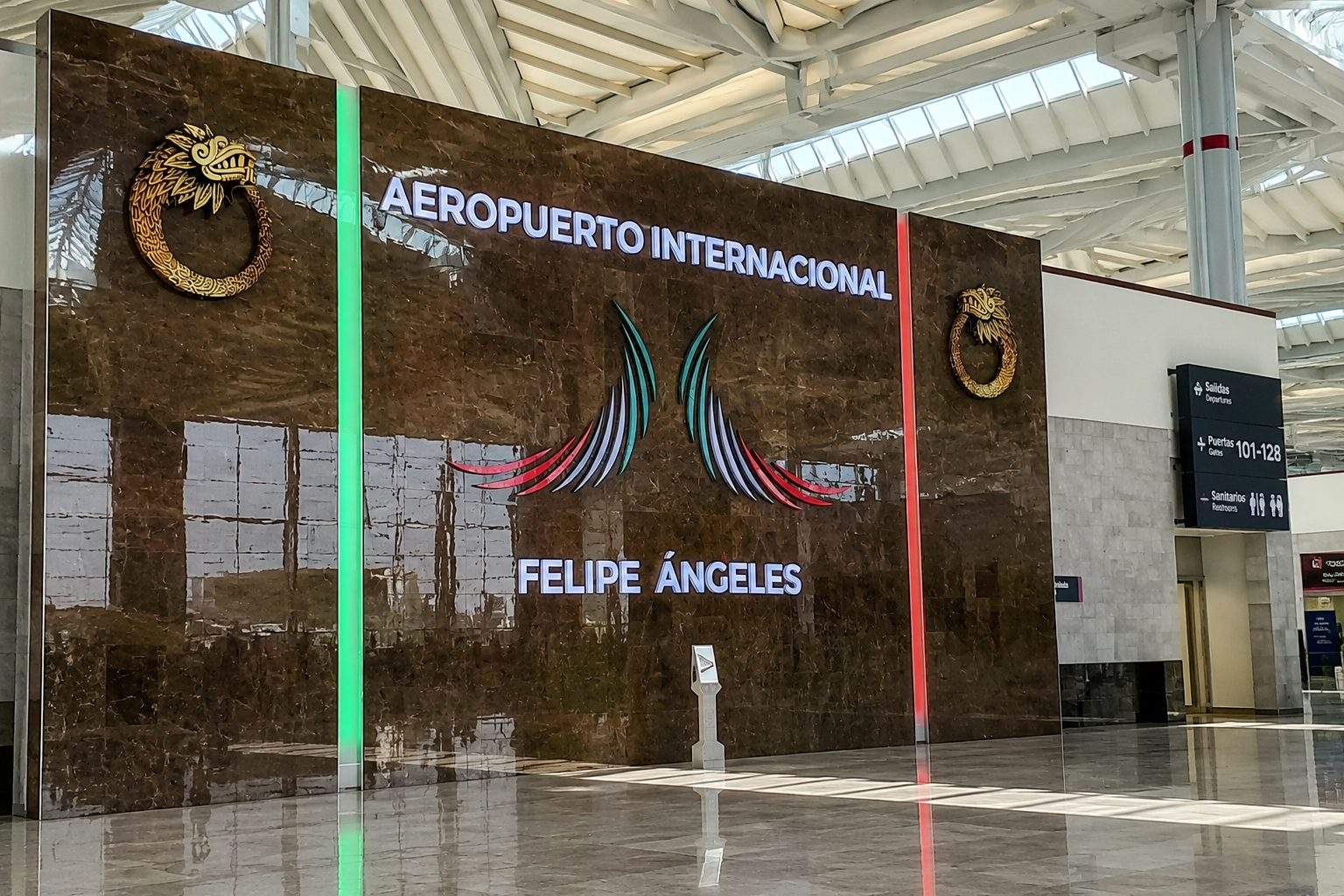
Felipe Ángeles International Airport entered Mexico’s top 10 for international passengers in June. However, the more significant indicator for investors was movement in listed airport portfolios rather than the ranking itself. OMA increased, while GAP and ASUR saw declines.
The division is significant. While World Cup tourism increased passenger numbers at some host city airports, the overall performance of the broader network was sluggish. Sharp drops at resort locations offset improvements posted by Guadalajara and Monterrey.
AIFA is managed by a company controlled mainly by the state and overseen by Mexico’s defence ministry. The airport itself is not publicly listed. To access airport investments, investors turn to OMA, GAP and ASUR.
| AIFA traffic measure | June or H1 2026 | Comparison |
|---|---|---|
| International passengers in June | 35,898 | Up 20.1% from a year ago |
| Total passengers in June | 595,191 | Increased by 9.3% |
| International portion of AIFA traffic | 6.0% | As calculated |
| Percentage of Mexico’s international traffic | 0.8% | June |
| International passengers, January through June | 181,400 | Down 5.9% |
Published AFAC data was used to determine the 6.0% traffic mix.
The strong performance in June did not offset the six-month decline. The month saw an uptick of around 6,000 international passengers compared to the previous year. The cumulative shortfall for the first half stayed at about 11,400.
This indicates that June made up just about 35% of the shortfall accumulated up to May. The figure puts the World Cup headline in context. Ongoing demand for the route is now a larger factor.
Rank additionally exaggerates the scale of AIFA.
| Airport | June international passengers | Multiple of AIFA |
|---|---|---|
| Mexico City International | Roughly 1,430,000 | 39.8 times |
| Cancún | 1,353,772 | 37.7 times |
| Guadalajara | 531,900 | 14.8 times |
| AIFA | 35,898 | 1.0 time |
AIFA was largely geared toward domestic traffic. In June, international passengers accounted for just 6.0% of its total. Its ranking in the top 10 thus stems from an increase off a low starting point.
World Cup demand continued to generate a noticeable host-city effect. International traffic in Guadalajara increased by 11.5%. Monterrey recorded a 10.3% rise, and AIFA saw growth of 20.1%.
| Host-city airport | Total traffic change | International traffic change |
|---|---|---|
| AIFA | up 9.3% | up 20.1% |
| Guadalajara | up 6.0% | up 11.5% |
| Monterrey | up 0.3% | up 10.3% |
| Mexico City International | down 2.2% | up 1.5% |
The listed portfolios presented a clearer picture. Of the three groups, only OMA recorded expansion in June. Most of its growth came from the international segment.
| Listed operator | June passengers | Total change | International change | H1 total change |
|---|---|---|---|---|
| OMA NASDAQ:OMAB | 2,403,275 | up 2.1% | up 10.2% | up 2.4% |
| GAP NYSE:PAC | 4,916,500 | down 5.1% | down 9.1% | down 5.6% |
| ASUR NYSE:ASR | 5,642,870 | down 5.8% | down 10.0% | down 0.3% |
GAP characterized its monthly data as provisional. The operators manage distinct geographic portfolios.
OMA benefited from its composition of traffic. While Monterrey posted a modest 0.3% total increase, the number of international travelers climbed by 10.3%. Network-wide, international passengers at OMA were up by 10.2%.
OMA CEO Ricardo Dueñas stated the rise confirmed “a trend we have been driving for several years.” The company plans to invest 8 billion pesos in Monterrey airport from 2025 to 2030. OMA Airports Newsroom
GAP experienced a reverse portfolio effect. While Guadalajara increased by 6.0%, Puerto Vallarta dropped 18.7%. Losses were also recorded at Los Cabos and Tijuana, resulting in a 5.1% decrease across GAP’s network.
ASUR recorded the steepest decline among Mexican operators. Passenger volume at Cancún declined by 11.5%, with international traffic down 13.1%. Overall, ASUR’s Mexican asset base shrank 8.5%.
Last week’s coverage focused on AIFA’s position in the rankings. The next data point to watch will be July traffic figures. Given airlines’ typical early-month announcement schedules, these updates are the sector’s next likely catalyst.
Risks: World Cup demand and the launch of new routes supported results in June. The drop in international results for the half-year indicates the recovery at AIFA could lose momentum. Ongoing softness at resort airports is likely to impact GAP and ASUR as well.
Portfolio breadth continues to offer investors the clearest signal. Strategically, AIFA’s milestone carries importance. Nevertheless, June operating figures benefited OMA rather than signaling a broad-based recovery among Mexican airports.




![US Stock Market Today 08/24/2026 [UPDATE: 01:05 EDT] [Nasdaq Futures Slip as Overnight Chip Weakness Holds]](https://ts2.tech/wp-content/uploads/2026/08/US-market-dashboard-2026-08-24-0102-480x384.jpg "US Stock Market Today 08/24/2026 [UPDATE: 01:05 EDT] [Nasdaq Futures Slip as Overnight Chip Weakness Holds]")