
NEW YORK, August 23, 2026, 12:35 EDT
- Ongoing acquisition speculation is not supported by a confirmed bid and contradicts Citi’s denial from March.
- Citi’s $30 billion buyback approval amounts to 13.6% of its market capitalization.
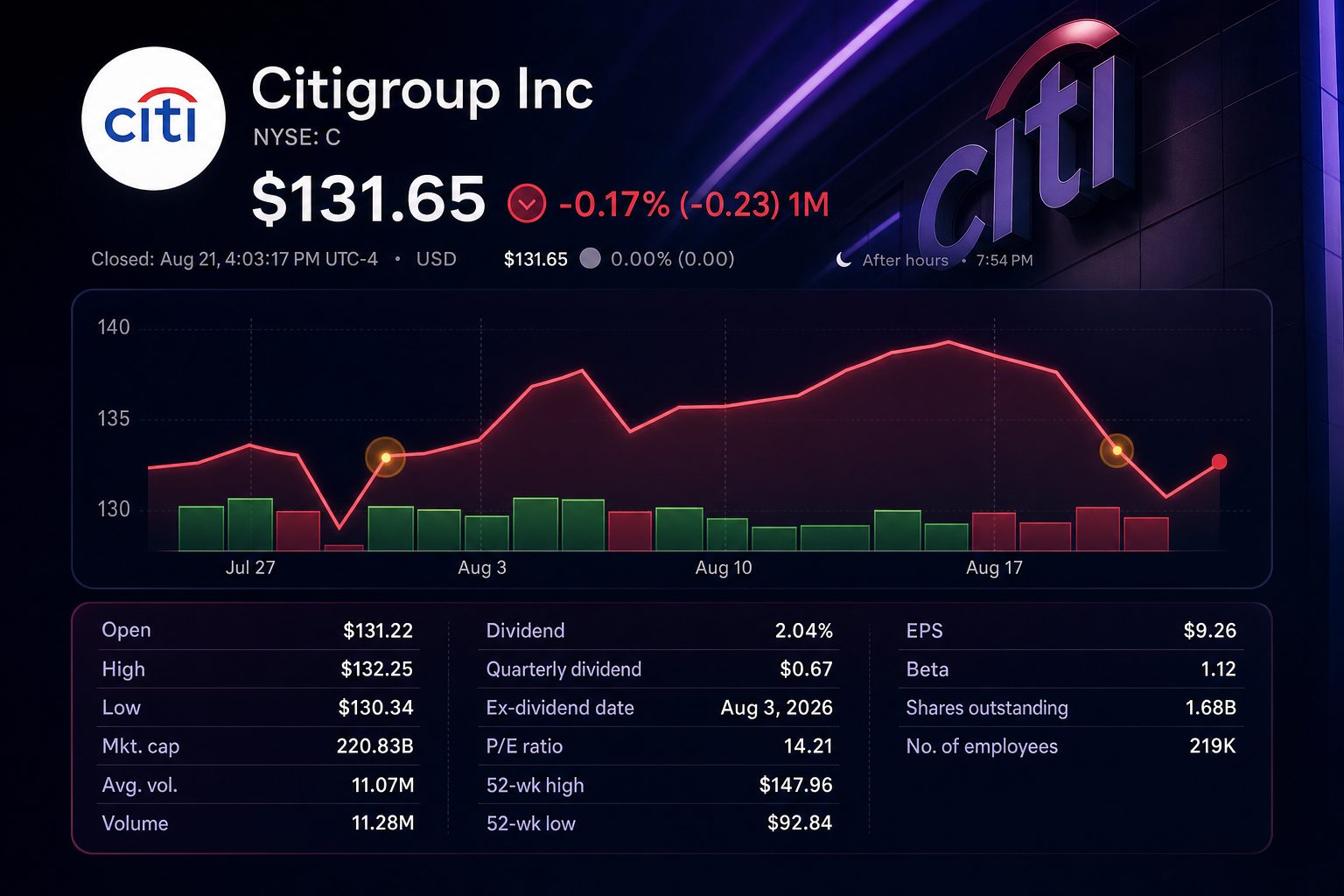
- Shares fell 5.5% during the week, even as they recovered 1.5% on Friday.
- The consensus price target of $154.50 from analysts points to a 17.4% potential gain from Friday’s closing price.
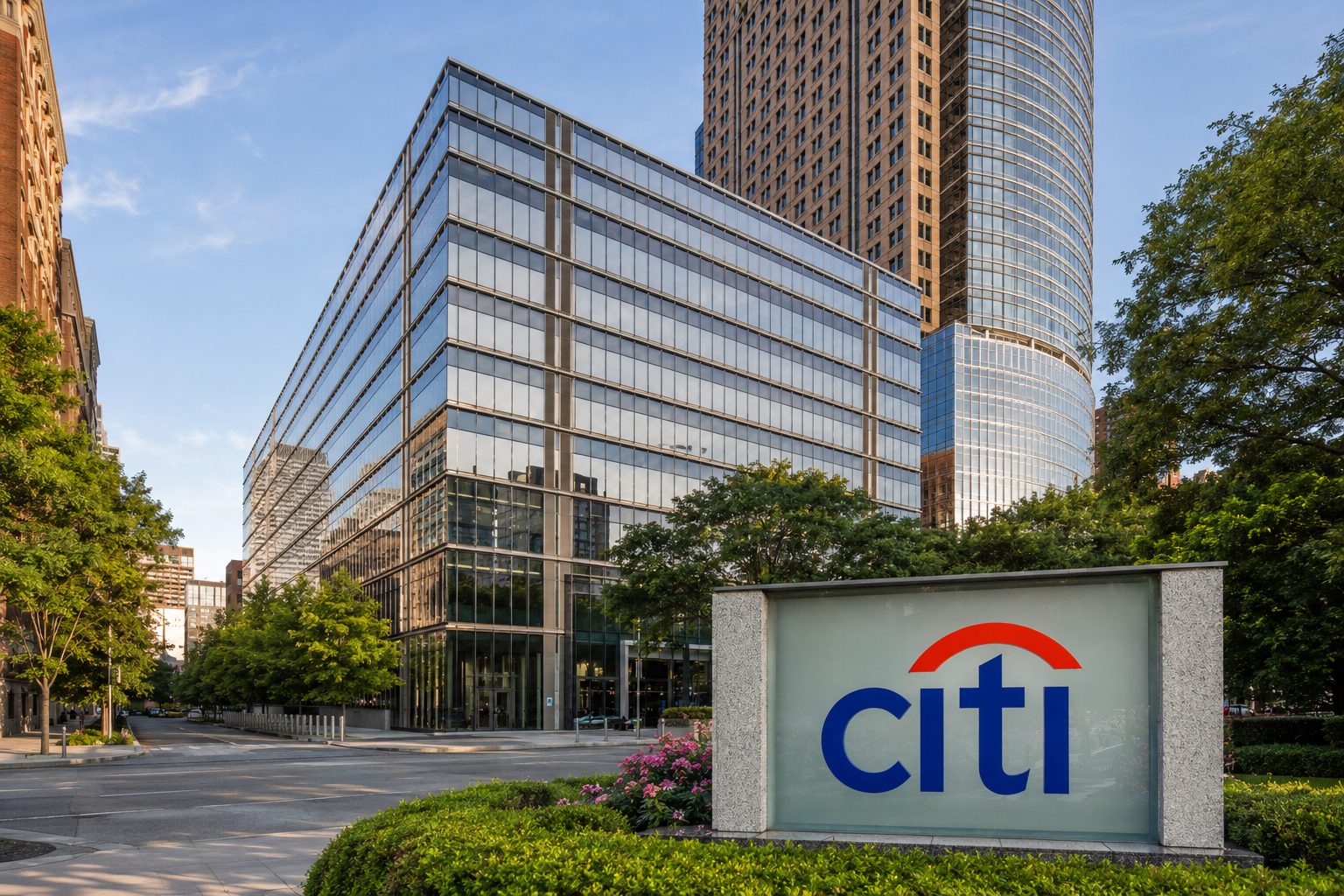
Citigroup Inc. NYSE:C started the week amid fresh speculation about a potential acquisition, though no confirmed deal has emerged. The latest rumors contrast with Citi’s most recent public comment. In March, the bank dismissed suggestions it was evaluating a regional bank purchase as “baseless speculation.” Reuters
The question for investors is not focused on any specific unnamed target. Instead, it centers on whether acquiring another bank would outperform Citi’s outlined capital return strategy. The ongoing Google Trends discussion points to potential major bank mergers as regulations become less strict, though no deals have been formally disclosed.
Citi has initiated a multi-year buyback program worth $30 billion. This figure represents 13.6% of the $220.83 billion market capitalization recorded on Friday. The difference stands out.
| Capital choice | Verified status | Investor scale |
|---|---|---|
| Buy another bank | No bid or target disclosed | Not specified |
| $30 billion repurchase | In progress | Represents 13.6% of market capitalization |
| Quarterly dividend | Increased 12% to $0.67 | Annualized yield near 2.0% |
| Q2 capital return | Finalized | Totaled about $5.0 billion |
The lender’s operational performance allows for flexibility. Revenue in the second quarter climbed 14% to $24.8 billion. Net income advanced 45% to $5.8 billion, and return on tangible common equity was 13.0%.
| Citi metric | Q2 2026 | Year-on-year change |
|---|---|---|
| Revenue | $24.8 billion | up 14% |
| Net income | $5.8 billion | up 45% |
| Diluted EPS | $3.15 | rises 61% |
| RoTCE | 13.0% | 430 basis points higher |
| Efficiency ratio | 57.4% | 530 basis points better |
| CET1 ratio | 12.8% | increased 10 basis points from prior quarter |
Citi’s quarterly revenue reached its highest level in ten years, CEO Jane Fraser said. She noted that increased earnings would help fund the raised dividend and share buyback. Around $5 billion was distributed via buybacks and dividends during the same quarter.
The valuation continues to reflect lower expected returns compared to rivals. Citi is valued at 1.30 times its tangible book value and 11.28 times forward earnings. JPMorgan Chase & Co. NYSE:JPM holds a much higher tangible-book multiple, underpinned by a 17.79% trailing return on equity.
| Large U.S. bank | Forward P/E | Price/TBV | Trailing ROE |
|---|---|---|---|
| Citigroup NYSE:C | 11.28x | 1.30x | 8.53% |
| JPMorgan NYSE:JPM | 14.57x | 3.13x | 17.79% |
| Bank of America NYSE:BAC | 12.40x | 2.08x | 11.20% |
| Wells Fargo NYSE:WFC | 11.28x | 1.81x | 12.58% |
The gap suggests prioritizing execution over expansion. Acquiring a bank may increase deposits and scale, but would bring integration expenses, credit risk, and regulatory scrutiny as Citi continues with its overhaul.
Citi maintains a solid capital buffer. Its CET1 ratio for the second quarter was 12.8%, exceeding the required 11.6%. The drop in capital under stress tests narrowed to 290 basis points, up from 320 basis points in the previous cycle.
However, shares saw limited interest in a new story last week. Citi ended Friday at $131.65, gaining 1.53% on the session. Despite this, the stock declined 5.5% compared to the August 14 close and remains 11.0% under its 52-week peak reached in June.
| Analyst / firm | Rating | Target | Implied move |
|---|---|---|---|
| Erika Najarian / UBS | Neutral | $142 | +7.9% |
| Glenn Schorr / Evercore | In Line | $135 | +2.5% |
| Gerard Cassidy / RBC | Outperform | $150 | +13.9% |
| John McDonald / Truist | Buy | $154 | +17.0% |
| Ebrahim Poonawala / BofA | Buy | $176 | +33.7% |
| S&P Global consensus | Buy | $154.50 | +17.4% |
Analyst sentiment stays optimistic, yet targets vary significantly. The average price target among 21 analysts is $154.50, while specific estimates range from $129 to $176, highlighting uncertainty regarding long-term returns and costs.
Citi is not set to report earnings this week. Investors will focus on any regulatory disclosures, a specific acquisition being identified, or management validation. Without those, buyback activity and increases in tangible book value continue to be the key metrics to track. Citi has its next earnings call scheduled for October 13.
Risks: Securing a solidly priced deal could potentially invalidate present doubts. On the other hand, increased costs, credit losses, regulatory expenses, or buybacks above tangible book value may reduce anticipated returns.
Related articles: NYSE:C