
TORONTO, Sept. 5, 2026, 9:12 p.m. EDT — Air Canada TSE:AC shares jumped 2.4% when its biggest-ever international expansion landed Thursday. They barely moved the next day.
That pause is telling. The route plan is ambitious, but investors have already seen higher sales swallowed by costs.
The airline plans more than 8% growth in international available seat miles next summer. Its Sept. 3 network announcement adds five destinations and seven routes across Asia, Europe and Latin America.
Air Canada closed Friday at C$28.72, one cent below Thursday. The stock gained 5.2% from Monday through Friday, based on daily closing data.
The announcement-day pop held
Air Canada closing price, Aug. 31 through Sept. 4
As of . Prices are unadjusted daily closes from the Financial Times market data service.
A narrow-body bet across the Atlantic
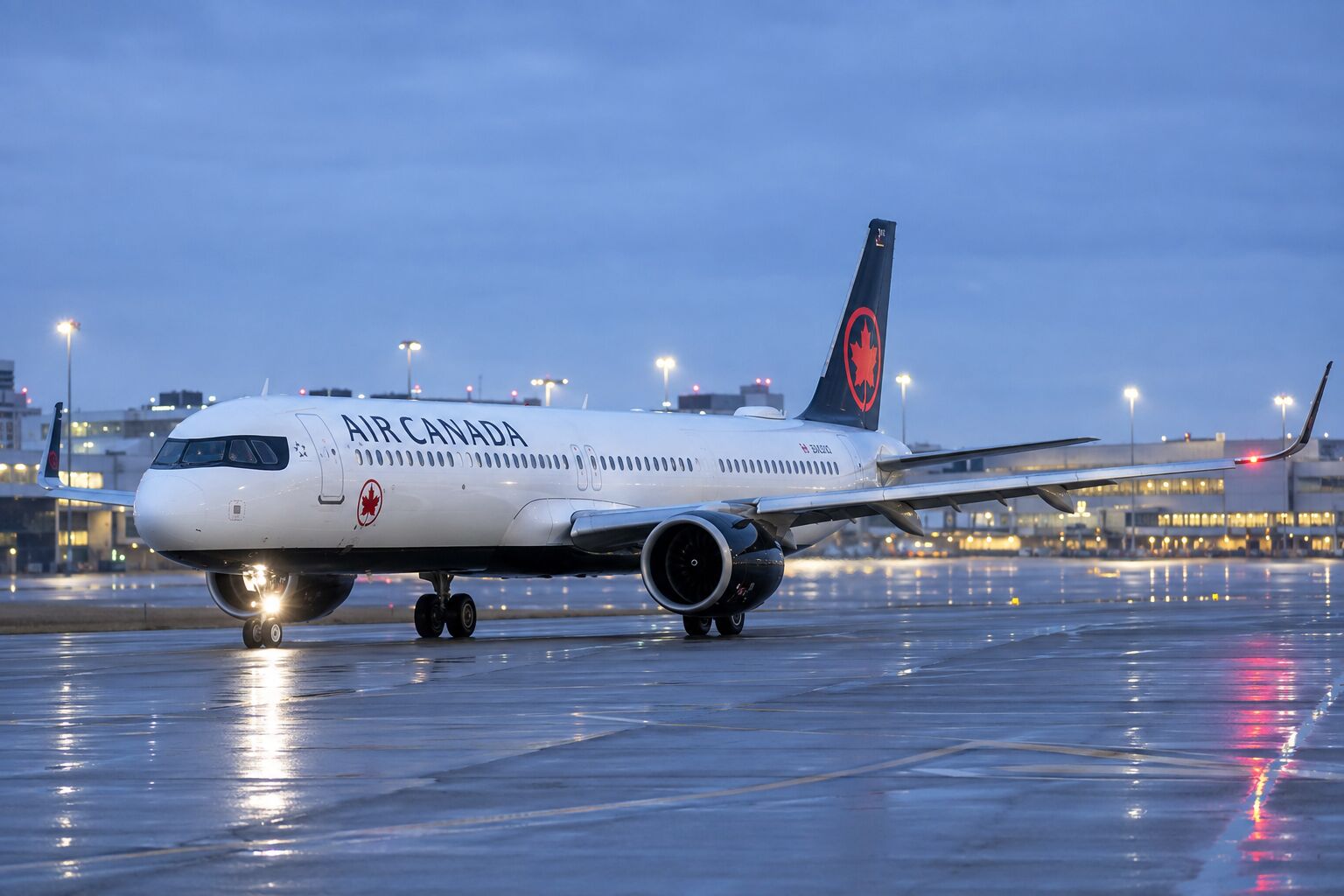
The aircraft math is straightforward. Four announced Airbus EPA:AIR A321XLR services account for 18 weekly outbound departures.
Toronto gets four weekly Oslo flights and three to Shannon. Montréal adds four to Basel, while a fifth daily Toronto-Heathrow flight supplies the other seven.
At 182 seats per aircraft, those departures offer 3,276 one-way seats each week. That is TS2 Tech’s calculation using Air Canada’s schedule and published cabin layout.
Where the A321XLR goes next
Planned summer 2027 transatlantic departures tied to the latest expansion
Seat total is a calculation, not company guidance. It excludes other aircraft and routes in the broader plan. Schedule source: Air Canada’s Toronto hub release and its global network announcement.
That capacity is small beside Air Canada’s promised 169,000 weekly international seats. Its importance comes from the routes it can make economical.
A321XLRs carry fewer passengers than wide-body jets. They can therefore open thinner long-haul markets without demanding the same daily passenger pool.
Airbus says the model burns 30% less fuel per seat than previous-generation competing aircraft. That is a manufacturer claim, not a guarantee of route profit.
Mark Galardo, Air Canada’s chief commercial officer, called summer 2027 “the most extensive intercontinental expansion in Air Canada’s history.” He separately told The Canadian Press that the airline wants to become “a true global airline.”
Revenue grew. The margin still went backward.
Air Canada’s latest quarter explains Friday’s caution. Revenue rose 11% to C$6.27 billion, yet the carrier recorded a C$215 million operating loss.
Adjusted EBITDA margin fell to 11.5% from 16.1%. Adjusted cost per available seat mile climbed 7.4%, although capacity barely changed.
The second-quarter squeeze
Year-over-year change, with capacity nearly flat
Bars use a common 12-point scale. CASM excludes fuel expense, Air Canada Vacations packages and freighter costs. Source: Air Canada’s second-quarter results.
Fuel added more pressure. Expense rose 49% as the average price per litre increased 51% to C$1.33.
Management cut its full-year adjusted EBITDA forecast to C$2.9 billion–C$3.2 billion. It now expects adjusted CASM to rise 5%–6% and free cash flow of C$200 million–C$500 million.
The next useful signal arrives in unit revenue
The expansion works if premium fares and connecting traffic outrun incremental operating costs. Full planes alone will not settle that test.
Route maturity takes time. New city pairs also add marketing, crew, station and disruption costs before schedules achieve their intended scale.
The balance sheet offers a cushion. Air Canada ended June with C$8.91 billion of liquidity, but long-term debt and lease liabilities totaled C$12.79 billion.
The risk case is broad. Fuel, currency moves, weak Canadian demand, unavailable aircraft or soft opening fares could erase the A321XLR’s efficiency advantage.
Toronto trading stays closed Monday for Labour Day, according to TMX Group. When the shares reopen Tuesday, investors should watch whether C$28.73 becomes support rather than a one-day vote for growth.
The more durable proof will come later. Air Canada must show that international passenger revenue per seat grows faster than the cost of putting that seat in the air.