
- Heavy Production Cuts: Industry sources (Nikkei/AppleInsider) say Apple has drastically cut iPhone Air orders, ramping down capacity by “more than 80%” into early 2026appleinsider.comindianexpress.com. One report says Air output is now at “end-of-production” levels, barely 10% below September’s paceindianexpress.com.
- Weak Demand: A KeyBanc survey found “virtually no demand” for the Air, prompting Apple to shift focus back to Pro/standard modelsinvesting.comindianexpress.com. iPhone 17 and 17 Pro sales are tracking strong, even exceeding expectationsindianexpress.comts2.tech. Analysts note the Air’s premium price and feature cuts (single rear camera, smaller battery) may be deterring buyersts2.techts2.tech.
- Stock Impact: Apple’s stock jumped to record highs (~$262 on Oct 20) on robust iPhone 17 salests2.tech, but slipped (~1–2%) when Air cut reports surfacedappleinsider.cominvesting.com. Wall Street is split on what comes next: bullish brokers (Loop, Wedbush, Wells Fargo) have pushed 12-month targets into the $290–$315 rangets2.techappleinsider.com, while cautious voices (Jefferies, consensus analysts) see only mid-$200 upsidets2.tech.
- Holiday & Long-Term Outlook: Some experts caution that early launch mix often favors Pro models, with mainstream models like Air picking up during holiday seasonappleinsider.com. Notably, AppleInsider observers predict the Air could gain traction in November/December sales surgesappleinsider.com. Meanwhile, reports of foldable iPhones and strong AI-service trends suggest Apple is banking on new innovations to reignite consumer interest.
Apple began informing its suppliers this week of new production plans: overall iPhone 17 output remains about 85–90 million units, but iPhone Air units will be sharply curtailed. A Nikkei/Verge scoop notes the Air’s share (originally ~10–15% of initial production) will be cut back dramatically from November onwardtheverge.com. Sources say Apple has ordered 5 million more base iPhone 17s and “significantly” more Pro models, reflecting higher-than-expected demand for the flagship variantsindianexpress.comtheverge.com. At the same time, Air component orders are being slashed. One supply-chain manager told the Indian Express that Air orders are now “end-of-production mode,” about 10% below prior forecastsindianexpress.com.
The production shift follows analyst Ming-Chi Kuo’s warning that iPhone Air sales “fell short of expectations,” causing suppliers to cut capacity by over 80% into early 2026appleinsider.comindianexpress.com. Kuo argues that Apple’s Pro and standard models already cover “the majority of high-end user demand”, leaving “little room” for a new niche phoneappleinsider.comnews.futunn.com. This echoes Apple’s past experiences: the “mini” and “Plus” iPhones similarly failed to find a foothold, and now the Air appears to be joining that list. KeyBanc analysts (Brandon Nispel et al.) noted in a note that survey respondents reported “virtually no demand for iPhone Air,” and a limited appetite even for foldable phonesinvesting.com.
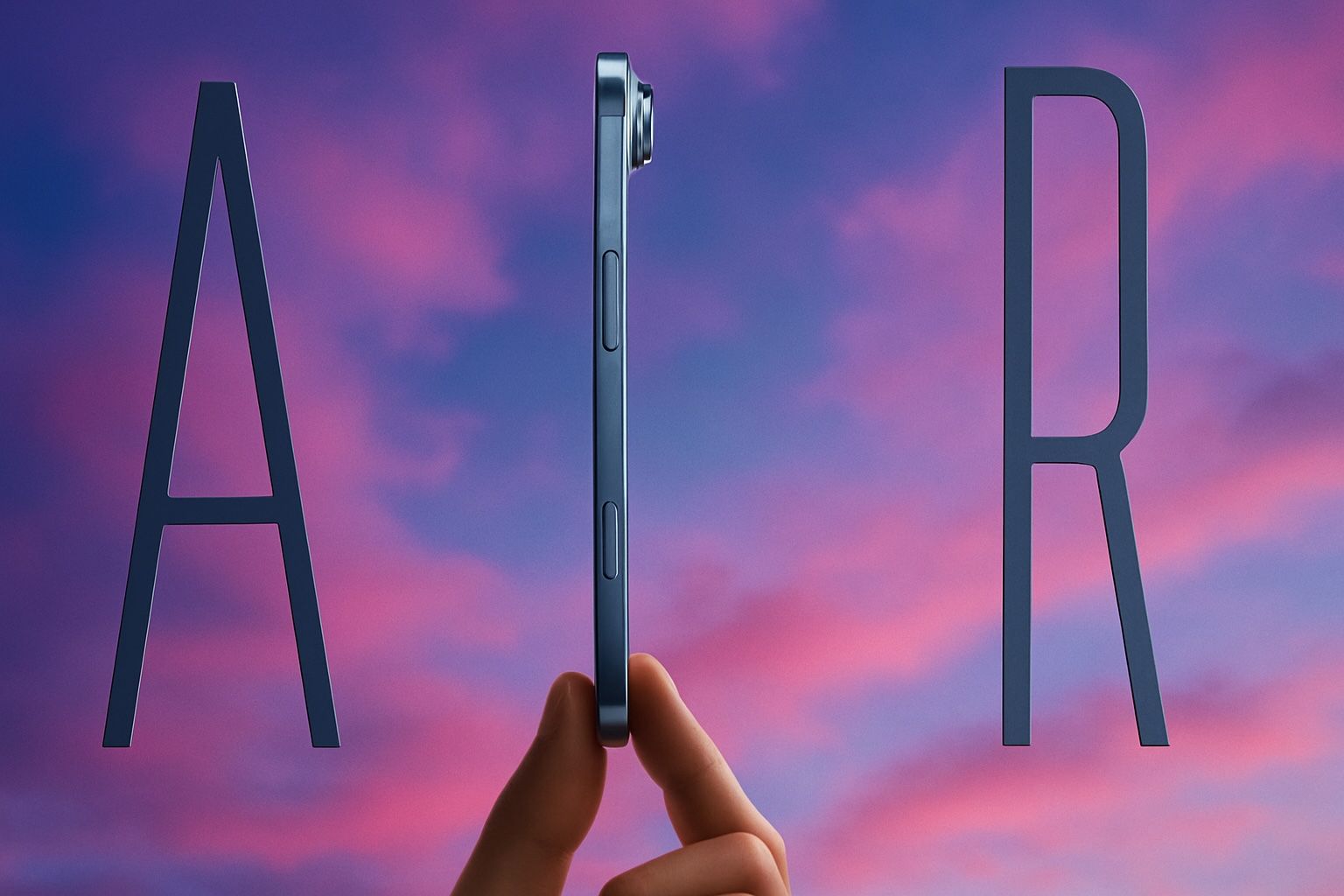
The iPhone Air is Apple’s thinnest-ever iPhone (just 5.6 mm thick) with a lightweight titanium framets2.tech. It trades some features for slimness. Unlike the dual-camera iPhone 17, the Air has only one 48 MP rear camera (no ultrawide lens), and its battery (≈3150 mAh) is smaller than the 17’s (~3700 mAh)ts2.techts2.tech. Apple positioned the Air as a premium mid-tier model, selling at $999 (256 GB) – $200 more than the base iPhone 17 and on par with last year’s Pro pricests2.tech. In effect, customers pay a premium for style (thinness and build) rather than extra camera or battery life. Experts now question if enough users will buy into that trade-off right away. As one tech review put it, “don’t read too much into reports… about low iPhone Air sales” in early weeks, since many buyers opt first for the bigger Pro modelsappleinsider.com. That review predicts the Air will grab some of the sales crown during the holiday rush, when broader audiences (e.g. family upgrade buyers) enter the mixappleinsider.com.
Despite the Air’s setback, the iPhone 17 launch has largely been a boon for Apple. Counterpoint Research data cited by analysts show iPhone 17 ten-day sales outpacing last year’s iPhone 16 by roughly 10–15%ts2.tech. One Ts2.Tech report notes Apple was “the only major brand to grow shipments in China” in Q3, helped by the value-oriented base 17 modelts2.techts2.tech. In fact, Apple’s stock has been riding that momentum: it briefly hit an all-time high (~$262) in mid-October as investors cheered the strong upgrade wavets2.tech.
In Wall Street’s view, this dichotomy – an otherwise “supercycle” of upgrades vs. one lukewarm product – sets up a mixed outlook for Apple. Bullish analysts have upped Apple’s price targets. Loop Capital just lifted AAPL to “Buy” with a $315 target on the back of the iPhone surgets2.tech. Wells Fargo similarly hiked its 12-month target to $290, forecasting a blockbuster Q4 (over $102 billion revenue, $1.79 EPS) thanks to iPhone 17 and the nascent “Apple Intelligence” featuresappleinsider.comappleinsider.com. Wedbush’s Dan Ives even called this a potential “golden era” for Apple and raised his target to $310ts2.tech. These bulls argue higher average selling prices (thanks to strong Pro sales and new products like MacBooks/iPad with AI chips) will keep Apple growing.
By contrast, skeptics note Apple’s lofty valuation (trading near 38–39× earningsts2.tech) and warn that a lot is already priced in. Jefferies just downgraded AAPL to “Underperform” with a $205 target, saying the stock already reflects “excessive expectations” about upcoming innovationsts2.tech. The Wall Street consensus target sits only in the mid-$250sts2.tech, implying limited upside from here. As one note observed, with Apple near all-time highs, “the stock is expensive and pricing in lofty expectations…lacking a bear case”investing.com.
The stock reacted modestly on Wednesday (Oct 22). Futures markets showed Apple down under 2% after hours, but it remains close to its peak. Supplier stocks saw bigger moves: on Asian markets Foxconn (Hon Hai) and related component makers fell sharply. Hong Kong-traded Foxconn Interconnect (FIH) dropped about 4.7%, and Hon Hai/Sea Me Tech slid over 3%, as news of Apple’s cutbacks sent ripples through the supply chainnews.futunn.com. (Even Q Technology – maker of camera modules – was off 4%.) All this underscores investors’ concern: if the Air experiment fails, can Apple reliably sell enough of its new device formats?
Looking ahead, analysts will watch Apple’s upcoming earnings and guidance (Q4 reports late October) for signs of how the Air news filters into the company’s financials. So far, KeyBanc’s findings suggest overall iPhone revenue should still beat estimates, with the drop in Air units offset by higher shipments of pricier modelsinvesting.com. In the nearer term, Apple may press ahead with encouraging festive sales of the Air – holiday marketing and carrier deals could help liquidate early inventory. Beyond that, Apple’s product roadmap may shift focus: rumors of a 2026 iPhone foldable and recent investments in AI-capable devices aim to spark fresh demand. As one analysis notes, Apple’s ability to “make AI mainstream” and introduce hit new form factors will be crucial if it wants growth beyond its flagship phonesappleinsider.cominvesting.com.
In summary, the iPhone Air’s rocky start has rattled some investors but not convinced everyone of doom. Production tweaks at launch are normal for Apple’s just-in-time modelappleinsider.comappleinsider.com. Yet if demand stays low, Apple will have to decide: double down on future thin/innovative designs or stick with what already sells. For now, pundits remain divided: some see Apple simply adapting its mix and bouncing back, while others warn that the Air stumble is a rare miss in an otherwise strong lineup. Investors will be watching closely to see whether holiday sales and next-gen products can turn this “Air” snag into just a minor blip – or signal deeper shifts in smartphone demand.
Sources: Industry reports (Nikkei, KeyBanc), AppleInsider, The Verge, Ts2.Tech, Investing.com, Indian Express, and market dataappleinsider.cominvesting.comts2.techappleinsider.comts2.techts2.tech. These reflect the latest updates (Oct 22–23, 2025) on Apple’s iPhone Air production, sales, and stock forecasts.
Related articles: NASDAQ:AAPL