
Copenhagen, June 9, 2026, 01:05 CEST
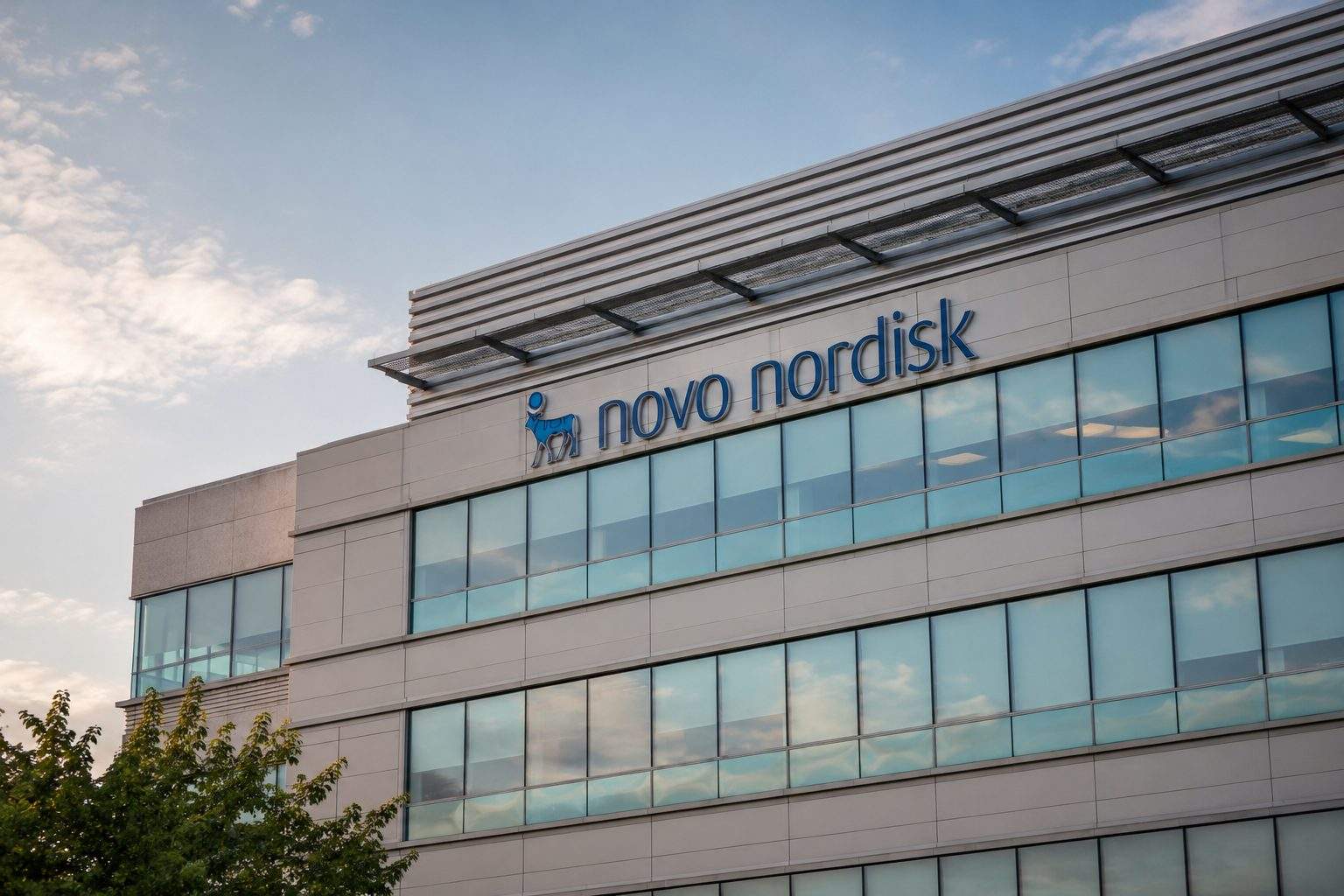
Novo Nordisk’s Copenhagen-listed B shares fell 4.2% to DKK 272.00 after Monday’s session, underperforming a 0.9% drop in the OMX Copenhagen 25, even as the Danish drugmaker reported another strong demand marker for its Wegovy pill. Its U.S.-listed shares were at $41.02, down about 4.6%.
Novo said Wegovy tablets had surpassed 3 million U.S. prescriptions since their Jan. 5 launch, equal to roughly one filled every five seconds. More than 80% of new prescriptions were for people new to GLP-1 therapy — drugs that mimic a gut hormone involved in appetite and blood-sugar control — suggesting the pill is bringing in patients rather than only switching existing users from injections. Jamey Millar, Novo’s U.S. operations chief, said patients and doctors were making “choices that fit their needs.” PR Newswire
That was not enough for the stock.
The point now is not whether oral Wegovy has demand. It does. The harder question is whether Novo can turn volume into enough profit while Eli Lilly presses its advantage in the wider obesity market and new rivals push into pills.
Lilly shares rose after the company presented data for retatrutide, its next-generation obesity drug, at the American Diabetes Association meeting in New Orleans. The lower 4 mg dose produced roughly 19% weight loss, and J.P. Morgan analyst Chris Schott said Lilly could be “further extending its leadership position,” while RBC analyst Trung Huynh said the depth of Lilly’s portfolio showed “leadership growing rather than a narrowing gap.” Reuters
AstraZeneca added to the competitive pressure. It said patients lost 10.5% of body weight after 26 weeks in a mid-stage trial of elecoglipron, a once-daily obesity pill, with the highest dose showing 11.8% loss after 36 weeks. Sharon Barr, AstraZeneca’s head of biopharma research and development, pointed to a “very low rate of discontinuation,” a key issue in a market where nausea and other stomach-related side effects often decide how long patients stay on therapy. Reuters
Novo also brought pipeline news. It said its once-weekly CagriSema combination met goals across three phase 3 diabetes trials, cutting HbA1c — a measure of average blood sugar — and body weight. Martin Holst Lange, Novo’s chief scientific officer, called the results “promising,” and said the drug could become the first amylin and GLP-1 combination therapy for type 2 diabetes. PR Newswire
Still, the stock’s reaction showed investors are ranking the data. Wegovy pill volume is helpful, and CagriSema may matter later, but Lilly’s broader obesity pipeline remains the comparison point.
Novo had regained some footing in May when the Wegovy pill’s first-quarter sales reached DKK 2.26 billion, almost double analyst consensus, according to Jefferies analyst Michael Leuchten. The company also narrowed its expected 2026 decline in adjusted sales and operating profit to 4%-12%, from an earlier 5%-13% drop.
But the risk is plain: large prescription counts may not become large revenue if patients stay on lower-priced starter doses or if discounts deepen. Barclays analyst James Gordon said last month the initial launch had gone “better than people thought,” but warned there were “quite a lot of moving parts,” including whether patients step up to higher doses. Novo has also warned of U.S. pricing pressure, competition and semaglutide patent expiries in some markets outside the United States. Reuters
The downside scenario is that Novo keeps winning scripts but loses the earnings argument. That would leave investors focused less on the headline prescription milestone and more on dose mix, net prices and whether Lilly’s next drugs reset expectations again.
For now, Monday’s tape gave a blunt answer. A big Wegovy pill number helped the story. It did not settle it.
Related articles: Pharmaceuticals