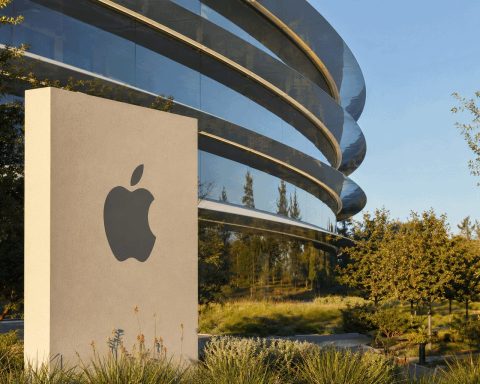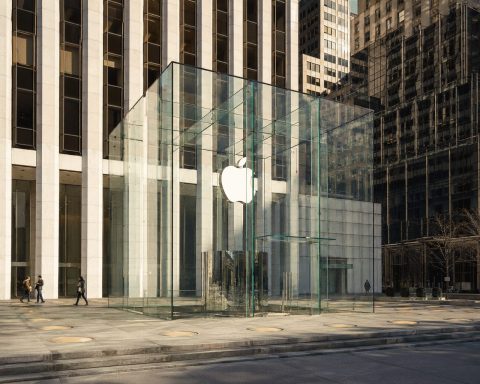

Apple Inc. (NASDAQ: AAPL) heads into the Christmas holiday trading week with shares ending Friday, Dec. 19, 2025 at $273.67 and a market capitalization of about $4.04 trillion, keeping the iPhone maker firmly in mega-cap territory and among the market’s most influential stocks.
But the next five sessions won’t look like a typical week on Wall Street. Trading is holiday-shortened—U.S. stock markets are scheduled to close early on Wednesday, Dec. 24 (1:00 p.m. ET) and remain closed Thursday, Dec. 25—which can compress liquidity, amplify headline-driven moves, and turn seemingly minor catalysts into outsized price swings for AAPL and the broader tech sector.
Below is what matters most for Apple stock in the week ahead (Dec. 22–26), including the latest regulatory developments, analyst forecasts, macro catalysts, and the technical setup traders will be watching.
Where Apple stock stands entering Christmas week
Apple’s current setup is a blend of “steady” and “sensitive”:
- Price: $273.67 (Dec. 19 close) StockAnalysis
- Market cap: ~$4.04T StockAnalysis+1
- 50-day moving average: ~269.52 (a commonly watched near-term trend level) StockAnalysis
- 200-day moving average: ~229.91 (longer-term trend support) StockAnalysis
- RSI: ~48.95 (roughly neutral momentum) StockAnalysis
In plain English: Apple is not flashing extreme “overbought” signals right now, but it’s close enough to key trend levels (like the 50-day) that a macro jolt—or a regulatory headline—could matter more than usual during a low-volume holiday week.
The market backdrop: “Santa rally” hopes meet AI jitters and rate uncertainty
Apple rarely trades in isolation, especially at a ~$4T valuation. It behaves like a company and like a “market factor” because of its weight in major indexes.
Reuters’ week-ahead preview captured the two crosscurrents that have been moving U.S. equities into year-end:
- Scrutiny of big spending tied to AI buildouts (investors asking when massive infrastructure outlays translate into returns)
- Shifting expectations for the Fed’s next moves in 2026 Reuters
That matters for Apple because big-cap tech valuations can react quickly to changes in discount rates (Treasury yields) and to sentiment swings around “Magnificent Seven”-style leadership.
Reuters also notes the seasonal “Santa Claus rally” statistic often quoted by traders—an average 1.3% S&P 500 rise over the last five trading days of the year and the first two in January, based on Stock Trader’s Almanac data—while emphasizing that year-end positioning and liquidity can still create turbulence. Reuters
The Fed factor: why interest-rate messaging still moves AAPL
Even without a Fed meeting this week, rate expectations remain a key lever.
On Dec. 21, Reuters reported that Cleveland Fed President Beth Hammack signaled she sees no need to change U.S. rates for months, with the benchmark rate currently in a 3.5%–3.75% range, and that she wants clearer evidence inflation is returning to target (while also flagging tariff-related uncertainty).
For Apple stock in the week ahead, this matters less as a “headline” and more as a setup: any surprise in GDP, consumer confidence, or jobless claims that changes bond yields can quickly spill into AAPL—especially when trading volumes are thin.
Analyst forecasts for Apple stock: targets drift higher, but the stock is already priced for execution
Analyst sentiment on Apple remains constructive, with price targets that cluster above (but not dramatically above) current levels—though the upper end remains aggressive.
According to StockAnalysis.com’s compilation of Wall Street forecasts:
- Consensus rating: “Buy”
- Average 12‑month target:$288.62 (about +5.46% vs. $273.67)
- Median target:$305
- Low / High target:$200 / $350 StockAnalysis+1
Recent notable target moves listed there include:
- Morgan Stanley: $305 → $315 (maintained Buy), dated Dec. 17, 2025 StockAnalysis
- Citigroup: $315 → $330, dated Dec. 9, 2025 StockAnalysis
- Evercore ISI: $300 → $325, dated Dec. 8, 2025 StockAnalysis
- Wedbush: $320 → $350, dated Dec. 8, 2025 StockAnalysis
What this implies for the week ahead: the analyst community isn’t signaling panic or broad downgrades. The bigger question is whether the market keeps rewarding Apple with a premium multiple into 2026—or demands more proof that AI features and Services resilience can justify it.
On valuation, StockAnalysis lists Apple at roughly 36.68x trailing earnings and 33.26x forward earnings. StockAnalysis Reuters similarly highlighted Apple trading around 33x forward earnings in the context of its mega-cap milestone earlier this fall.
That valuation doesn’t “predict” what Apple will do this week—but it does explain why rates, regulation, and sentiment can feel magnified: there isn’t much room for major disappointment.
The core Apple catalyst still lurking behind the scenes: iPhone demand and holiday-quarter execution
The biggest fundamental driver for Apple into year-end remains straightforward: iPhone demand and supply, plus what that implies for the holiday quarter.
In late October, Reuters reported Apple CEO Tim Cook forecast double‑digit year‑over‑year iPhone sales growth for the holiday-focused quarter and overall revenue growth of 10%–12%, citing strong orders for iPhone 17 models even amid supply constraints.
A few days earlier, Reuters also reported Apple briefly topped $4 trillion in market value as demand for its latest iPhones “revitalized sales,” noting early iPhone 17 sales outperformed its predecessor (citing Counterpoint data) and that investors were balancing iPhone momentum with questions about Apple’s AI strategy. Reuters
Why this matters for the coming week: you’re unlikely to get an official Apple “holiday sales update” between now and Friday. But the stock can still react to:
- third-party channel commentary,
- broader “AI trade” risk-on/risk-off moves, and
- any incremental regulatory headlines that touch the Services segment (where App Store economics are central).
Regulation is back in focus: EU pressure and Japan’s iPhone marketplace changes
1) Europe: developer groups renew pressure after DMA changes
Apple’s Services narrative is a strength—until regulation becomes the story.
Reuters reported that a coalition of app developers and consumer groups urged the European Commission to take action, arguing Apple’s revised App Store terms still amount to “exorbitant” fees after the Commission fined Apple 500 million euros for breaching the EU’s Digital Markets Act (DMA). Reuters detailed Apple’s revised fee framework with charges in a 13%–20% range (depending on conditions) and additional fees tied to outside transactions (reported as 5%–15% in the piece). Reuters
For AAPL investors, the near-term question is not whether the App Store goes away—it won’t. The question is whether ongoing enforcement actions compress Services margins or introduce uncertainty around Apple’s “rules of the road” across regions.
2) Japan: iPhone opens to alternative app stores under new law
Japan delivered an unusually concrete catalyst just days before the holiday week.
Reuters reported Apple has opened iPhones in Japan to alternative app stores to comply with new competition-focused laws. Under Apple’s new rules, Japanese developers can launch their own marketplaces and pay Apple as little as 5% on sales via those marketplaces; Apple also outlined commissions for other pathways, including 15% for certain external links and 26% for standard App Store purchases in the Reuters summary.
Apple’s own Japan-specific policy update adds more detail on its new framework—including commissions and fees for different transaction types and distribution methods, plus requirements like notarization/security checks.
Week-ahead angle: regulatory headlines can hit during thin liquidity. Even if the direct revenue impact is small near-term, the signal—more jurisdictions “prying open” the iPhone ecosystem—can influence how the market values Apple’s Services durability.
A quiet but notable sentiment factor: Berkshire Hathaway has been reducing Apple exposure
Another ongoing narrative investors still track is what major long-term holders are doing.
Reuters reported Berkshire Hathaway further reduced its Apple stake in Q3 2025, cutting holdings to 238.2 million shares from 280 million, while noting Berkshire had “shed nearly three-quarters” of the more than 900 million shares it once held (Apple remained Berkshire’s largest stock holding at the time). Reuters
This does not automatically translate into “bearish” week-ahead price action. But it’s part of the backdrop: with Apple so widely owned, marginal shifts in large-holder positioning can affect flows, particularly around year-end.
The week-ahead calendar: what could move Apple stock from Dec. 22 to Dec. 26
Even in a holiday week, the macro calendar isn’t empty—and several releases are positioned to move yields and tech multiples.
Market hours to know
- Wednesday, Dec. 24: U.S. stock markets close at 1:00 p.m. ET (bonds at 2:00 p.m. ET) Investopedia+1
- Thursday, Dec. 25: markets closed Investopedia+1
Key economic releases (and why AAPL cares)
Investopedia’s week-ahead preview highlights:
- Tuesday, Dec. 23: initial Q3 GDP estimate (a delayed release), plus durable goods, and other delayed industrial production/capacity utilization data, alongside the regularly scheduled consumer confidence report.
- Wednesday, Dec. 24:initial jobless claims.
Reuters also flags that GDP and consumer confidence are among the focal points for markets heading into the holiday stretch.
What to watch: In this environment, Apple stock may trade less on “Apple-only” news and more like a proxy for (1) rate expectations and (2) mega-cap tech risk appetite.
Technical setup for AAPL: the levels traders will likely reference this week
Without overcomplicating it, here’s the most commonly watched “dashboard” for Apple into a compressed holiday week:
- 50-day moving average (~269.52): a key short-term trend line StockAnalysis
- 200-day moving average (~229.91): the longer-term trend anchor StockAnalysis
- RSI (~48.95): neutral momentum, suggesting room for a move either direction if a catalyst hits StockAnalysis
In practical terms, a sustained move above the 50-day with falling yields can support a grind higher; a break below it during thin liquidity can trigger quick, mechanical selling (or at least a sentiment wobble).
Apple earnings are not this week—but the date still matters for positioning
While the coming week is about macro releases and holiday trading conditions, investors are already looking ahead to the next major “hard catalyst” on Apple’s calendar.
StockAnalysis lists Apple’s next estimated earnings date as Thursday, Jan. 29, 2026 (after market close).
This matters because any week-ahead move—up or down—can influence positioning and options activity heading into late January, especially if the market’s AI narrative heats up again.
Week-ahead scenarios for Apple stock: bullish, bearish, and “holiday range”
No one can reliably forecast five days of price action, especially in a holiday week. But the most realistic scenarios cluster around three paths:
Scenario 1: Santa-rally lift + stable yields (mildly bullish)
If GDP/consumer confidence don’t spook rates, and the market leans back into mega-cap leadership, Apple can benefit from the classic year-end “risk-on” bid that Reuters notes investors are watching for. Reuters
Scenario 2: Rates re-price higher or AI skepticism grows (bearish pressure)
If macro releases push yields up—or if AI spending worries flare again—Apple’s premium multiple can become a headwind even without any Apple-specific bad news.
Scenario 3: Choppy, low-volume range (arguably the “base case”)
With early closes and holiday absences, many traders expect range-bound action where intraday moves look dramatic but fade quickly—unless a regulation headline in Europe/Japan (or a surprise macro datapoint) breaks the calm.
Bottom line: what to watch first if you follow AAPL this week
If you only track a handful of signals in the week ahead, make them these:
- Tuesday’s macro burst (GDP, durable goods, consumer confidence) and what it does to yields Investopedia+1
- Regulatory headlines tied to App Store economics (EU DMA enforcement chatter) and distribution/payment rule changes (Japan) Reuters+2Reuters+2
- Holiday liquidity conditions (early close Wednesday, closed Thursday) that can exaggerate moves Investopedia+1
- Key trend references like the 50-day moving average near 269.5 StockAnalysis
- Analyst framing remains supportive overall (consensus “Buy”; median target $305), but valuation sensitivity is real at current multiples StockAnalysis+1
Related articles: NASDAQ:AAPL