
New York, May 21, 2026, 05:01 (EDT)
- Arm ended Wednesday at $256.73, up 15.05%. The stock traded as high as $259.44 during the session.
- Bernstein analyst David Dai started coverage at outperform, giving a $300 target. He pointed to demand for server CPUs used in agentic AI.
- U.S. markets were not open for regular trading in New York. May 21 is not an exchange holiday.
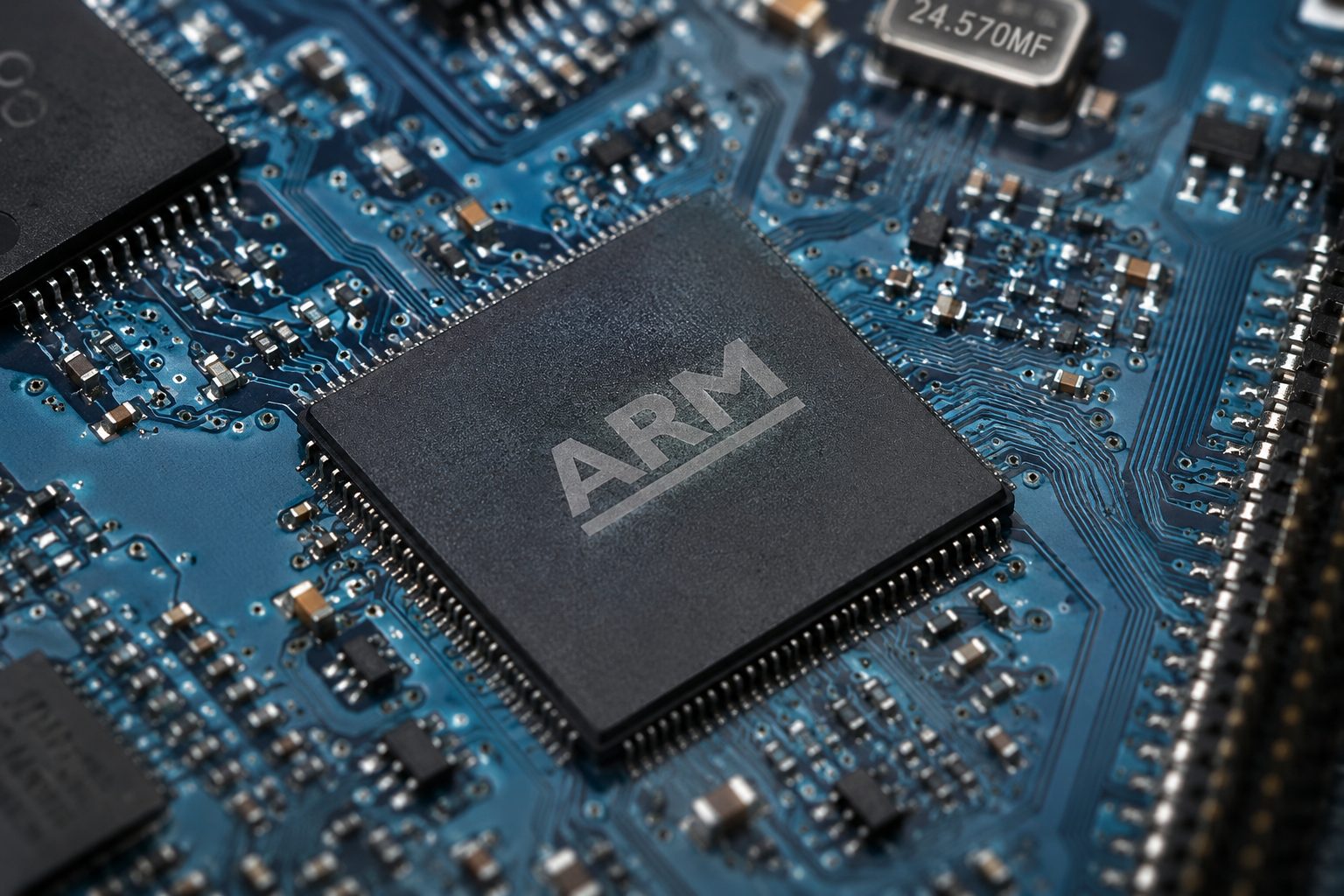
Arm Holdings’ shares are near record highs in Thursday’s premarket, after closing up 15% at $256.73 on Wednesday. The British chip designer’s Nasdaq-listed stock jumped as investors bet on more demand for CPUs in AI data centers. Arm hit an intraday high of $259.44.
AI stocks are broadening out from just Nvidia’s GPUs to other chips helping run data centers. Reuters said the Philadelphia SE Semiconductor index surged 4.5% Wednesday. Arm’s U.S. shares rose 15%, Astera Labs gained 17.7%, with chip names rallying ahead of Nvidia’s numbers.
New York’s cash market was still closed. NYSE’s holiday calendar shows Memorial Day, May 25, is the next market holiday in 2026, not May 21. That puts the Arm move back in play for regular trading on Thursday.
Bernstein’s David Dai started coverage on Arm this week with an outperform and set the price target at $300. Arm is “the center of the renaissance of CPUs,” Dai wrote, per MarketWatch. He said that agentic AI — which he described as systems able to do more without direct human input — could push server CPU demand up four times by 2030. MarketWatch
Arm is pushing into data-center silicon after years of licensing chip designs. In March, the company rolled out its AGI CPU, marking its first Arm-designed server CPU. CEO Rene Haas called it “a defining moment” for Arm, saying AI is changing how computing gets built. Arm Newsroom
Arm says the AGI CPU has over $2 billion in expected demand for fiscal 2027 and 2028. The company posted record fourth-quarter revenue of $1.49 billion this month. Arm also put out a first-quarter revenue forecast that’s just above Wall Street’s expectations. But the company pointed to weak smartphone demand and supply constraints for its new AI chip.
Arm CEO Rene Haas said in March the company expects its new chip to bring in about $15 billion in yearly revenue within five years, according to Reuters. “It’s a very pivotal moment for the company,” Haas said. He also said Arm got working test chips from Taiwan Semiconductor Manufacturing Co, which is making the chip on 3-nanometer tech. Reuters
Mixed signals for rivals. Intel and AMD have gained on bets that AI inference will drive more demand for their CPUs. Nvidia is still the main player. It guided for second-quarter revenue beating Wall Street and set an $80 billion buyback. Shares fell after-hours as traders looked at rival pressure and supply issues.
Arm’s shares have outpaced its sales growth. Reuters said earlier this month that Arm can cover the first $1 billion in demand for its new chip, but it hasn’t lined up more supply after that. Memory shortages are still hurting smartphone sales, which remain a main market for Arm’s designs.
Legal questions remain. Bloomberg News reported, via Reuters, that the U.S. Federal Trade Commission is looking into Arm’s licensing practices and possible monopoly moves in the semiconductor space. Arm would not comment on any probe. Qualcomm and Arm are also locked in a commercial fight.
Right now, the stock trades as if it’s making a shift from mobile-chip licensing to AI infrastructure. That’s what bulls are betting on. The question is whether Thursday regular hours will back up the move seen on Wednesday, or if the strong open just gives investors a chance to cash out.