
Singapore, June 8, 2026, 17:58 (SGT)
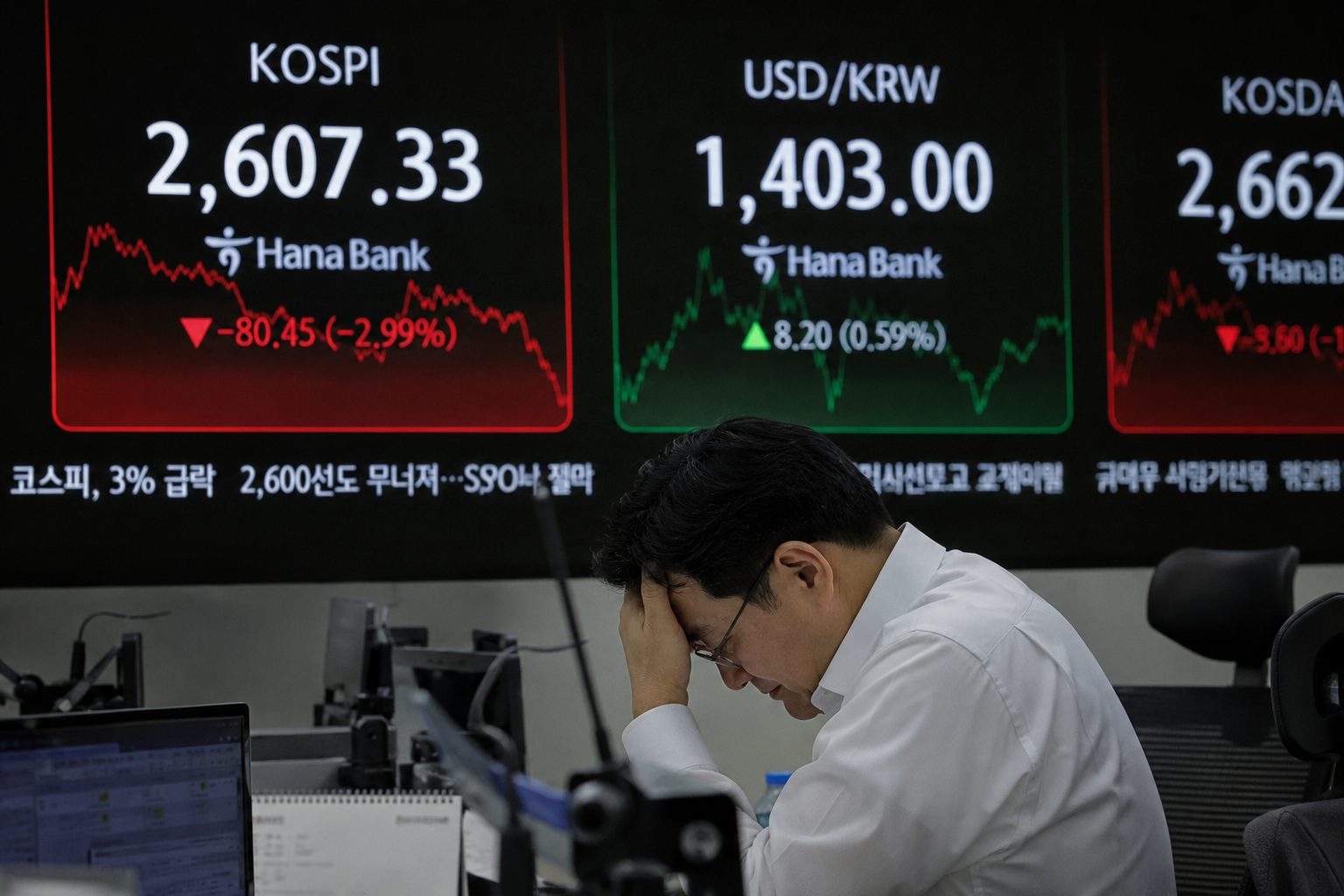
Asia stocks tumbled Monday. South Korea’s KOSPI slid 8.3% for the biggest loss in the region, as traders pulled back from AI chip names and oil climbed on new Middle East clashes. Japan’s Nikkei dropped close to 4%. Taiwan’s Taiex was off 3.5%. Hong Kong and Shanghai both ended lower.
Timing is key. This year, most of Asia’s gains have come from a handful of AI hardware names. That’s left the region’s indexes more vulnerable as traders weigh rates, oil, and valuations together.
Stocks sold off after a solid U.S. jobs number put Fed rate hikes back on the table, while oil prices jumped following strikes between Israel and Iran. “The market has gone a long way without a correction,” Lars Skovgaard, senior investment strategist at Danske Bank, said. Marc Velan, head of investments at Lucerne Asset Management in Singapore, described the move as a “positioning and momentum unwind.” Reuters
Samsung Electronics dropped 10.2% in Seoul, while SK Hynix slid 7.7%. The KOSPI tumbled at the open, hitting circuit breakers and halting trading as losses deepened. “Increased volatility is inevitable,” said Han Ji-young, analyst at Kiwoom Securities. She added that semiconductor earnings momentum was still strong. Reuters
Asian stocks kept falling. Reuters’ Asian markets page showed the Nikkei dropped 3.85% to 64,024.60. The Hang Seng fell 1.22% to 24,657.06. The Shanghai Composite gave up 1.70%. Brent crude pushed up 4.4% to $97.19. The U.S. 10-year Treasury yield was at 4.57%, still a headwind for high-growth names.
Concentration is the bigger problem here. Reuters says TSMC, Samsung, and SK Hynix make up nearly a third of the MSCI Asia Pacific ex-Japan index now. Bernstein Asia quant strategist Rupal Agarwal called this level of concentration risk in Asian stocks “never seen before.” Reuters
Crude’s climb dragged India into the risk-off move. The Nifty 50 and Sensex dropped early, pressured by weaker financial and IT stocks. “Near-term sentiment is likely to remain cautious” until tech shares, crude, and global markets settle down, said Hariprasad K, research analyst and founder of Livelong Wealth. Reuters
Dollar stayed close to a two-month high, with currencies under pressure. U.S. nonfarm payrolls climbed by 172,000 in May. The yen was steady near 160 per dollar, a level that keeps traders watching for moves from Japanese officials. “The U.S. labour market is strengthening despite the energy shock,” Jonas Goltermann at Capital Economics said. Reuters
Rate hike bets picked up. The CME FedWatch tool, tracking where traders see Fed policy, put the odds of a December hike above 70%, a jump from 45% just last week. Rising rates pressure growth stocks, cutting into the value of future earnings.
Australia stood out during the session, as the ASX cash market was shut Monday for the King’s Birthday holiday. There was no settlement.
The risk is the selloff could go beyond a single session’s clearing of crowded trades. Another strong U.S. inflation print this week, another jump in oil, or tougher talk from the Fed might push more selling in stocks that have already rallied. Goldman Sachs said steady activity and jobs numbers “lower the bar for a rate hike,” though the bank still isn’t expecting one. Reuters
But that isn’t the only scenario. If oil drops, U.S. inflation comes in below forecasts and chip earnings look solid, some fund managers could see Monday’s drop as a reset instead of a full stop to the AI trade. At this point, Asia’s most crowded trades are getting hit first.
Related articles: NYSE:TSM