
SINGAPORE, June 29, 2026, 03:32 SGT
- KOSPI dropped around 7% last week, though it’s still up 66% this quarter. Seoul remains the region’s most clear-cut AI-crowding test.
- China PMIs, Japan’s Tankan, and Korea export numbers all land before lower liquidity on the U.S. holiday shortens the week. Korea also starts a won trading trial.
- Hong Kong’s stock market doesn’t trade Wednesday for HKSAR Establishment Day. NYSE markets take Friday off for the Independence Day holiday.
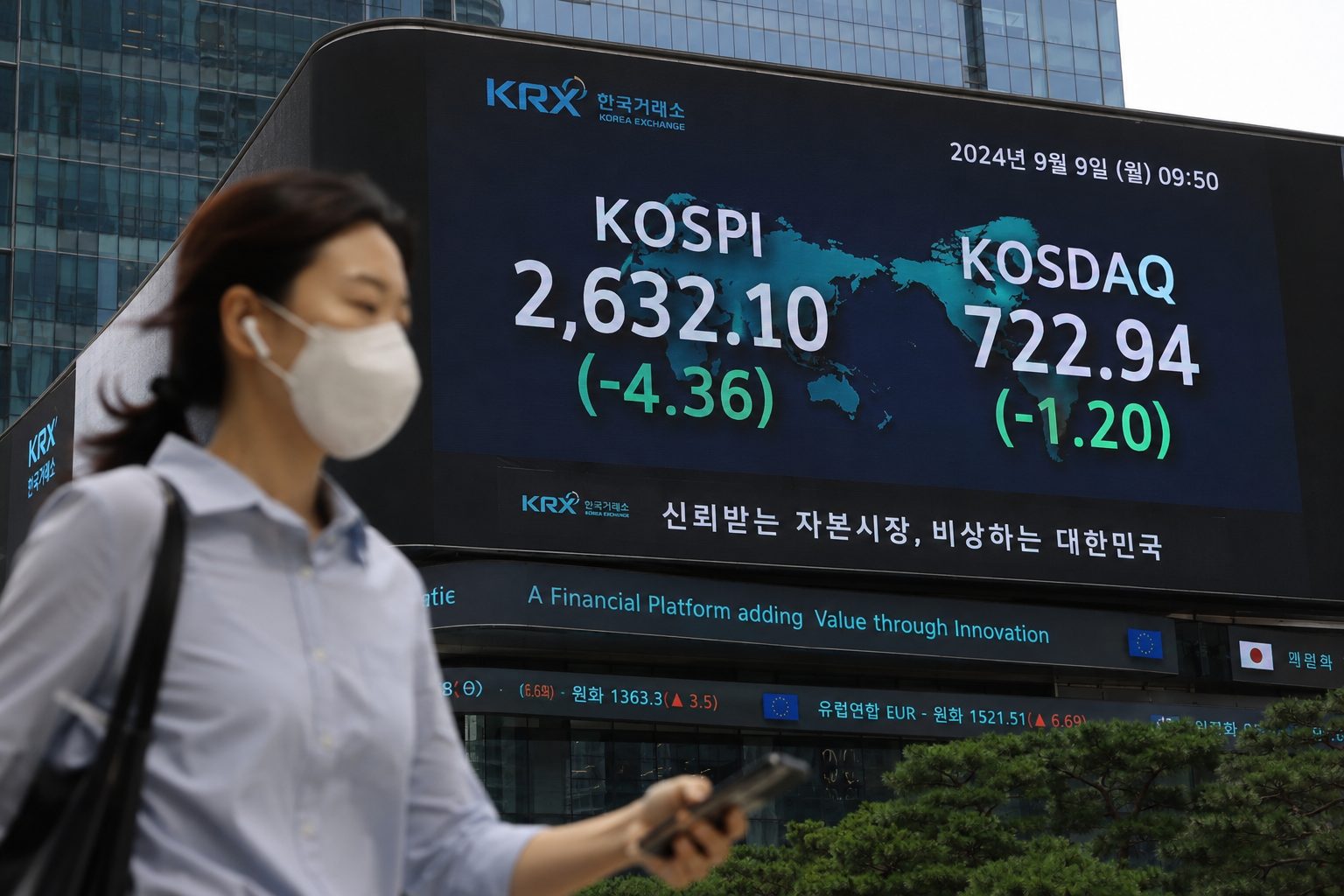
Asian stocks are opening the week with moves that look driven more by balance sheet space than by earnings news. South Korea’s KOSPI stands out: after falling about 7% last week, it’s still up 66% for the quarter and has nearly doubled this year, according to a Reuters snapshot. That split between a sharp drop and a still-high gain puts Seoul in focus as a sign of how much leverage might be left in the AI rally.
Asia got little help from global markets. The Philadelphia SE Semiconductor Index slid 7.7% last week, the biggest weekly fall since March 2025. MSCI’s broad Asia ex-Japan index dropped close to 3% on Friday. Mark Hackett, Nationwide’s chief market strategist, called it “a needed and healthy period of consolidation following the historic run since March” and “a dramatic rotation from tech and everything else.” Reuters
| Stress point | Latest read | Investor read |
|---|---|---|
| Korea | KOSPI dropped about 7% last week but still up 66% for the quarter | Positioning cuts may be showing up as macro selling |
| U.S. chips | SOX was down 7.7% last week | Asia chip beta is under pressure with the weaker U.S. tape |
| Seoul single-day break | KOSPI fell 9.99% Tuesday; Samsung Electronics Co KRX:005930 and SK Hynix Inc KRX:000660 both lost over 12% | Margin moves and ETFs now in the market price |
| China profits | May industrial profits rose 21.1% after April’s 24.7% gain | Investors want to see PMI strength outside electronics and upstream |
Seoul’s sharp move shifted Korea from a valuation story to a market-structure focus. Samsung Electronics and SK Hynix now represent over half of the country’s market value, Reuters said. “Volatility has blown out,” CLSA chief equity strategist Alexander Redman told Reuters. He said such swings need strong retail participation, with leveraged single-security ETFs “pouring fuel onto the fire.” Reuters
Market mechanics get an update this week as banks begin trials Monday for South Korea’s 24-hour won-dollar market. The official rollout is set for July 6. The won has hovered near a 17-year low, and Reuters said offshore investors have used the KOSPI bounce to sell and rebalance. “I’m seeing a significant increase in demand for won assets,” Hana Bank’s Namkoong Taehun said. He also warned, “We are afraid that our workload will increase significantly.” Reuters
Seoul’s policy-corporate mix remains dense. Samsung Group is planning a pledge of 1,000 trillion won, around $648 billion, over 10 years for chips, AI data centers, batteries, and displays, Reuters said. Top Samsung Electronics and SK Hynix executives will attend a meeting Monday. Kim Tae-yun, a Hanyang University professor, said: “Securing skilled workers will be extremely difficult in the southwest, and that will determine whether the project succeeds or fails.” Reuters
Kioxia Holdings Corp TYO:285A dropped 12% on Friday, losing its spot as the Nikkei 225’s most valuable stock after Reuters reported OpenAI had pushed back IPO plans. The chipmaker is looking at a stock split and might pursue an ADR listing. “Whether it’s April, May, or June is not yet clear, but we’re hoping to list… around that time,” CFO Yoshihiko Kawamura said. Reuters
The Bank of Japan will put out its June Tankan report at 8:50 a.m. JST on Wednesday, with the next policy meeting planned for July 30-31, the BOJ said. The numbers are in focus for stocks tied to the yen, after board member Naoki Tamura said the risks to prices are higher and the BOJ should hike rates “every few months” if its forecast holds. boj.or.jp
China gave investors the first major look at factory earnings. Industrial profits climbed 21.1% in May, after jumping 24.7% in April. Electronics and upstream names outperformed. Tianchen Xu, senior economist at the Economist Intelligence Unit, said, “As shipping through the Strait of Hormuz resumes and international oil prices fall, we should see a gradual recovery in downstream profits.” Official manufacturing PMI for May was flat at 50.0, with new orders at 49.9. Tuesday’s PMI needs to show more than just easing costs. Reuters
| Date | Event | Equity angle |
|---|---|---|
| Monday, June 29 | South Korea starts 24-hour won-dollar market trial; Samsung investment news expected | Korean market shifts to an FX and funding story, no longer just about indexes |
| Tuesday, June 30 | China official PMI, as on the National Bureau of Statistics release calendar | Cyclicals and Hong Kong names need signs demand isn’t stuck right at 50 stats.gov.cn |
| Wednesday, July 1 | BOJ Tankan; S&P Global PMIs for Japan, South Korea, China; Hong Kong stock market shut for HKSAR Day | Japan’s numbers hit yen and rates; Hong Kong cash stays offline one day pmi.spglobal.com |
| Thursday, July 2 | U.S. nonfarm payrolls lands a day early due to U.S. holiday week | Rates and the dollar take the last U.S. lead for Asia chips this week Reuters |
| Friday, July 3 | NYSE closed for Independence Day | Asia prices go into the Friday close without help from U.S. cash equities New York Stock Exchange |
AI spending is still strong. Australia’s Firmus Technologies has struck a deal with Nvidia Corp NASDAQ:NVDA to buy Nvidia gear and resell Nvidia cloud services. Reuters said Firmus plans to deploy 170,000 GPUs in Batam, Indonesia, starting in the first quarter of 2027 through early 2028. Co-CEO Tim Rosenfield told Reuters the deal is “closing that cost gap” for customers who need AI compute. Reuters
Funding risk is front and center, not just demand. The Bank for International Settlements flagged in its annual report that the AI boom is leaning heavily on debt and tangled funding setups. BIS general manager Pablo Hernandez de Cos said policy steps “must reinforce each other.” For Asian stocks, Thursday’s U.S. payrolls stand out as the last full macro input before Friday trading with no U.S. cash market lead. Reuters


![UK Stock Market Today 29/08/2026 [UPDATE: 08:49 BST] [Weekly Recap + Week Ahead: Midcaps Lead Before Bailey and Gilt Auction]](https://ts2.tech/wp-content/uploads/2026/08/UK-market-dashboard-2026-08-29-0843-480x384.jpg "UK Stock Market Today 29/08/2026 [UPDATE: 08:49 BST] [Weekly Recap + Week Ahead: Midcaps Lead Before Bailey and Gilt Auction]")