LONDON, July 28, 2026, 11:11 BST — Trading continues.
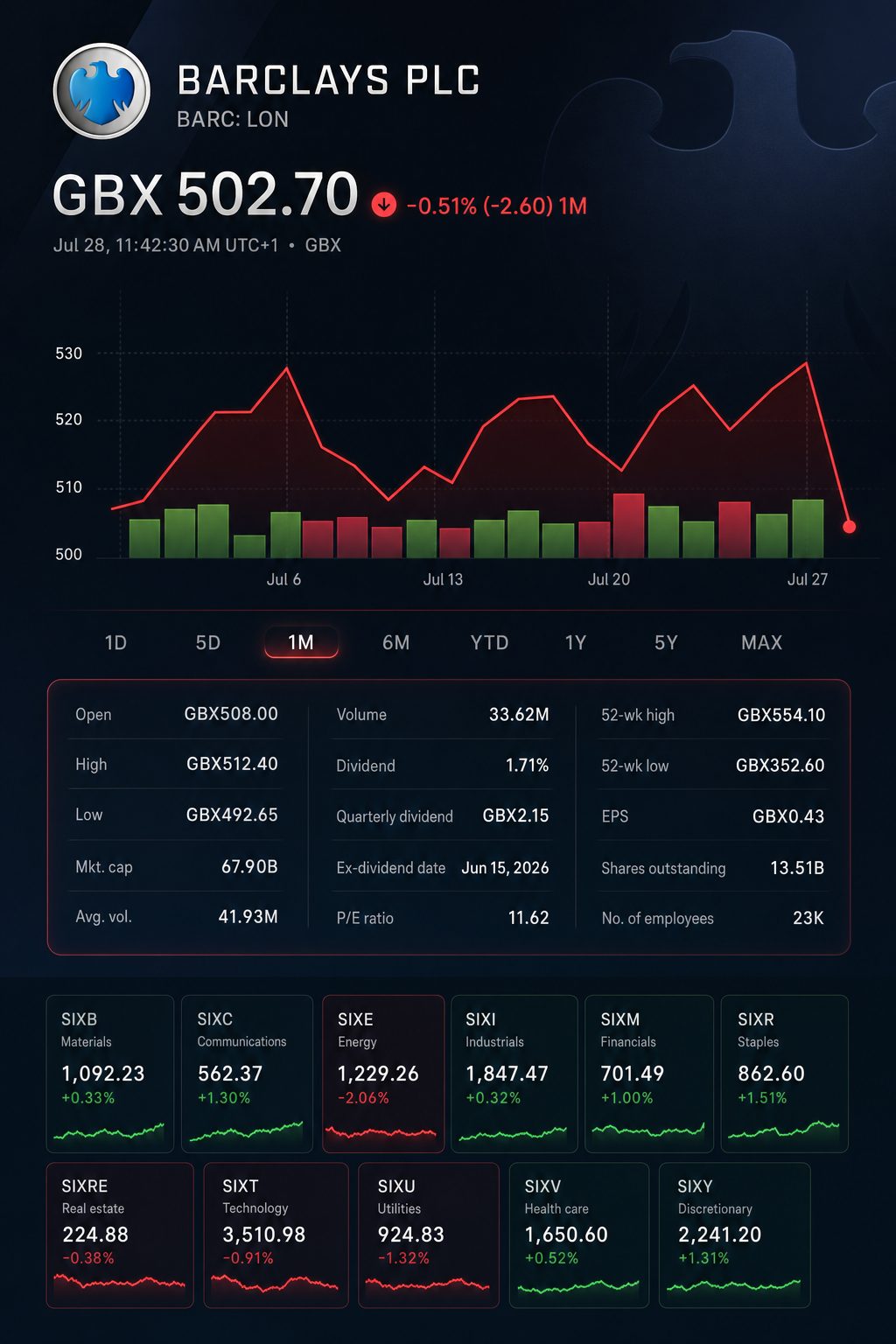
Barclays shares were at 502.5 pence, falling 5.26%, as of 10:48 BST.
Pretax profit for the second quarter surpassed consensus estimates by £132 million, while income came in £218 million higher.
A portfolio sale brought in approximately £225 million, topping the unexpected revenue boost.
Barclays shares dropped over 5% on Tuesday despite quarterly results topping expectations. Increased costs and a disposal gain undercut the earnings surprise.
Anticipation was high. The stock had risen by almost 50% throughout the past year.
The most definitive indication for investors emerged from the US consumer banking division. A gain of around £225 million from the sale of the American Airlines NASDAQ:AAL card portfolio was greater than the group income beat of £218 million. The difference in margin was narrow.
The comparison does not demonstrate that analysts disregarded the gain. It indicates the reported beat offered minimal margin apart from it.
The outlook for the bridge was similarly constrained. Barclays lifted its 2026 income forecast by £500 million to roughly £31.5 billion. Analysts highlighted £450 million in additional expenses for the second half. That figure accounts for 90% of the upward guidance revision.
Pretax profit for the second quarter climbed 31% to £3.252 billion. Income grew 16% to £8.338 billion. Return on tangible equity stood at 16.1%. Earnings per share were up 43%, reaching 16.7 pence.
Q2 measure
Reported
Consensus or forecast
Difference
Total income
£8.338bn
£8.12bn
Up £218m, or 2.7%
Operating costs
£4.514bn
£4.36bn
Increase of £154m, or 3.5% higher than expected
Pretax profit
£3.252bn
£3.12bn
£132m above forecast, or 4.2%
Share buyback
£1.00bn
£0.831bn
Surpassed by £169m, or 20.3%
The table brings together figures reported by companies and widely published consensus estimates. The percentages are derived from these data.
Costs were the soft spot. Operating expenses rose by 8.7%, coming in £154 million higher than expected. This overrun took up 71% of the positive income surprise when compared directly.
Chief Financial Officer Anna Cross stated: “We anticipate spending up to £300 million in structural cost actions.” An additional £150 million is linked to changes in investment-bank compensation. Reuters
Barclays lifted its forecast for net interest income. It now anticipates income, excluding the investment bank and head office, will exceed £13.7 billion. However, the target for the full-year cost-income ratio stays set in the high 50s.
Investment-bank earnings increased by 20% to £3.958 billion. Revenue from equities advanced 45%, trailing the 69% average reported by US competitors. Fixed-income trading grew 1%, compared to a 13% rise across the five leading US banks.
Capital returns beat expectations, with a £1 billion buyback exceeding the £831 million estimate. Barclays increased its interim dividend to 5.9 pence from 3 pence.
The CET1 capital ratio was 14.3%. Following the new buyback, it would decrease to 14.0%, which remains at the upper end of Barclays’ target range.
“Costs exceeded expectations, while income rose at a quicker pace,” said Matt Britzman, senior equity analyst at Hargreaves Lansdown. He noted that the investment bank handled most of the quarter’s main work. The Guardian
Pretax profit for the first half climbed 17% to £6.066 billion. Credit impairments were up 25% at £1.394 billion, which included a £0.2 billion charge related to a single-name in the investment bank.
Risks: A decline in trading revenue may occur should market volatility subside. Barclays UK contends with pressure on mortgage margins and potential changes in deposit levels. The lender projects its loan-loss rate to approach the upper end of a 50-to-60 basis-point band.
The buyback boosts returns per share. Tuesday’s decline signals investors continue to seek steadier growth and tighter cost discipline.
What caused Barclays shares to decline following results that beat expectations?
Barclays shares hovered around 505p at 10:25 UTC, showing a 4.75% drop. This fall occurred even after the company beat second-quarter profit forecasts by about 4%. Over the past year, shares had surged nearly 50%. Investors highlighted increased costs and trading growth lagging Wall Street competitors. Market expectations were already set high.
What was the size of the earnings beat?
Pretax profit for the second quarter stood at £3.252 billion, compared to a consensus of £3.12 billion. This marks a roughly 4.2% positive surprise. Quarterly income totaled £8.338 billion, coming in about 2.7% above consensus. First-half pretax profit surpassed the Reuters consensus by around 2%. Results came in solid but not significant enough to alter market expectations.
Does setting a higher 2026 income target allow sufficient margin for error?
Barclays increased its 2026 income forecast by £500 million to approximately £31.5 billion. Income for the first half had already hit £16.5 billion as of June, leaving an estimated £15.0 billion needed in the second half. The goal looks achievable, but trading income can be volatile. Management additionally raised guidance for non-investment-bank net interest income to above £13.7 billion.
Could increased expenses offset the higher revenue forecast?
Group operating expenses increased by 9% to £4.5 billion in Q2. Management highlighted an additional £500 million in costs expected in the second half, including up to £300 million tied to planned structural reforms. That £500 million figure coincides with the uplift in revenue guidance, but due to differing baselines, the effect on margins is unclear. Barclays continues to aim for a full-year cost-to-income ratio in the high 50s.
Is the investment bank capable of matching its results from the second quarter?
Income from investment banking rose by 20% in the second quarter to £3.958 billion. Equities revenue surged by 45%, while fixed-income trading saw only a 1% gain. Banking fees and underwriting revenue increased 32% to £747 million. The quarterly return on tangible equity improved to 16.0% from 12.2%. By comparison, US peers registered 69% equities growth and 13% growth in fixed-income. The sustainability of these results is highly influenced by market volatility and deal activity, both of which can wane.
Is there an increase in credit losses?
Credit impairment charges for the first half increased by 25% year-on-year to £1.394 billion. The loan-loss rate reported climbed to 62 basis points, including a £228 million charge attributed to a single investment-bank name. Reuters associated that exceptional provision with Market Financial Solutions. In the second quarter, loss rates moderated to 51 basis points. Management projects 2026 losses toward the upper end of its 50-to-60-basis-point target range. UK card 30-day arrears reached 0.9%, up from 0.7%, and remain on watch.
Is Barclays' UK banking business making rapid enough progress?
Barclays UK delivered a return on tangible equity of 20.4% in the second quarter. Net interest income grew by 8% from a year earlier to £2.0 billion. Overall income climbed 7%, with mortgage balances standing at £176.7 billion. Increased structural-hedge income served as a significant boost. However, changes in deposits and squeezed mortgage margins constrained broader progress. The franchise is gaining momentum, but investment banking continued to account for the earnings beat.
What is the significance of the latest share buyback and dividend announcement?
Capital distributions in the first half reached £2.3 billion, marking a 61% increase from a year earlier. The overall package features a £1 billion share buyback and dividends of roughly £800 million. The announced buyback surpassed analyst expectations of £831 million. At approximately 505p per share, the 16.9p payout corresponds to about 3.3%. The CET1 ratio stands at 14.0% pro forma post-buyback, remaining at the upper end of the management's 13%-14% target range. Further capital distributions are subject to earnings, regulatory developments and board approval.
Does Barclays remain undervalued following its rally over the past year?
Barclays is trading around 505p, equivalent to approximately 1.2 times its tangible net asset value of 423p. The share price reflects a multiple of about 12 times trailing earnings. Over the past year, the stock advanced by almost 50% before pulling back on Tuesday. In the first half, the bank delivered a 14.8% return on tangible equity, supporting a premium valuation to tangible book. Much of the rerating may have already taken place, and further gains will likely depend on sustaining returns, maintaining cost discipline, and keeping credit losses in check.
Jerzy Lewandowski is a senior markets editor at TS2.tech. His coverage ranges from stocks and semiconductors to AI and the broader global markets. He studied economics at the University of Warsaw and worked in investment analysis before becoming a financial journalist. Follow Jerzy Lewandowski on Google News.
A figure above or below the 12.0 consensus could impact Treasury yields, the dollar, and cyclical stocks by influencing short-term growth outlooks.
#2
NAHB Housing Sentiment
A reading above or below 33 will influence expectations for housing demand, mortgage rate trends, and homebuilder stocks.
#3
Fabrinet After the Close
Investors are focusing on revenue, margins, and comments on datacom as key factors for companies involved in optical networking and AI infrastructure supply chains.