
Big Tech stocks were mixed in early afternoon trading on Tuesday, December 16, 2025, as investors balanced a fresh U.S. jobs report, shifting expectations for 2026 interest-rate cuts, and the ongoing debate over whether AI infrastructure spending is a durable growth engine—or the next valuation trap.
Shortly before 1:45 p.m. ET (prices below reflect trades around 1:35–1:40 p.m. ET), the broader market was modestly lower while leadership inside Big Tech split into two camps: Tesla and Meta higher, Alphabet leading declines, and Nvidia hovering near flat-to-up as the AI narrative evolved again.
Big Tech stocks at a glance (early afternoon, ET)
Here’s where the core “Magnificent Seven” traded in the U.S. stock market in early afternoon action:
- Apple (AAPL): $272.64, -0.54%
- Microsoft (MSFT): $474.33, -0.10%
- Alphabet (GOOGL): $304.01, -1.37%
- Amazon (AMZN): $222.19, -0.16%
- Meta (META): $652.47, +0.77%
- Nvidia (NVDA): $177.04, +0.43%
- Tesla (TSLA): $477.98, +0.56%
For context, major market trackers were also lower-to-mixed:
- S&P 500 ETF (SPY): -0.62%
- Nasdaq 100 ETF (QQQ): -0.29%
- Tech sector ETF (XLK): -0.17%
- Magnificent Seven ETF (MAGS): -0.08%
The macro driver: jobs data, a “distorted” signal, and the Fed-cut tug-of-war
The day’s tone was set by the U.S. labor-market update—and by how much investors trust it.
Reuters reported that nonfarm payrolls rose by 64,000 in November while the unemployment rate increased to 4.6%, with analysts cautioning the report may be distorted by the effects of a recent government shutdown that complicated data collection.
That “noisy data” matters for Big Tech because megacap tech valuations remain highly sensitive to the path of real rates. On Tuesday, Reuters noted investors were pricing in at least 58 basis points of rate cuts next year, more than the 25 bps the Fed signaled previously, while also describing the market’s ongoing unease with lofty tech valuations. Reuters
In plain English: traders are trying to decide whether the economy is slowing enough to justify a meaningful easing cycle in 2026—without weakening so much that earnings expectations for the biggest growth franchises need to come down.
AI sentiment check: “bubble fears” vs. capex reality
The AI trade—still the central narrative in Big Tech—looked less like a straight-line momentum story and more like a cross-examination on Tuesday.
A Barron’s analysis highlighted that Nvidia is “walking the fine line” between AI bubble fears and the view that the spending cycle has years to run. UBS strategists argued fears are overblown and projected global AI capex rising from $423 billion in 2025 to $571 billion in 2026, with the AI market potentially reaching $3.1 trillion in revenue by 2030. Barron’s
That’s a meaningful backdrop for Big Tech investors, because the Magnificent Seven are both:
- the biggest buyers of AI infrastructure, and
- the biggest expected beneficiaries via cloud, ads, productivity software, and consumer devices.
The tension right now is whether returns on that spend will show up quickly enough to justify premium multiples—especially as markets reassess “AI at any price” positioning into year-end.
Stock-by-stock: what’s moving Apple, Microsoft, Alphabet, Amazon, Meta, Nvidia, and Tesla today
Tesla (TSLA): robotaxi optimism pushes the stock toward record territory
Tesla was one of the notable outperformers inside Big Tech, trading higher near the $478 level in early afternoon.
The bullish catalyst is familiar—and powerful: autonomy. Barron’s reported Tesla is nearing an all-time high as investors lean into optimism around its robo-taxi initiative, including CEO Elon Musk’s comments about testing robo-taxis without safety monitors. Barron’s also cited Mizuho raising its price target to $530, while Barclays remained more cautious with a $350 target, underscoring how wide the Street’s autonomy “confidence interval” remains. Barron’s
Why this matters today: in a market that’s slightly risk-off after macro data, Tesla’s ability to rally anyway suggests some investors are willing to pay for “company-specific upside” (autonomy milestones) rather than purely macro-driven multiple expansion.
Meta (META): relative strength and a market-cap reshuffle narrative
Meta was another standout, up roughly 0.8% in early afternoon trade.
Part of the story is positioning: a MarketWatch report noted that Meta regained the No. 6 spot among the largest U.S. companies by market cap (after Broadcom’s sharp pullback), and highlighted renewed optimism tied to reports that Meta may scale back metaverse investment. The same piece cited Morgan Stanley analyst Brian Nowak reaffirming an overweight view, pointing to Meta’s data, distribution, and AI capabilities.
For Big Tech investors, Meta’s day-to-day performance often acts as a “pure play” read-through on digital advertising sentiment—especially as AI reshapes targeting, creative, and measurement across platforms.
Nvidia (NVDA): AI bubble debate plus a strategic software acquisition
Nvidia traded modestly higher around $177 in early afternoon action.
Two Nvidia-related threads dominated today’s coverage:
- AI bubble fears vs. durable demand: As noted above, UBS argued the investment cycle still has legs, with large capex and revenue forecasts underpinning the “not a bubble” thesis. Barron’s
- Building the ecosystem, not just chips: Nvidia recently announced the acquisition of SchedMD, the company behind Slurm, a widely used open-source workload manager in high-performance computing and AI environments. Nvidia framed the deal as a way to strengthen the open-source software ecosystem supporting AI and research workloads.
The strategic point for investors: Nvidia is leaning harder into the “platform” narrative (hardware + software + developer ecosystem), which may help defend margins and relevance as competition intensifies.
Alphabet (GOOGL): down on the day, even as the data-center buildout expands globally
Alphabet was the weakest Magnificent Seven name in this snapshot, down about 1.4% around $304.
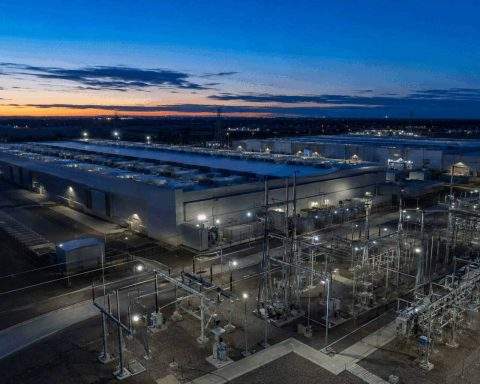
Still, today brought a notable Alphabet-linked headline in the AI infrastructure arms race: Reuters reported TotalEnergies signed a 21-year renewable power deal to supply Google data centers in Malaysia, reflecting the rising energy demands associated with AI growth and hyperscale expansion.
This kind of news increasingly matters to Google’s investment narrative because:
- the cost and availability of power can become a binding constraint on AI capacity, and
- long-duration energy contracting supports sustainability commitments while reducing volatility in long-term operating costs.
Apple (AAPL): iPhone lineup expansion reports collide with “chip-cost” headwinds
Apple traded modestly lower near $273.
Two Apple-related storylines stood out today:
- A bigger iPhone lineup is reportedly coming. Multiple market outlets circulated reporting attributed to The Information that Apple is planning an expansion of its iPhone lineup to seven models by fall 2027, up from five today.
- Smartphone demand in 2026 may soften due to component inflation. Reuters reported Counterpoint forecasts global smartphone shipments falling 2.1% in 2026, citing rising chip costs and supply-chain pressure tied to memory and AI-driven component allocation. Importantly for Apple holders, Counterpoint suggested Apple and Samsung are best-positioned to weather the environment compared with low-end handset makers.
The implication for Apple stock today: the market is weighing product-cycle optionality (more models, potentially more segmentation) against the risk that input costs and low-end demand erosion weigh on the broader handset ecosystem.
Microsoft (MSFT) and Amazon (AMZN): trading with rates and the “AI returns” question
Microsoft and Amazon were both slightly lower in early afternoon trade, broadly moving with the day’s macro tone.
Even without a single dominant company-specific headline at midday, both names sit at the center of what the market is debating right now:
- How quickly will AI pay back? Investors are increasingly focused on when AI infrastructure spending converts into sustained operating leverage (particularly in cloud).
- What does the Fed do next? With markets pricing a larger 2026 easing path than the Fed previously signaled—and with today’s labor data seen as potentially distorted—rate expectations remain a daily driver for megacap tech multiples.
For Microsoft, the stock’s near-term sensitivity often runs through “cloud growth vs. capex intensity.” For Amazon, the key swing factor remains AWS momentum and margins versus competition—especially as AI workloads change customer behavior and cloud pricing strategies.
A structural market shift Big Tech investors are watching: Nasdaq’s push toward near 24-hour trading
One of today’s most consequential “plumbing” stories for U.S. equities—especially for Nasdaq-heavy Big Tech—was Nasdaq’s move toward much longer trading hours.
Reuters reported Nasdaq is preparing to seek regulatory approval to move toward 23-hour trading, five days a week, with an eye toward launching in the second half of 2026. The proposed schedule would include a day session and a night session with a brief maintenance break, and would require upgrades across key infrastructure—including clearing—where the DTCC is working toward supporting continuous clearing by late 2026.
A second Reuters piece added that major Wall Street banks are preparing—often reluctantly—due to operational complexity, cost, and concerns about liquidity and volatility in overnight hours. Reuters also cited projections that only 1%–10% of U.S. equity volume may trade in extended hours by 2028.
Why this matters for Big Tech stocks: these are global brands with global shareholder bases, and they often react sharply to off-hours AI and regulatory news. More continuous trading could eventually change how overnight information gets priced—though liquidity quality will be the deciding factor.
What to watch next for Big Tech in the next 24–72 hours
The “Big Tech stocks today” story is ultimately being written by a blend of macro prints and AI narratives. The next catalysts that could reset sentiment include:
- More U.S. economic data (inflation and activity) and how it affects the market-implied 2026 easing path. Reuters noted business activity slowed to a six-month low and retail sales were unchanged in October, reinforcing the “cooling growth” theme investors are trying to handicap. Reuters
- Central bank decisions overseas (Bank of England, ECB, and Bank of Japan) and any spillover into global rates and FX, which can influence megacap revenue translation and risk appetite.
- AI infrastructure headlines (capex plans, supply-chain constraints, and power deals) that shape expectations for Nvidia and for hyperscalers’ margin paths.
This market update is for informational purposes and reflects publicly reported news and prices at the time noted. Prices and percentage changes can move quickly during the trading session.
Related articles: NASDAQ:META