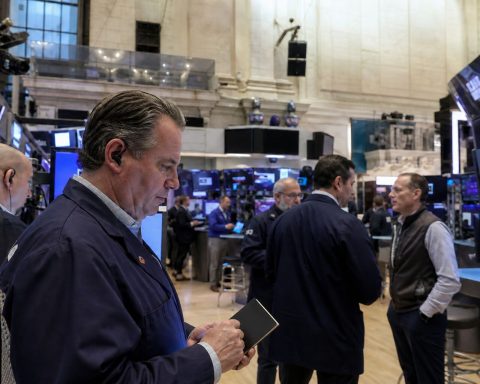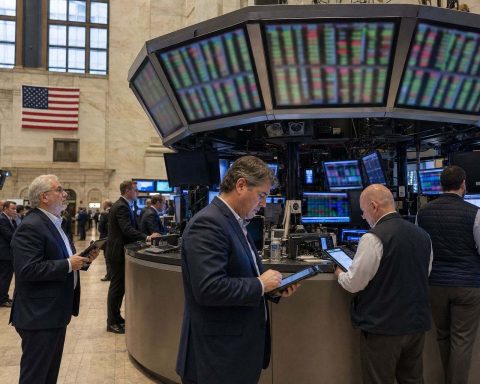

NEW YORK, September 1, 2026, 13:00 EDT — Wall Street’s midday rebound faded as higher oil prices and rising U.S. Treasury yields weighed on equities on Tuesday.
- At 13:00 EDT, the S&P 500 had dropped 0.64% to 7,636.95.
- The Nasdaq declined by 0.34% and the Dow slipped 0.43% in the last hour.
- Energy advanced 0.75%, whereas industrials and discretionary stocks declined roughly 1.6%.
U.S. equities gave up midday gains in the hour leading to 13:00 EDT. The S&P 500 fell to 7,636.95, a decline of 0.64%. Both the Nasdaq Composite and the Dow dropped around 0.82% 13:00 EDT index data.
The turnaround is significant because the decline extended past the initial drop at the open. WTI crude gained 1.34% after midday. The yield on the 10-year Treasury increased by 1.2 basis points.
By 13:00, the S&P dropped 0.30% over the past hour. The Nasdaq declined 0.34%. The Dow was down 0.43%.
Intraday path · change from prior close
Midday recovery breaks during the last hour
Unit: percentage change from August 31 close. Source: Yahoo Finance one-minute index data; TS2 calculations.
The main indexes stayed above their opening levels, with the exception of the Dow. The Nasdaq was up 0.50% from its 09:30 mark, while the S&P gained 0.10%.
Session loss versus the preceding hour
Red shows the move from Monday’s close. Amber isolates 12:00–13:00 EDT.
S&P 500
Nasdaq Composite
Dow
As of 13:00 EDT. Source: Yahoo Finance index data; TS2 calculations.
Oil remained under pressure. At 12:52, WTI traded at $89.51 and Brent was at $93.95, up 4.37% and 3.82% respectively from previous closes crude futures data.
The Strait of Hormuz saw a daily transit of 20.7 million barrels in 2024, amounting to roughly 20% of worldwide petroleum consumption, the U.S. Energy Information Administration reported.
Bond markets delivered the same signal. The 10-year yield stood at 4.780% as of 12:47, rising by 2.2 basis points. The VIX climbed to 15.95, an increase of roughly one point Treasury-yield data.
Inflation and risk gauges stay elevated
Changes are from the prior close. Source: Yahoo Finance market data; TS2 calculations.
New factory figures pointed to expansion with limited easing on prices. Manufacturing PMI for August came in at 54.6, a drop of one point. The prices index held steady at 71.1, and supplier deliveries increased to 59.3 ISM report.
ISM survey chair Susan Spence stated that manufacturing “remained in expansion territory, though it has lost ground in a number of key measures.”
The labor market showed weaker demand. Preliminary job openings for July totaled 7.271 million, compared with June’s revised figure of 7.182 million. The number of hires declined to 5.054 million, according to the Bureau of Labor Statistics.
Energy stood out as the sector with the strongest advance, up 0.75%. Staples increased by 0.54%. Industrials dropped 1.63%, and discretionary stocks fell 1.62%.
Defensive groups lead the sector split
Selected S&P sector ETFs, change from the prior close.
As of 13:00 EDT. Source: Yahoo Finance sector ETF data; TS2 calculations.
Ryan Isherwood at Significance Capital described energy as the “most effective” sector for defense. On the NYSE, decliners outnumbered advancers by 1.96-to-1, while on the Nasdaq the ratio was 2.2-to-1 at 11:31 Reuters.
Equal-weighted stocks underperformed as well. RSP dropped 0.88%, compared with a 0.65% decrease for SPY. IWM slipped 1.03%, indicating softness outside the megacap sector.
Trading activity increased as the market fell. By 13:00, SPY volume had climbed to 16.43 million shares, marking a 28.6% rise compared to the same time on Monday.
Apple (NASDAQ:AAPL) gained 2.79%. Microsoft (NASDAQ:MSFT) slipped 1.31%, while AMD (NASDAQ:AMD) dropped 2.61%. Increased borrowing costs pressured technology stocks sensitive to interest rates.
Risks: These intraday snapshots could change rapidly if oil or bond markets reverse, which might swiftly renew the rebound. New geopolitical developments may also worsen the downturn.
The next significant test arrives with Friday’s August employment report. In the meantime, oil prices and yields are acting as the quicker indicators. In the past hour, dip buyers have lost their grip.
Related articles: Commodities