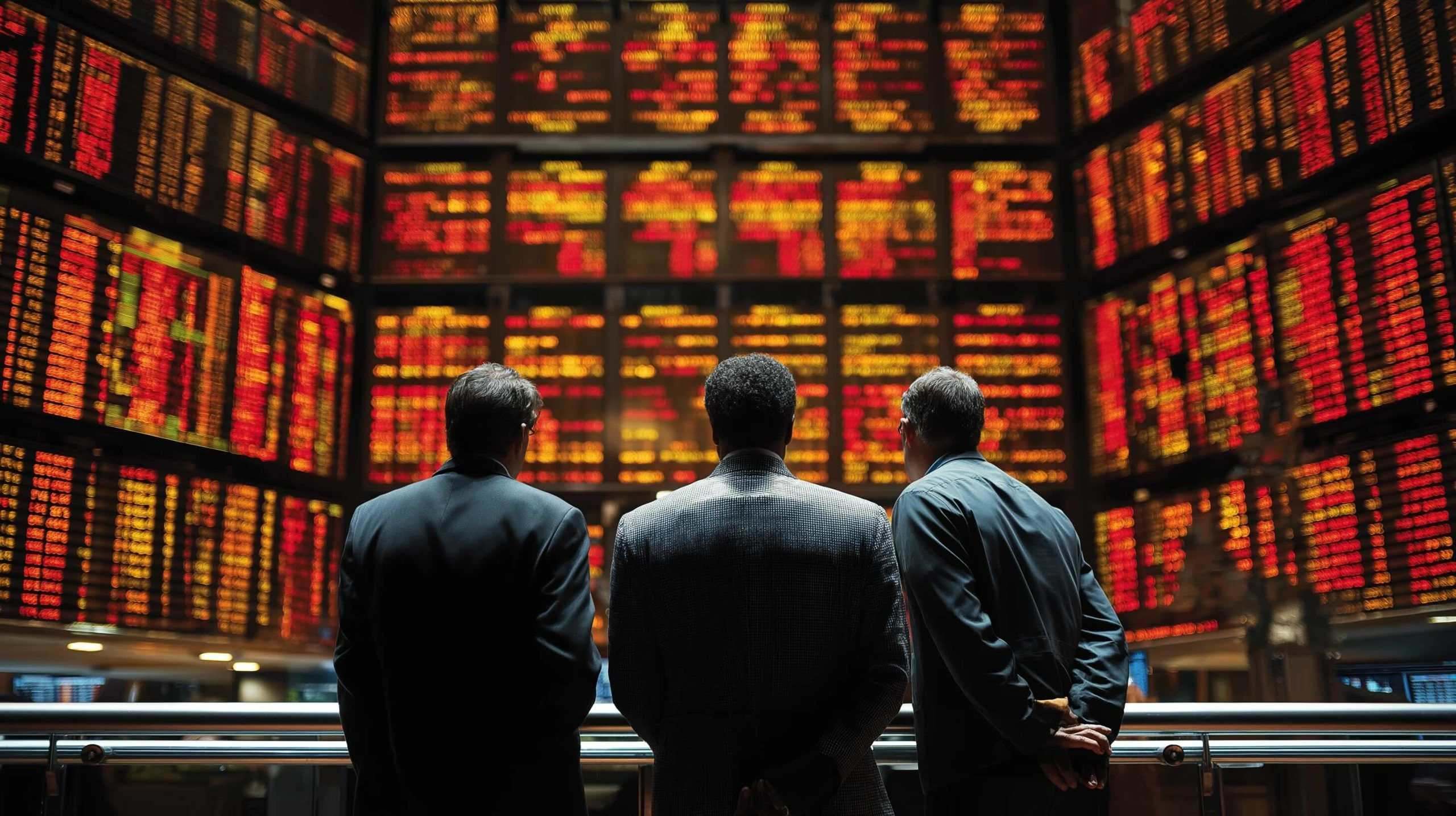
As Fed week begins, stocks around the world are wobbling just below record highs while a handful of heavyweight names suffer outsized losses. Here’s what sank Air Products, Marvell, Tesla, Netflix, Unilever and other global laggards in the latest completed sessions as of December 9, 2025.
Market recap: Fed jitters, sticky inflation and mega‑deals set the stage
Global markets are entering one of the most important weeks of the year. The U.S. Federal Reserve begins a two‑day policy meeting on December 9–10 that is widely expected to deliver a quarter‑point rate cut – the third this year – even though inflation is still hovering near 3%, above the Fed’s 2% target.
Because of a lengthy government shutdown that delayed key economic releases, policymakers are flying partially blind and leaning heavily on private data and regional surveys. That uncertainty is feeding into markets: futures imply an 80–90% chance of a 25‑basis‑point cut this week, but only a slow, uneven easing path in 2026.
In Monday’s U.S. session (December 8):
- S&P 500 slipped about 0.35% to 6,846.51
- Dow Jones Industrial Average fell roughly 0.45% to 47,739.32
- Nasdaq Composite eased 0.14% to 23,545.90
Technology was the only S&P 500 sector to finish higher, up about 0.9%, while communication services – home to Netflix and Warner Bros. Discovery – was the worst performer, dropping around 1.8%. U.S. 10‑year Treasury yields climbed to roughly 4.19%, adding pressure to richly valued growth stocks and rate‑sensitive “bond proxy” names.TechStock²+1
A similar pattern played out overseas:
- In London, the FTSE 100 dipped around 0.2%, dragged lower by a sharp sell‑off in Unilever and weakness in housebuilders and retailers.
- In Japan, the Nikkei edged slightly lower, but the real damage was in small‑cap growth and biotech names after a significant offshore earthquake and expectations of further Bank of Japan tightening.
- In Australia and Singapore, headline indices moved only modestly, but individual losers saw double‑digit percentage declines, especially among micro‑caps and highly speculative plays.
Against that backdrop, here’s a stock‑by‑stock breakdown of the biggest losers dominating today’s final closing‑bell wrap.
Top U.S. stock losers: APD, Marvell, Tesla, Netflix and more
1. Air Products and Chemicals (APD): Yara megadeal jolts investors
Move: roughly ‑9–10% on Monday, making APD the worst performer in the S&P 500.
Air Products and Chemicals became the day’s highest‑profile casualty after revealing it is in advanced talks with Norway’s Yara on two major low‑carbon ammonia projects:
- Yara could acquire ammonia facilities at Air Products’ Louisiana low‑carbon energy complex for $8–9 billion, while Air Products would continue to own and operate the industrial gas production, supplying about 80% of the low‑carbon hydrogen under a 25‑year offtake deal.
- A second agreement would make Yara the commission‑based marketer of ammonia produced at the NEOM Green Hydrogen project in Saudi Arabia that Air Products doesn’t sell directly as renewable hydrogen in Europe.
On paper, the partnership locks in long‑dated volume and cements Air Products’ role in global hydrogen and ammonia supply chains. But analysts highlighted a critical concern: Air Products keeps the price risk on NEOM ammonia while largely offloading volume risk to Yara. If ammonia prices fall, the company could see compressed margins even while volumes are secured.
That mix of capital intensity and commodity risk helped drive APD shares down more than 9%, their worst day since early 2024 and the steepest drop in the S&P 500 on Monday. The stock is now down over 17% year‑to‑date.
Longer‑term, many fundamental analysts still see structural tailwinds from hydrogen and low‑carbon fuel projects, but Monday’s move shows investors demanding a higher risk premium for capital‑heavy energy transition bets with uncertain returns.
2. Marvell Technology (MRVL): S&P 500 “snub” and AI competition worries
Move: about ‑6–7% on Monday.
Chipmaker Marvell Technology – a key supplier of networking and data‑center chips used in AI systems – was hit by a double blow:
- S&P 500 exclusion:
Late Friday, S&P Dow Jones Indices announced that Carvana, CRH and Comfort Systems USA will be added to the S&P 500, leaving Marvell on the sidelines despite being one of the largest eligible names by market cap.- A Reuters note highlighted that some analysts had expected MRVL to join the index after returning to positive GAAP earnings, which is one of the key eligibility criteria.
- Getting passed over means missing out on automatic index‑fund buying, a near‑term technical negative.
- Microsoft–Broadcom headlines:
Separate reporting indicated that Microsoft is deepening discussions with Broadcom around AI networking chips, a segment where Marvell has been pushing to grow. Traders interpreted this as a potential threat to Marvell’s share of hyperscaler AI spend, compounding the disappointment over the S&P 500 decision.
The stock, which had recently jumped more than 10% after announcing a $3.25 billion deal to acquire AI startup Celestial AI, is now down over 10% year‑to‑date, even as the broader Philadelphia Semiconductor Index is up more than 40%.
The fundamental story – exposure to high‑speed networking, custom ASICs and AI infrastructure – remains intact, but Monday’s drop underscores how expectations and index flows can overpower near‑term earnings trends in high‑beta tech.
3. Tesla (TSLA): New Morgan Stanley analyst hits the brakes
Move: roughly ‑3.4% to the low $440s on Monday.
Tesla’s slide came after a high‑profile shift at one of its most influential Wall Street cheerleaders:
- Morgan Stanley’s new Tesla analyst Andrew Percoco replaced longtime bull Adam Jonas and downgraded the stock from Buy to Hold, even as he raised the price target from $410 to around $425 per share.
- Percoco argued that much of the upside from Tesla’s AI, robotaxi and humanoid‑robot ambitions is already reflected in the stock, leaving a narrow margin for error at current valuations.
The downgrade landed after a strong run: Tesla shares are still up about 13% in 2025 and roughly 17% over the past year, and they’re trading several percent above Morgan Stanley’s new target. At the same time, fewer than 40% of analysts rate Tesla a Buy, and the average price target – around $400 – now sits below the market price, highlighting how divided the Street is.
Percoco outlined a wide range of outcomes:
- Bull case: valuation up toward the $800+ area if Tesla successfully scales robo‑taxis and humanoid robots, potentially starting mass sales around 2026.
- Bear case: a slide toward the mid‑$100s if EV competition, regulation and execution miscues cap growth and compress margins.
Monday’s drop reflects investors recalibrating toward a more balanced – and volatile – risk/reward profile, even as Tesla remains a core AI and EV bellwether.
4. Netflix (NFLX): Warner Bros bidding war rattles the stock
Move: about ‑3.4% on Monday.
Netflix has become the lightning rod for Wall Street’s biggest media story of the year: the battle for Warner Bros. Discovery (WBD).
- Netflix recently agreed to buy Warner Bros’ studios and streaming assets, including HBO and HBO Max, in a deal valued at roughly $72 billion in equity and about $82–83 billion in enterprise value, or around $27.75 per WBD share in a mix of cash and stock.
- On Monday, Paramount Skydance escalated the fight with an all‑cash hostile bid at $30 per share, valuing Warner Bros at about $108.4 billion and taking the offer directly to shareholders.
Warner Bros. shares jumped more than 4% on the possibility of a bidding war, while Paramount Skydance rallied on hopes of creating a Hollywood powerhouse. Netflix, by contrast, fell 3.4% as investors weighed:
- The risk of overpaying if it is forced to sweeten its bid
- Potential antitrust and regulatory hurdles, especially given comments from President Donald Trump that a Netflix–Warner tie‑up “could be a problem” for competition
- Execution risk in integrating a heavily indebted media asset with roughly $35 billion in debt into Netflix’s balance sheet and strategy.
Pivotal Research and other analysts have downgraded Netflix or cut targets, describing the deal as a high‑risk, low‑probability swing that could backfire if regulators balk or if streaming growth disappoints. Still, Netflix’s management insists the transaction is ultimately pro‑consumer and accretive over the long term.
For now, the stock is trading as a proxy for megadeal risk and regulatory uncertainty in global media, not just for its core streaming fundamentals.
5. Dollar General, Incyte, D.R. Horton, Fortinet, Clorox & Boston Scientific: under‑the‑radar S&P 500 laggards
Beyond the headline names, Smartkarma’s U.S. Market Movers list shows a cluster of S&P 500 constituents down between roughly 3.7% and 6.1% on Monday:
- Dollar General (DG) – about ‑6.1%
- Incyte (INCY) – ‑5.7%
- Erie Indemnity (ERIE) – ‑5.3%
- The Cooper Companies (COO) – ‑4.1%
- West Pharmaceutical Services (WST) – ‑4.0%
- D.R. Horton (DHI) and Fortinet (FTNT) – each around ‑3.9%
- Clorox (CLX) – ‑3.8%
- Boston Scientific (BSX) – ‑3.8%
Collectively, these moves underscore three themes:
- Rate‑sensitive cyclicals under pressure: D.R. Horton and other housing‑linked names are reacting to higher yields and a U.S. housing market entering what some analysts call a “great reset”, with slower price appreciation and easing but still‑elevated mortgage rates.TechStock²
- Healthcare and biotech volatility: Incyte and West Pharma remind investors that even profitable medical names can see sharp swings as drug pipelines, pricing and regulatory news shift.
- Defensive staples not immune: Clorox’s decline highlights that classic “bond proxy” staples can sell off when bond yields rise and investors question high multiples, even if earnings are relatively stable.
6. Biotech and China tech: Inhibrx (INBX) and Baidu (BIDU)
Two notable names from outside the mega‑cap universe also stood out on U.S. and ADR loser lists:
- Inhibrx Biosciences (INBX) fell about 5% to the low‑$20s. MarketBeat notes that the small‑cap biotech, which remains loss‑making on a GAAP basis, carries a “Reduce” consensus rating, with skepticism around valuation after a big year‑to‑date run.MarketBeat
- Baidu (BIDU) traded down roughly 4.3% intraday to about $124 despite a wave of recent analyst upgrades. JPMorgan, DBS and Macquarie have all raised ratings or targets in recent months, leaving Baidu with a “Moderate Buy” consensus and an average target near $146, well above current levels.MarketBeat
Baidu’s decline, in particular, highlights how China risk and sentiment can overshadow improving fundamentals and bullish analyst coverage. The stock still trades at a premium P/E multiple north of 40x while facing geopolitical, regulatory and competitive headwinds.
Europe’s biggest losers: Unilever, housebuilders and retail under strain
7. Unilever (ULVR): Magnum spin‑off hangover and index‑flow pressure
Move:‑6.64% on Monday, worst performer in the FTSE 100.
Unilever dominated the UK losers list as investors digested the demerger of its ice‑cream arm and a complex share‑structure change:
- The group completed the spin‑off of its ice‑cream business as Magnum Ice Cream Company, listed in Amsterdam with additional trading in London and New York. Initial valuations – roughly €7.8–9.1 billion depending on the reference – landed below some bullish expectations, prompting a rethink of “New Unilever + Magnum” combined value.TechStock²
- Because Magnum is headquartered in the Netherlands, it won’t qualify for FTSE UK index inclusion. UK index funds that received Magnum shares in the spin‑off will need to sell them, creating forced selling pressure in both Magnum and, indirectly, Unilever around the event.
- Unilever is also implementing an 8‑for‑9 share consolidation (eight new shares for every nine existing), a mechanically neutral step that often creates short‑term confusion and volatility, especially when it coincides with a major spin‑off.
Despite the turbulence, analyst sentiment remains cautiously constructive. MarketScreener data show an average rating of “Outperform” with a mean target roughly 20% above the latest close, and a fresh J.P. Morgan note on December 9 reiterated a Buy rating, suggesting many see the sell‑off as overdone.TechStock²
The key questions from here: how Magnum trades in its first weeks as a standalone company, how index flows settle, and whether Unilever can deliver on margin expansion now that a lower‑margin business has been carved out.
8. Barratt Redrow & Persimmon: housing jitters and rate sensitivity
Moves:
- Barratt Redrow (BTRW):‑3.97%
- Persimmon (PSN):‑3.46%
UK housebuilders were hit hard as gilt yields rose and traders positioned ahead of both the Fed and an upcoming Bank of England decision:
- Reuters reported that a dedicated UK housing index fell more than 3% on Monday, making it one of the region’s weakest sectors.
- Barratt Redrow was knocked by a Citigroup target cut from 530p to 506p, reinforcing a narrative that near‑term upside is limited while mortgage costs remain elevated and planning bottlenecks persist.
Interestingly, the medium‑term analyst tone is less gloomy:
- For Persimmon, recent broker research compiled by MarketBeat shows a “Moderate Buy” consensus, with J.P. Morgan raising its price target to around 1,800p, implying substantial upside if volumes recover and margins stabilize into 2026.TechStock²
In short, Monday’s losses reflect the tug of war between rate worries and long‑run housing demand, not a clear verdict that UK homebuilders are broken.
9. JD Sports Fashion (JD.) and Entain (ENT): consumer and gambling headwinds
Moves:
- JD Sports Fashion:‑3.77%
- Entain:‑3.16%
JD Sports’ drop extends a difficult spell for the sportswear retailer:
- A November trading update guided full‑year profit toward the lower end of expectations and revealed a 1.7% decline in like‑for‑like sales in Q3, with weakness in North America, the UK and Europe.
- Reuters coverage cited softer demand for Nike products and sustained discounting pressure, while fresh data showing disappointing Black Friday spending in the UK added to concerns that the crucial Christmas period may underwhelm.
Entain, owner of Ladbrokes and Coral, remains weighed down by:
- Concerns over higher UK gambling taxes and regulatory tightening
- A broader valuation reset in online betting and gaming
The moves in both stocks highlight how consumer‑facing names are squeezed between slower spending, higher rates and intensifying competition.
Asia‑Pacific losers: Japan’s growth stocks, Singapore micro‑caps and ASX laggards
10. Tokyo: growth and biotech at the sharp end of de‑risking
In Tokyo, the headline indices didn’t collapse, but the pain in speculative corners of the market was severe.
TechStock²’s wrap on the Tokyo Stock Market’s Biggest Losers notes that many of the steepest declines were concentrated in:
- Biotech and early‑stage pharma – names such as RaQualia, TransGenic, PhoenixBio and PRISM BioLab
- High‑multiple growth/tech – including Fundinno, pluszero, Dynamic Map and eole
Many of these stocks fell between 8% and 14% in a single session.
Key drivers:
- Rising domestic yields and a reduced global liquidity backdrop, which tend to hurt long‑duration, high‑valuation names the most
- A 7.5‑magnitude earthquake off Japan’s northeast coast and a government advisory warning of possible further large quakes over the next week, nudging local investors to trim smaller, illiquid positions rather than core blue‑chips
- Stretched valuations after a strong year: IG’s 2026 outlook puts the Nikkei’s forward P/E near 22x, above its 10‑year average around 18x, even as the Bank of Japan is expected to gradually raise rates toward ~1.1% by 2026.
Despite the sell‑off, technical indicators for the Nikkei 225 remain broadly constructive, and IG’s base case still envisions the index reaching around 52,000 by end‑2026. The message: the bull market is intact, but speculative small‑caps are increasingly vulnerable to any macro shock.
11. Singapore: Hoe Leong, Quantum Healthcare and penny‑stock free‑falls
On the Singapore Exchange (SGX), the day’s most eye‑catching losers were tiny, illiquid names:
- Hoe Leong Corporation (H20) – ‑50.0% at S$0.001
- Quantum Healthcare (V8Y) – ‑50.0% at S$0.001
- Amcorp Global (S9B) – ‑18.1%
- Ocean Sky International (1B6) – ‑12.2%
- Eneco Energy (R14) – ‑10.0%
According to SGinvestors live data cited in TechStock²’s Singapore losers report, these names dominated the Top Losers (%) list as of mid‑morning on December 9.
The broader backdrop:
- The Straits Times Index slipped on Monday and was described as trading with weak breadth, with banks and large‑caps under mild pressure.
- Across Asia, MSCI’s ex‑Japan index edged lower as investors waited for the Fed decision and tracked a string of central‑bank meetings, including the RBA, SNB and Bank of Canada.
For global investors, these moves are a reminder that headline percentage losers lists are often dominated by micro‑caps whose liquidity and risk profiles differ dramatically from large‑cap benchmarks.
12. Australia: Bapcor, Lynas, Life360 and TPG drag the ASX lower
In Sydney, the S&P/ASX 200 spent Tuesday in what TechStock² calls “risk‑off mode,” slipping around 0.1–0.3% after several choppy sessions. Selling was concentrated in energy, gold and tech, with a handful of well‑known names leading the losers list:TechStock²
- Bapcor – under pressure after guidance and margin concerns
- Lynas Rare Earths – hit by volatility in critical‑minerals prices and geopolitical worries
- Life360 – sliding on growth‑stock de‑rating and questions about profitability
- TPG Telecom – weighed down by regulatory overhangs and competitive fears
While the article’s detailed price moves sit behind a longer breakdown, the common thread is clear: profit downgrades, regulatory scrutiny and commodity volatility are driving concentrated pain beneath what looks like a modest index move.
What today’s biggest losers signal about 2026
Looking across U.S., European and Asia‑Pacific markets, today’s biggest losers share a few common themes:
1. Event risk is back in focus
- APD’s hydrogen partnership, Netflix’s Warner Bros megadeal, and Tesla’s analyst downgrade all show how single headlines can wipe out months of gains when valuations are stretched.
- Media and AI names in particular are trading as macro and policy proxies – for tariffs, antitrust risk and AI regulation – as much as on company‑specific fundamentals.
2. Rates and housing remain powerful drivers
- From U.S. homebuilders like D.R. Horton to UK names such as Barratt Redrow and Persimmon, the path of interest rates and the unfolding “great housing reset” are exerting heavy influence. Higher yields are still biting into valuations for housing, REITs and staples across markets.TechStock²+2TechStock²+2
3. Small caps and illiquid stocks are the first casualties of de‑risking
- The steep, double‑digit plunges in Tokyo Growth‑market biotechs and Singapore penny stocks illustrate how liquidity and leverage can magnify moves when investors pivot to safety.
4. Long‑term forecasts are still broadly bullish – but volatility is here to stay
Despite today’s red screens, many strategists remain upbeat:
- Oppenheimer has a Street‑high S&P 500 target of 8,100 for end‑2026, implying roughly 18% upside from recent levels near 6,870.
- A widely cited forecast sees S&P 500 earnings per share growing around 14% in 2026, after roughly 10% growth this year, as AI and productivity gains support profits.
- At the same time, Reuters reports hedge funds and state‑backed investors are pouring money into volatility strategies, betting that geopolitical tensions, tariff disputes and uneven rate cuts will keep markets choppy even if indices trend higher.
Put together, the picture is nuanced: the bull market isn’t over, but it’s getting bumpier.
How investors might approach days like this
Nothing in this article is financial advice, but a few broad takeaways stand out:
- Separate structural stories from event shocks. APD, MRVL, TSLA, NFLX and ULVR all face real risks, yet many still have long‑term growth or restructuring narratives that could play out over years, not days.
- Watch balance sheets and cash flows. High‑valuation, cash‑burning biotechs and micro‑caps – from Tokyo to Singapore – are typically the first to suffer when rates stay high and liquidity tightens.
- Respect macro and policy catalysts. With the Fed, BoE, BoJ and RBA all in focus, and with antitrust regulators scrutinizing megadeals, large single‑stock moves are likely to remain a feature, not a bug, of late‑cycle markets.
For traders, today’s losers list offers volatility and opportunity. For long‑term investors, it’s a reminder to stress‑test portfolios against rate shocks, policy surprises and deal risk – and to distinguish between temporary sentiment swings and genuine changes in a company’s long‑run story.