
SAN JOSE, April 26, 2026, 12:08 PDT
BlackRock has taken a passive 8.2% stake in Bloom Energy Corporation, according to an amended ownership filing dated April 24. The disclosure comes just ahead of the fuel-cell company’s first-quarter report, set for two days later. BlackRock’s filing lists 22,911,282 Class A shares owned, with sole voting rights attached to 22,035,523 of those.
Timing’s key here. Bloom is set to report first-quarter numbers after the bell on April 28. Investors will be tuned in less for the actual quarterly figures and more for what management has to say on Oracle, how quickly backlog is being converted, and the trajectory of power demand out of AI data centers.
Bloom shares finished Friday at $231.17, slipping 2.7%. Earlier in the day, they peaked at $246.02. The recent action—steep and fast—means that even new institutional filings drop into a market that’s demanding evidence, not just another run of AI-fueled headlines.
BlackRock has updated its passive stake in Bloom through a Schedule 13G/A amendment, a move signaling institutional rather than activist intent. The firm confirmed it holds the shares in the normal course of business, not to seek control or push changes at Bloom.
Oracle continues to be the sticking point. On April 13, Bloom said Oracle plans to buy as much as 2.8 gigawatts of Bloom’s fuel-cell systems through a master services agreement. Of that, 1.2 gigawatts are already under contract, with deployment happening now at U.S. sites.
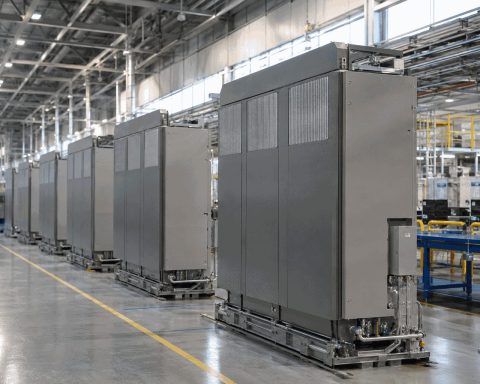
One gigawatt equals 1,000 megawatts. Fuel cells convert hydrogen or other fuels into electricity via chemical reactions—a selling point for data-center operators who’d rather install on-site power than wait out lengthy grid upgrades in stressed regions. According to the U.S. Energy Department, fuel cells are devices that generate electricity from chemical energy. Bloom, for its part, says its solid-oxide technology is used by data centers, semiconductor manufacturers, utilities, and other industrial sectors.
Mahesh Thiagarajan, executive vice president at Oracle Cloud Infrastructure, said the firms were “quickly meeting the demands” of U.S. customers. Bloom Chief Commercial Officer Aman Joshi described the partnership as “defining a shared vision” for energy and AI infrastructure. Bloom Energy
Analyst opinions have split. Jefferies’ Dushyant Ailani bumped Bloom up to Hold from Underperform, pointing to the Oracle order. He sees a potential 20% revenue beat for 2026 and a 51% upside in 2027 if the backlog and Oracle demand materialize as sales. But his note flags a catch: hitting 2026 volume could mean maxing out capacity and relying on finished goods inventory.
Several analysts moved their targets up. Citigroup’s Vikram Bagri bumped his price target to $229, sticking with a neutral stance. UBS’s Manav Gupta marked his up to $251 and maintained a buy, while Baird went to $242, still rating the stock outperform. The range says plenty—order books look firmer, but much of that optimism is already baked into the share price.
The competitive landscape keeps tightening. Investors are still eyeing Plug Power and Ballard Power Systems as fuel-cell and hydrogen rivals, yet Bloom stands apart on market cap—about $54.3 billion as of Friday, towering over Plug’s $3.6 billion and Ballard’s $982 million. With the Oracle deal, Bloom has shifted closer to a pure hyperscale data-center power story than most names in the space.
Bloom started the quarter on a roll. The company posted 2025 revenue of $2.02 billion, a jump of 37.3% over 2024. For 2026, Bloom is targeting revenue between $3.1 billion and $3.3 billion, with non-GAAP EPS in a $1.33 to $1.48 range. Whether Bloom can actually translate its expanding backlog into better margins and cash flow—beyond just more shipments—will be on the line with Tuesday’s results.
Still, there are clear risks here. Just 1.2 gigawatts from the Oracle deal has actually been locked in; the much-touted 2.8-gigawatt figure remains merely “up to.” Another filing revealed Bloom handed Oracle a warrant covering as many as 3,531,073 Class A shares at $113.28 apiece, with the option open until Oct. 9, 2026. If Oracle exercises it, existing shareholders could see dilution. SEC
Bloom itself has pointed to risks like tight supply, limits on manufacturing, holdups in utility hookups, recognizing its backlog, and any pause in AI data-center spending. Those are the issues behind both the BlackRock filing and the Oracle agreement: is Bloom actually cementing its role as a critical power player for AI, or is the market pricing in more than the company can realistically deliver? Bloom Energy
Related articles: NYSE:BE