Today: 2 July 2026
Browse Category

Internet 7 February 2025 - 24 February 2025

Internet Access in Afghanistan: A Comprehensive Overview

Internet Access in Afghanistan: A Comprehensive Overview

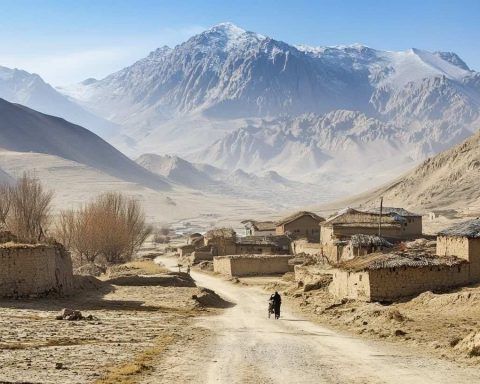
Afghanistan’s internet infrastructure is relatively underdeveloped, relying heavily on mobile networks and limited fixed broadband. After 2001, the country had to build its telecom network from scratch, as the previous Taliban regime had effectively banned the internet​ Wired. In the two decades that followed, mobile telecommunications saw rapid growth – rising from zero subscribers in 2001 to nearly a 100% mobile subscription penetration by 2021​ Businesswire. A nationwide fiber-optic backbone was being rolled out and even a 400 km cross-border fiber link to China was near completion in 2021​ Businesswire. However, the Taliban’s return to power in August 2021 stalled or halted many of these projects​ Businesswire​ Businesswire, casting uncertainty on the finalization of the fiber network. Major service providers in Afghanistan include a mix of state-run and private mobile operators that also serve as the primary ISPs. The key players are:

24 February 2025
Internet Access in Ukraine: Overview

Internet Access in Ukraine: Overview

Ukraine has a well-developed internet infrastructure with extensive fiber-optic networks and numerous providers. Thousands of Internet Service Providers operate in Ukraine, from national telecoms to small local companies. In fact, over 4,200 ISPs were registered as of August 2024​ interfax.com, reflecting a highly competitive market. The largest providers hold relatively small market shares – for example, Kyivstar’s network leads with about 19% of the market, followed by Vodafone Ukraine with ~9% and Lifecell with ~5%​ pulse.internetsociety.org. The state-run Ukrtelecom and various regional fiber operators also serve significant user bases, but no single company dominates nationally​ pulse.internetsociety.org. This diverse provider landscape has kept internet access competitive and affordable for consumers, with the Internet Society rating Ukraine’s ISP market competitiveness as “excellent”​ pulse.internetsociety.org. Ukraine’s backbone internet infrastructure is robust. Dozens of data centers and Internet Exchange Points support domestic connectivity​ pulse.internetsociety.org. Key cities host IXPs that route traffic locally, and about 63% of popular content is cached within Ukraine – above the European average​ pulse.internetsociety.org. This means users can reach most websites via local servers, improving speed and resilience. International fiber-optic links connect Ukraine to the global internet through neighboring European countries, ensuring multiple routes for traffic. Overall, high-capacity fiber broadband is
24 February 2025
Internet Access in Mozambique

Internet Access in Mozambique

Mozambique’s internet infrastructure is still developing and heavily reliant on mobile networks. Fixed-line broadband penetration is minimal, with the state-owned Telecomunicações de Moçambique being the only operator offering integrated fixed-line services​ trade.gov. The country is primarily served by three mobile network providers: International connectivity has improved significantly over the past decade. Mozambique is connected to multiple submarine fiber-optic cables, including the SEACOM and EASSy cables that landed in 2009–2010​ wikiwand.com. In 2023, the new 2Africa subsea cable landed in Maputo and Nacala, further boosting bandwidth and redundancy​ trade.gov. This expansion of undersea cables has reduced reliance on older satellite gateways and neighboring countries for international transit​ wikiwand.com. Mozambique also operates an Internet Exchange Point to keep local traffic domestic​ wikiwand.com.
23 February 2025
Internet Access in Libya: A Comprehensive Overview

Internet Access in Libya: A Comprehensive Overview

Libya’s internet infrastructure is recovering and evolving after years of conflict. Under Muammar Gaddafi’s regime, the telecom sector was entirely state-controlled and private competition was virtually nonexistent​ mondaq.com. The primary telecommunications holding is the Libyan Post, Telecommunication and Information Technology Company, which oversees key state-owned providers​ libyareview.com. Major service providers include: Libya’s international bandwidth comes through a mix of submarine cables and satellite links. The country is connected to Europe and regional networks via undersea fiber – for example, an older cable to Italy and the newly operational Silphium cable to Greece​ submarinecablemap.com. In 2023, Libya also signed on to the upcoming Medusa pan-Mediterranean cable, which will land in Tripoli and Benghazi by 2025, boosting international capacity and redundancy​ datacenterdynamics.com​ datacenterdynamics.com. These developments aim to improve a network that, despite damage from war, remained “one of the more robust in the region” by the mid-2010s​ mondaq.com. Overall, Libya’s core internet infrastructure is state-dominated but is gradually diversifying, with new investments in fiber and satellite backbones to reconnect and upgrade the country after the disruptions of civil conflict.
16 February 2025
Internet Access in China

Internet Access in China

China’s internet landscape is characterized by massive scale, state-controlled infrastructure, and strict governance. With over a billion users online, China hosts the world’s largest internet community, but this access comes with significant restrictions and a parallel digital ecosystem separate from the global internet. Below is an overview of key aspects of internet access in China, from infrastructure and service providers to censorship policies and emerging trends. China has built an extensive internet infrastructure, largely through state-run enterprises. Major Internet Service Providers in China include:
Internet Access in Syria

Internet Access in Syria

Syria was relatively late in opening internet access to the public. An internet connection was established in the country by 1997, but for years Syria was the only connected Middle Eastern country that did not allow general public access Hrw. In the late 1990s, only government institutions and a few individuals could get online Hrw. This cautious rollout reflected official policy: the regime under President Hafez al-Assad took a “go-slow” approach, fearing the free flow of information. All media in Syria were tightly controlled, and officials were wary that the internet could enable dissent Hrw. Even Bashar al-Assad advocated for expanding internet access, but security services resisted due to concerns over “making it safe” for a traditional society Hrw. Public internet access only truly began around 2000, shortly after Bashar al-Assad took power Thenetmonitor. Once the internet was introduced, usage grew steadily, though under heavy state oversight. The first internet service providers were state-affiliated, and the Syrian Telecommunications Establishment became the principal gateway. By July 1998, about 35 Syrian government agencies were online Wikipedia, marking the initial step toward connectivity. In the early 2000s growth was modest – for example, in 2000 there were only about 30,000 users online Wikipedia.
7 February 2025
1 7 8 9

Stock Market Today

  • SpaceX IPO Sets Record on July 4 as Market Eyes Bubble Risk
    July 2, 2026, 7:01 AM EDT. On America's 250th birthday, July 4, 2026, SpaceX delivered the biggest IPO ever, with the deal drawing lines to the Bank of the United States debut in 1791. Like in 1791, the SpaceX IPO was massively oversubscribed and speculation is running high, with some traders calling back to the old "scriptomania" episode. Alexander Hamilton had backed that early IPO to support the system, while Thomas Jefferson pushed back on what he called a gambling streak. The 1791 action used heavy leverage and shares went out at just a small slice of equity value-a pattern some see now in the run on leveraged ETFs after SpaceX hit the market. The old worry about a "moral certainty of gain" still haunts some investors, with talk turning to whether SpaceX's valuation is running too hot.
Go toTop