Browse Category

Meteor Showers News 19 June 2025 - 10 August 2025

Epic Skywatch Alert (Aug 10–11, 2025): Perseid Meteor Shower Peaks under Bright Moon – Plus Venus & Jupiter’s Dazzling Conjunction

Epic Skywatch Alert (Aug 10–11, 2025): Perseid Meteor Shower Peaks under Bright Moon – Plus Venus & Jupiter’s Dazzling Conjunction

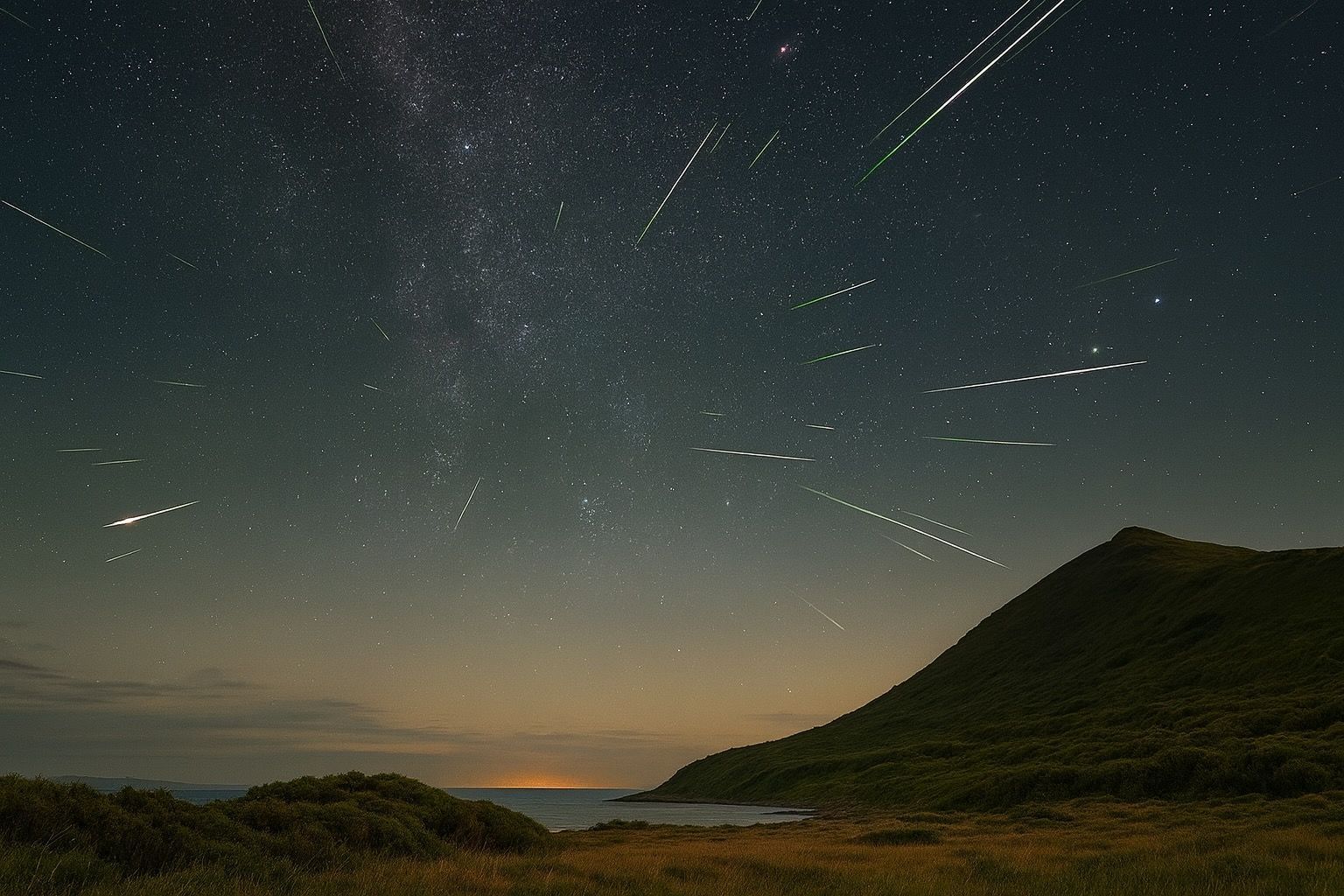
The Perseid Meteor Shower peaks on the night of August 11–12, 2025, under a waning gibbous Moon about 84% illuminated, with expected meteor rates of 10–20 per hour in bright conditions despite the usual 50–100 per hour under dark skies. Venus–Jupiter conjunction occurs August 11–12, 2025, with the two planets separated by about 0.5°–1°, Venus at magnitude −4 and Jupiter at magnitude −2, rising in the eastern pre-dawn sky around 4:30–5:00 a.m. Saturn rises around 10:30 p.m. in early August and by mid-August is up by about 8:30 p.m., shining in Aquarius with its rings visible in a small telescope.
10 August 2025
August 2025 Skywatch Alerts: Meteor Showers, Planetary Parades & Celestial Surprises

August 2025’s Meteor Shower Spectacle: Perseids vs. Bright Moon & Other Shooting Star Shows

The Perseid meteor shower peaks on August 12–13, 2025, with 50–75 meteors per hour under dark skies and up to ~100 per hour in ideal conditions, though moonlight will reduce counts to about 10–20 per hour. The Moon will be full on August 9, 2025 and will be a waning gibbous about 84% illuminated during the peak, washing out fainter meteors. The Perseids originate from debris of Comet 109P/Swift-Tuttle. A recommended viewing strategy is to watch on the peak night before Moonrise or about a week after peak when the Moon is dimmer, with early-evening Earthgrazers possible. The Virtual Telescope
9 August 2025
Skywatch Alert: Perseid Meteors, Sturgeon Moon & Venus-Jupiter Conjunction Dazzle Aug 9–10, 2025

Skywatch Alert: Perseid Meteors, Sturgeon Moon & Venus-Jupiter Conjunction Dazzle Aug 9–10, 2025

The Perseid meteor shower is active August 9–10, 2025, with peak activity expected August 12–13 and up to 100 meteors per hour at peak under ideal dark skies. The full Moon, known as the Sturgeon Moon, reaches full on August 9, 2025 at 3:55 a.m. EDT (07:55 GMT) and will dominate the sky that night. The Perseids radiate from the constellation Perseus, which rises in the northeast after midnight, making the late-night to pre-dawn hours the best viewing time. Under the near-full Moon, bright Perseids can still streak across the sky, especially in the pre-dawn hours. Venus (-4 magnitude) and
9 August 2025
Meteor Showers, Northern Lights & a Planet Parade – Aug 7–8 Night Sky Spectacle

Meteor Showers, Northern Lights & a Planet Parade – Aug 7–8 Night Sky Spectacle

The Perseids, active in early August and building toward their mid-August peak, can reach about 100 meteors per hour at maximum under dark skies, with bright blue fireballs from debris of Comet Swift–Tuttle. The 2025 Perseids peak will be hampered by moonlight: the Sturgeon Moon will be full on Aug 9, and the Moon will be 84–90% illuminated around Aug 11–13, washing out dim meteors and reducing the typical 50–75 meteors per hour to mostly bright fireballs. Eta Eridanids peak on the night of Aug 7–8, contributing about 3 meteors per hour at best. On Aug 7–8, Venus (mag −4.0)
7 August 2025
Cosmic Triple-Feature: Meteor Shower, Double Planet Show & Aurora Hopes on Aug 6–7, 2025

Cosmic Triple-Feature: Meteor Shower, Double Planet Show & Aurora Hopes on Aug 6–7, 2025

The Perseid meteor shower ramps up on August 6–7, 2025, with about 10–20 meteors per hour after local midnight under dark skies despite a bright Moon at roughly 95–99% full. The August full Moon on August 9, 2025 is called the Sturgeon Moon, and its brightness washes out faint meteors during early Perseid activity. The Eta Eridanids are expected to peak on the night of August 7–8, 2025, adding about 3 meteors per hour at best. Venus and Jupiter dominate the dawn sky on August 6–7, 2025, with Venus at magnitude −4.0 and Jupiter at −1.9, about 6° apart. Around
6 August 2025
Skywatch Alert: Meteors, Auroras & a Planetary Spectacle on Aug 5–6, 2025

Skywatch Alert: Meteors, Auroras & a Planetary Spectacle on Aug 5–6, 2025

The Perseid meteor shower is already ramping up for Aug 5–6, 2025, with an expected 10–20 meteors per hour under dark skies after midnight. Perseids are famous for fireballs, producing bright meteors that can blaze through moonlight despite lunar glare. The full Sturgeon Moon occurs on Aug 9, and the peak nights Aug 11–13 will have 84–90% moonlight, washing out dimmer meteors. Venus and Jupiter form a dawn pair before sunrise on Aug 5–6, with Venus at magnitude -4.0 and Jupiter at about -1.9, about 7–8° apart. The Venus–Jupiter pair will reach its closest approach around Aug 11–12, when they’re
5 August 2025
Eyes to the Skies August 2–3, 2025: Meteor Showers, Auroras, and Planets Put on a Show

Eyes to the Skies August 2–3, 2025: Meteor Showers, Auroras, and Planets Put on a Show

During the Aug 2–3 predawn hours under dark skies at mid-northern latitudes, observers could see about 20 meteors per hour as the Perseids rise. The Moon is in first-quarter and will set in the early morning, washing out fainter Perseids and potentially reducing observed rates by about 75% near the maximum. Delta Aquariids are tapering after their July 30 peak and may contribute only a few meteors per hour on Aug 2–3, while Alpha Capricornids are sparse but known for bright fireballs. Saturn and Neptune are in conjunction on Aug 6, and during Aug 2–3 they rise together; Saturn is
2 August 2025
Sky Show Spectacular: Twin Meteor Showers, Planet Parade & Aurora Hints (July 31–Aug 1, 2025)

Sky Show Spectacular: Twin Meteor Showers, Planet Parade & Aurora Hints (July 31–Aug 1, 2025)

Delta Aquariids peak on the nights of July 30–31 with rates up to 15–20 meteors per hour in the Southern Hemisphere and fewer than 10 per hour from mid-northern latitudes, under a slender 25–30% lit Moon that sets early. Alpha Capricornids peak around July 30–31, averaging 2–5 meteors per hour, but delivering slow, bright fireballs that can rival Venus in brightness. With both showers active and a few early Perseids, observers under dark skies could see several dozen meteors per hour during July 30–Aug 1. On July 31 the Moon is a 30% illuminated crescent near Spica in Virgo, with
31 July 2025
December 2025 Skywatch Alerts: Geminids Meteor Storm, Rare Planetary Sights & Auroras Galore

December 2025 Skywatch Alerts: Geminids Meteor Storm, Rare Planetary Sights & Auroras Galore

The Geminid meteor shower peaks overnight on December 13–14, 2025, with as many as 100–150 meteors per hour under dark skies, originating from asteroid 3200 Phaethon. The Ursid meteor shower peaks around December 21–22, 2025, near 11:00 UTC, typically producing 5–10 meteors per hour under dark skies thanks to a new Moon on December 20. Mercury reaches its greatest western elongation on December 7, 2025, about 20° west of the Sun, with magnitude around −0.5 and visible low in the southeastern dawn sky about 30–45 minutes before sunrise. On December 7, 2025, a Moon–Jupiter conjunction occurs with a Moon about
30 July 2025
Don’t Miss These Skywatch Wonders in October 2025

Don’t Miss These Skywatch Wonders in October 2025

The Draconid meteor shower peaks around October 8, 2025, but a full Moon on October 6–7 will wash out most meteors, making outbursts of hundreds to thousands per hour unlikely, and its parent comet is 21P/Giacobini-Zinner. The Orionids peak on the nights of October 21–22, 2025, producing about 20 meteors per hour under dark skies from Halley’s Comet debris, with a near-new Moon (~2% illumination) aiding viewing. The Harvest Moon and first Harvest Supermoon of 2025 occurs on October 6, 2025, when the full Moon reaches peak fullness at 11:47 p.m. EDT near its perigee. Saturn remains a prominent evening
30 July 2025
All Eyes on the Skies: September 2025 Celestial Spectacles (Meteor Showers, Eclipses & More)

All Eyes on the Skies: September 2025 Celestial Spectacles (Meteor Showers, Eclipses & More)

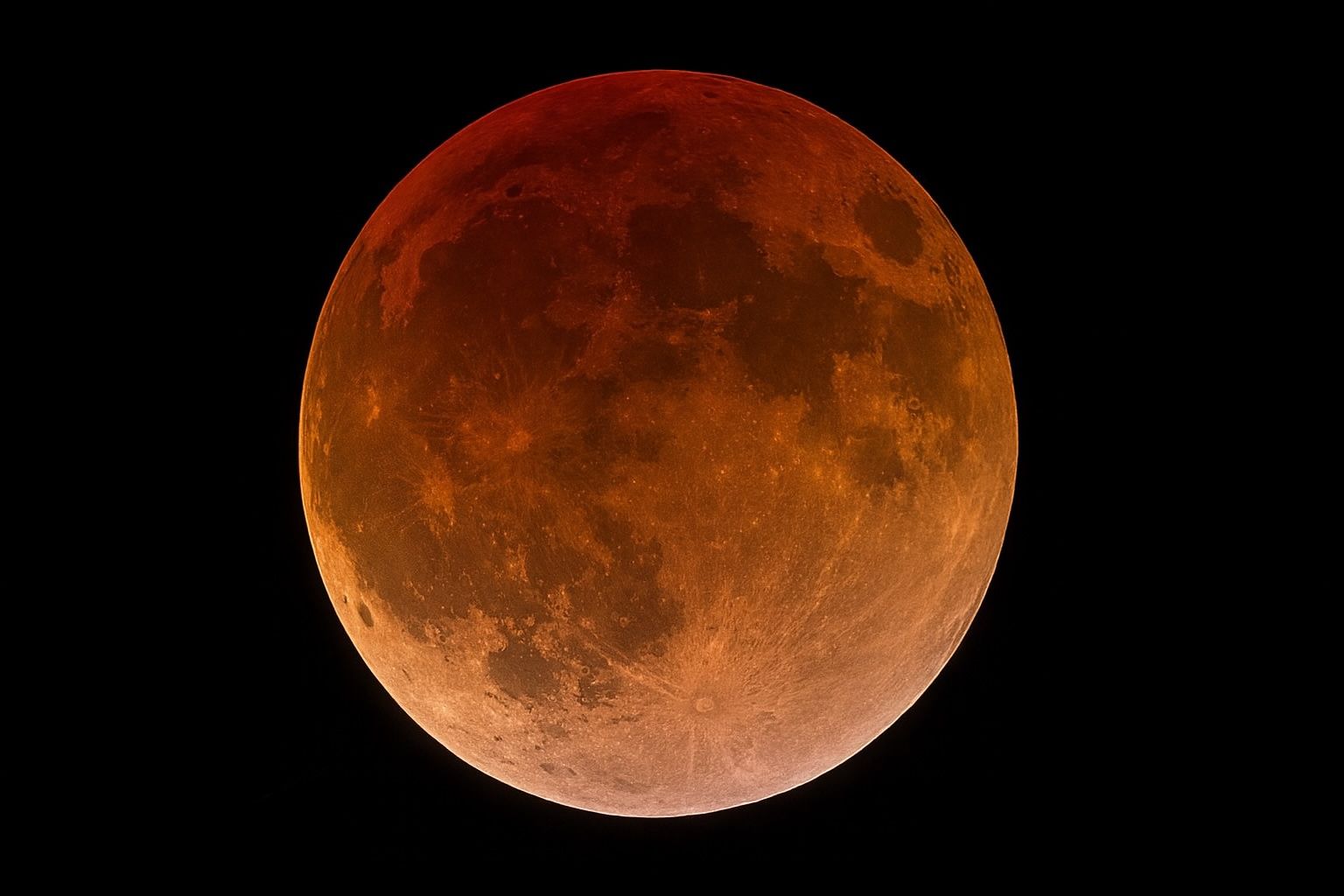
September 7, 2025 features a total lunar eclipse (Blood Moon) with about 83 minutes of totality, visible across Antarctica, Australia, Asia, the western Pacific and Africa, peaking around 18:11 UTC. A deep partial solar eclipse on September 21, 2025 reaches about 85% coverage, with maximum at 19:41 UTC and best views from New Zealand and nearby open-ocean regions between NZ and Antarctica. Saturn at opposition on September 21, 2025 appears near magnitude 0.6 with its rings tilted about 2° toward Earth, though the ring-plane is almost edge-on this year. Venus is occulted by the Moon on September 19, 2025, visible
30 July 2025
August 2025 Skywatch Alerts: Meteor Showers, Planetary Parades & Celestial Surprises

August 2025 Skywatch Alerts: Meteor Showers, Planetary Parades & Celestial Surprises

Perseid Meteor Shower peaks on the night of August 11–12 (into the pre-dawn of August 13), with up to about 100 shooting stars per hour under dark skies, though the August 9 full Sturgeon Moon at 84–90% illumination will wash out many dim meteors. On the morning of August 10, a rare six-planet parade will place Mercury, Venus, Jupiter, and Saturn visible to the naked eye, with Uranus and Neptune needing binoculars, and a nearly full Moon passing near Saturn. Aug 12 dawn sees a Venus–Jupiter conjunction with about 0.8 degrees separation; Venus at magnitude −4.0 and Jupiter at −1.9,
30 July 2025
Spectacular Skywatching Alert: Twin Meteor Showers, Dazzling Planets & More on July 30–31, 2025

Spectacular Skywatching Alert: Twin Meteor Showers, Dazzling Planets & More on July 30–31, 2025

Two meteor showers—Southern Delta Aquariids and Alpha Capricornids—are near peak around July 30, 2025, with the best viewing on the nights of July 29–31 under dark skies. Southern Delta Aquariids originate from debris of comet 96P/Machholz and run roughly July 18–August 12, with ideal conditions producing about 15–20 meteors per hour. Alpha Capricornids peak around July 30 and are known for slow, bright fireballs with long-lasting trails, linked to the parent body 169P/NEAT. The Moon will be about 27% illuminated at the peak, reducing moonlight interference with meteor visibility. Venus (magnitude −4.1) and Jupiter (magnitude −1.9) are visible in the
30 July 2025
June Bootids 2025: How to Watch the Rare Meteor Shower Peaking on 27 June

June Bootids 2025: How to Watch the Rare Meteor Shower Peaking on 27 June

The June Bootids peak occurs on the night of 27 June 2025 at about 04:00 PDT / 11:00 UTC as Earth intersects the dust trail of periodic comet 7P/Pons-Winnecke. The parent body is periodic comet 7P/Pons-Winnecke with a 6.3-year orbit and a nucleus about 5 km in diameter. Meteor speeds are slow for Bootids, about 18 km/s, producing long, graceful streaks. The typical Zenithal Hourly Rate (ZHR) is 0–10 meteors per hour, but historical outbursts reached 100+ meteors per hour in 1916, 1921, 1927, and 1998. The Moon on 27 June 2025 is a 9% illuminated waxing crescent with moonset
26 June 2025
Skywatch Alert: 50+ Must-See Cosmic Events from July 2025 to June 2026 (Eclipses, Meteor Storms & Rare Planetary Shows!)

Skywatch Alert: 50+ Must-See Cosmic Events from July 2025 to June 2026 (Eclipses, Meteor Storms & Rare Planetary Shows!)

Perseids peak on August 12–13, 2025 with 50–100 meteors per hour in the Northern Hemisphere, best after midnight as the Moon wanes. Geminids peak on December 13–14, 2025 with 100+ meteors per hour and the first-quarter Moon sets early. Quadrantids peak on January 3–4, 2026 with about 120 meteors per hour over roughly a four-hour window, aided by new Moon darkness. Total lunar eclipse on September 7–8, 2025, the long-haul Blood Moon, fully visible across Europe, Africa, Asia and Australia/New Zealand with totality about 1 hour 22 minutes. Saturn at opposition on September 21, 2025; rings are edge-on for a
19 June 2025

Stock Market Today

Salesforce stock price steadies at $191 after AI-driven software selloff — what to watch next

Salesforce stock price steadies at $191 after AI-driven software selloff — what to watch next

8 February 2026
New York, Feb 7, 2026, 18:33 EST — Market closed Salesforce (NYSE:CRM) shares closed up 0.7% at $191.35 on Friday after touching $187.12, a 52-week low, and then snapping back into the close. The stock swung as high as $194.60 during the session. (Investing.com) That late bounce did not erase the week’s damage. Salesforce has dropped about 9% this week, part of a wider split in the AI trade as investors reward the tools that power AI and punish software firms viewed as vulnerable to it. “This divergence is not a vote against AI,” Saxo’s Charu Chanana wrote. (Reuters) The
KLA stock price jumps 8% as chip rebound lifts KLAC — what to know before Monday

KLA stock price jumps 8% as chip rebound lifts KLAC — what to know before Monday

8 February 2026
KLA Corp shares surged 8.4% to $1,442.95 Friday, leading gains in chip-equipment stocks after Amazon announced a major increase in capital spending. About 1.6 million KLA shares traded as the PHLX semiconductor index rose 5.7%. KLA’s board declared a $1.90 quarterly dividend, payable March 3 to holders as of Feb. 17. Applied Materials and Lam Research also rallied sharply into the close.
Go toTop