Today: 21 July 2026
Browse Category

Meteor Showers 14 August 2025 - 11 September 2025

Don’t Miss These Night Sky Spectacles on Sept 11–12, 2025: Meteor Shower, Auroras & Planet Parade

Don’t Miss These Night Sky Spectacles on Sept 11–12, 2025: Meteor Shower, Auroras & Planet Parade

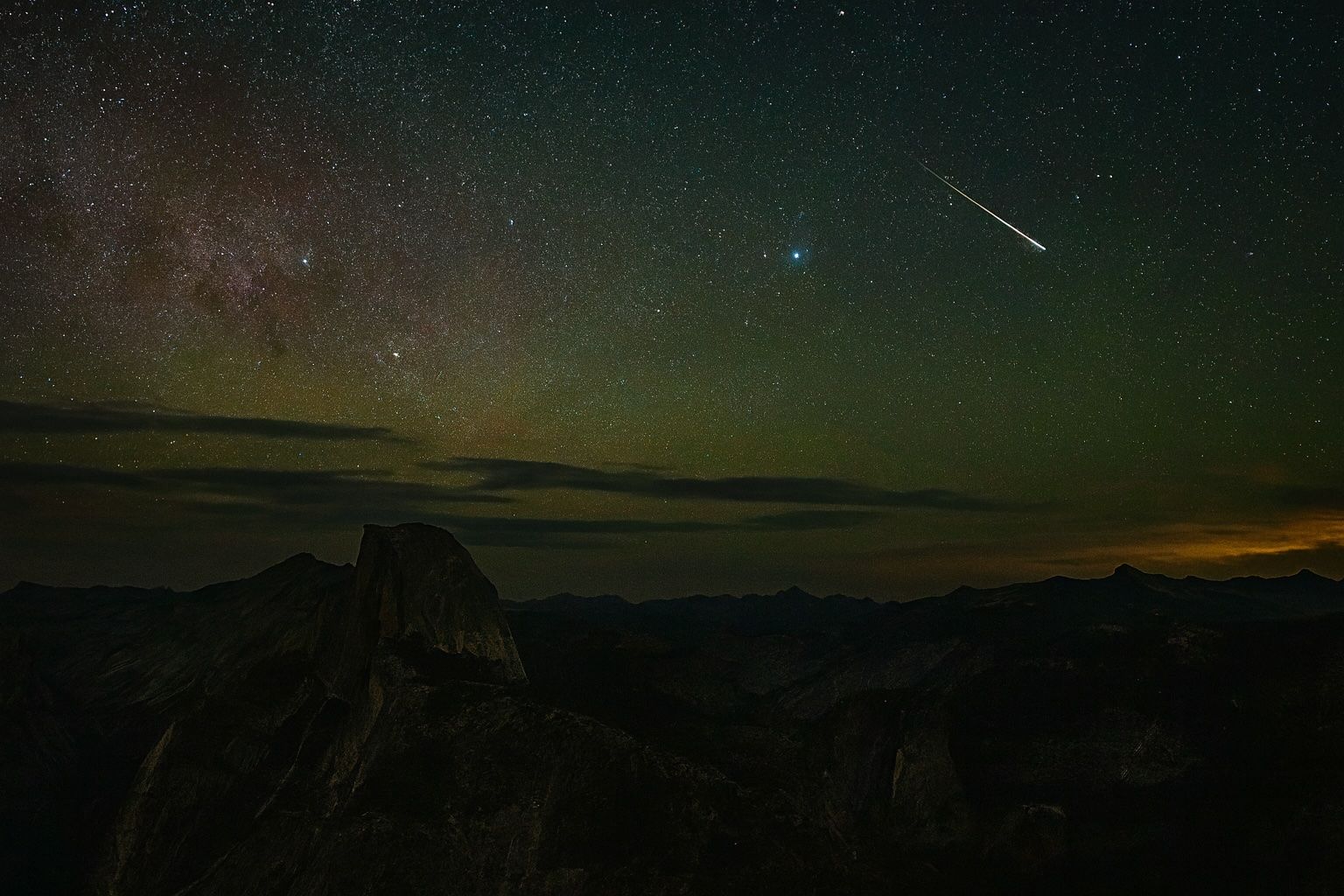
If you’re hoping to wish upon a shooting star this week, temper your expectations – no major meteor showers peak on exactly Sept 11–12. The only ongoing shower is the September Epsilon Perseids, a minor display active from about Sept 5 to 21 space.com. This shower peaked around the morning of Sept 9 with at best ~5 meteors per hour under ideal dark skies space.com. In practice, the bright Moon has severely limited the count – observers likely saw only a few meteors each hour even at peak space.com. As we move past the peak, Epsilon Perseid activity will dwindle to perhaps only a handful of meteors over the entire night.
11 September 2025
Little-Known Meteor Shower to Light Up September Skies – Your Guide to the Epsilon Perseids 2025

Little-Known Meteor Shower to Light Up September Skies – Your Guide to the Epsilon Perseids 2025

Mark your calendars for the night of September 8–9, 2025. That is when the September Epsilon Perseids meteor shower reaches its peak activity. In 2025 the predicted peak occurs around 8 a.m. Eastern Daylight Time on Sept. 9 space.com. This timing means that for skywatchers in the Americas, the pre-dawn hours of Tuesday, Sept. 9 are prime viewing. Even though the exact peak is during daylight for Europe/Africa, anytime after nightfall on Sept. 8 into the early hours of Sept. 9 is likely to offer the most meteors. You may also catch a few stragglers on the mornings just before and after the 9th, since the shower remains active for about a week on either side ts2.tech.
10 September 2025
Cosmic Spectacle Alert: Auroras, Meteor Shower & Planetary Parade Dazzle Sept. 10–11, 2025

Cosmic Spectacle Alert: Auroras, Meteor Shower & Planetary Parade Dazzle Sept. 10–11, 2025

After an unexpected geomagnetic storm dazzled skywatchers in early September, the Northern Lights remain a top attraction for those in northern regions. Over Labor Day weekend, a potent “cannibal” solar eruption hit Earth’s magnetic field, sparking auroras as far south as Illinois and Oregon in the U.S. space.com space.com. “Impact is expected by late September 1. G2+ conditions possible,” explained Dr. Tamitha Skov, a space weather physicist, as she noted that one fast coronal mass ejection overtook another to intensify the storm space.com. The result was a geomagnetic storm that briefly reached G3 levels space.com space.com, treating millions to rare mid-latitude auroras.
10 September 2025
Skywatch Alert: Meteors, Auroras & Planet Parade on Sept. 9–10, 2025

Skywatch Alert: Meteors, Auroras & Planet Parade on Sept. 9–10, 2025

An annual meteor shower is gracing the early-September skies – albeit a minor one. The September Epsilon Perseids are active from about Sept. 5 to 21 in-the-sky.org as Earth drifts through debris left by an unidentified comet. This shower is not to be confused with August’s famous Perseids; the September Epsilon Perseids are much fainter and produce far fewer meteors space.com space.com. In 2025, peak activity is expected around 8 a.m. EDT on Sept. 9 space.com in-the-sky.org. That timing means the best chances to see meteors come in the predawn hours of Sept. 9, though the mornings before and after could also yield a few shooting stars.
9 September 2025
This Weekend’s Sky Spectacle: ‘Blood Moon’ Eclipse, Auroras & Meteor Showers (Sept 7–8, 2025)

This Weekend’s Sky Spectacle: ‘Blood Moon’ Eclipse, Auroras & Meteor Showers (Sept 7–8, 2025)

The headline event is undoubtedly Sunday’s total lunar eclipse, whimsically nicknamed a “Blood Moon” for the eerie red color the Moon takes on. On the night of September 7–8, Earth will slide directly between the Sun and the full Moon, casting our planet’s shadow across the Moon’s face ndtv.com. During the peak totality phase, the Moon will be completely engulfed in Earth’s dark umbral shadow earthsky.org. Instead of vanishing entirely, the Moon glows red-orange – the result of sunlight filtering through Earth’s atmosphere and onto the Moon. As NASA explains, Earth’s air scatters the bluer wavelengths of sunlight and bends reddish light into the shadow, painting the Moon coppery-red ndtv.com.
7 September 2025
Don’t Miss This Weekend’s Cosmic Spectacle: Meteor Showers, Planets & a ‘Blood Moon’ Eclipse (Sept 5–6, 2025)

Don’t Miss This Weekend’s Cosmic Spectacle: Meteor Showers, Planets & a ‘Blood Moon’ Eclipse (Sept 5–6, 2025)

This weekend’s moon will be a brilliant full Corn Moon, traditionally named for the harvest season starwalk.space. It rises just after sunset and floods the night with silver light – so bright it may outshine fainter stars and meteors. Notably, the Moon will appear near golden Saturn in the constellation Aquarius; in fact, Saturn’s steady, bright glow will hover close by the Moon on Saturday night starwalk.space. If you have a telescope, take a peek at Saturn – even a small scope can reveal its famous rings while it’s near peak brightness science.nasa.gov.
5 September 2025
Rare Auroras, Shooting Stars and a Planet Parade: Sky Spectacle on Sept 1–2, 2025

Rare Auroras, Shooting Stars and a Planet Parade: Sky Spectacle on Sept 1–2, 2025

Skywatch alert: A geomagnetic storm watch is in effect for September 1–2, 2025, as an Earth-directed coronal mass ejection arrives. This solar eruption – launched by a long-lasting M2.7-class flare on Aug 30 – is expected to buffet Earth’s magnetic field starting late on Sept 1, with disturbances continuing into Sept 2 swpc.noaa.gov. Initially, NOAA’s models predict G2 geomagnetic storm conditions when the CME hits, ramping up to G3 as the main bulk of the plasma cloud sweeps past on Sept 2 space.com. In practical terms, vibrant auroras could expand well beyond their usual polar confines.
1 September 2025
Aurora Outbreak, Meteor Shower & Rocket Launch: Sky Spectacle on Aug 31–Sep 1, 2025

Aurora Outbreak, Meteor Shower & Rocket Launch: Sky Spectacle on Aug 31–Sep 1, 2025

The biggest excitement for this weekend’s skywatchers is the aurora alert triggered by an Earth-directed solar eruption. On Aug 30, a small sunspot surprised forecasters by erupting with a long-duration M2.7-class solar flare spaceweather.com. Though moderate in X-ray intensity, the flare’s 3-hour span flung a full-halo CME – essentially a billion-ton cloud of magnetized solar plasma – directly toward Earth swpc.noaa.gov spaceweather.com.
31 August 2025
Skywatch Alert: Meteor Shower, Planet Parade & Auroras Dazzle This Weekend (Aug 30–31, 2025)

Skywatch Alert: Meteor Shower, Planet Parade & Auroras Dazzle This Weekend (Aug 30–31, 2025)

Late August 2025 brings wonderfully dark night skies thanks to the Moon’s phase. August 23 was a rare “Black Moon”, so evenings around Aug 27–30 have had little moonlight ts2.tech. By this weekend the Moon is only about 7–8 days old, setting around midnight and leaving most of the night moonless ts2.tech. These dark conditions are ideal for spotting faint meteors, the Milky Way, and other dim celestial sights without glare ts2.tech.
30 August 2025
Spectacular Late-August Sky Show: Dark Moon, Meteors, Planets & Satellite Trains on Aug 28–29, 2025

Spectacular Late-August Sky Show: Dark Moon, Meteors, Planets & Satellite Trains on Aug 28–29, 2025

Late August 2025 brings unusually dark skies thanks to a rare Black Moon. The new Moon on Aug. 23 was the third new Moon in a season of four space.com – a configuration that leaves the next days moonless. By Aug 27–28 the slim crescent Moon is just a few days old and sets soon after dusk, so Moonlight won’t drown out fainter night-sky sights ts2.tech.
Don’t Miss Tonight’s Cosmic Spectacle: Meteors, Planet Parade & Aurora Alerts (Aug 26–27, 2025)

Don’t Miss Tonight’s Cosmic Spectacle: Meteors, Planet Parade & Aurora Alerts (Aug 26–27, 2025)

The famous Perseid meteor shower has just wrapped up its 2025 run. Unfortunately, its peak earlier this month was washed out by bright moonlight – NASA’s experts warned that the nearly full Sturgeon Moon would reduce visible meteors by 75% amsmeteors.org. “The average person under dark skies could see 40–50 Perseids per hour… instead, you’re probably going to see 10 to 20 per hour or fewer, and that’s because we have a bright Moon in the sky,” explained Bill Cooke, lead of NASA’s Meteoroid Environment Office economictimes.indiatimes.com. A few bright Perseid fireballs still pierced the moonlit sky in the pre-dawn hours science.nasa.gov economictimes.indiatimes.com, but overall this was a subdued year for the Perseids.
26 August 2025
Black Moon Sparks Cosmic Show: Meteors, Planet Parade & Auroras on Aug 24–25, 2025

Black Moon Sparks Cosmic Show: Meteors, Planet Parade & Auroras on Aug 24–25, 2025

The nights of August 24–25, 2025 are primed for an epic skywatching extravaganza. A “Black Moon” guarantees dark, star-studded skies, setting the stage for meteor shower finales, a multi-planet “parade” at dawn, potential Northern Lights at high latitudes, and bright satellite flybys like the ISS. Space agencies and astronomers are buzzing – from NASA touting a stunning Venus-Jupiter meetup to NOAA monitoring solar activity. Below we break down each celestial highlight and how to catch it, with expert tips and sources. Mark your calendars, set those alarms, and look up – the universe is putting on a show!
24 August 2025
Black Moon, Meteors & Auroras: Skywatch Alert for Aug 23–24, 2025

Black Moon, Meteors & Auroras: Skywatch Alert for Aug 23–24, 2025

This weekend’s skies offer a cosmic extravaganza – from a rare “Black Moon” darkening the heavens to the final flickers of the Perseid meteor shower, a parade of planets in the dawn, and even a chance for Northern Lights. Here’s your comprehensive, public-friendly guide to all the celestial sights on August 23–24, 2025, and how to enjoy them under clear, dark skies.
23 August 2025
Cosmic Show on Aug 22–23, 2025: Meteors, Planet Parade, Auroras & More

Cosmic Show on Aug 22–23, 2025: Meteors, Planet Parade, Auroras & More

Get ready for a skywatching extravaganza on the nights of August 22–23, 2025. The next 48 hours offer a little of everything: the tail end of the Perseid meteor shower streaking through dark, Moonless skies; a “planet parade” at dawn featuring Venus, Jupiter, Mercury and Saturn; a potential faint glow of the Northern Lights for lucky high-latitude observers; plus dazzling passes of the International Space Station and even “trains” of freshly launched satellites. Space agencies and experts are buzzing – from NASA highlighting a stunning Venus-Jupiter meetup to NOAA issuing recent aurora alerts. Below, we break down each phenomenon and what to watch for, with expert quotes and links to original sources so you can dive deeper. Mark your calendar, set your alarm, and look up – the universe is putting on a show!
22 August 2025
Skywatchers Alert: Meteors, Planetary Parade, Auroras & More Dazzle on August 21–22, 2025

Skywatchers Alert: Meteors, Planetary Parade, Auroras & More Dazzle on August 21–22, 2025

The night sky on August 21–22, 2025 is shaping up to be a cosmic extravaganza filled with eye-catching celestial events. From the lingering Perseid meteors streaking across moonless skies to a “planet parade” at dawn featuring multiple planets, there’s plenty for skywatchers to enjoy. Even the Northern Lights might make a subtle appearance for some lucky observers, and a host of satellite flyovers – including the bright International Space Station and newly launched Starlink “trains” – will add to the show. Below, we break down each phenomenon and why it matters, with tips on how to see these wonders for yourself. So grab your calendars and plan to look up – the universe has a spectacle in store on these dates!
21 August 2025
Aug 20–21 Cosmic Extravaganza: Meteor Showers, Planet Parade & Northern Lights Dazzle the Night Sky

Aug 20–21 Cosmic Extravaganza: Meteor Showers, Planet Parade & Northern Lights Dazzle the Night Sky

Mid-to-late August means the Perseid meteor shower is still active, even though its peak on August 12–13 has passed ts2.tech. The Perseids officially continue through August 23 ts2.tech, so on the nights of August 20 and 21, 2025 you may still catch a few “shooting stars” each hour streaking across the sky. In a dark sky with no Moon, the Perseids can normally produce up to 50–100 meteors per hour at their peak under ideal conditions ts2.tech. However, this year a bright Moon washed out many of the fainter meteors during the peak ts2.tech. “Instead, you’re probably going to see 10 to 20 per hour or fewer, and that’s because we have a bright Moon in the sky washing out the fainter meteors,” explained Bill Cooke, lead of NASA’s Meteoroid Environment Office, ahead of the peak ts2.tech. The good news is that by August 20–21 the Moon is a thin waning crescent – effectively no moonlight interference ts2.tech. This gives darker skies and a fighting chance to spot remaining Perseids. You might see on the order of just a few meteors per hour, especially in the late-night to pre-dawn hours when Earth is plowing head-on into the meteor stream ts2.tech.
20 August 2025
Skywatch Alert: 6-Planet Parade, Meteor Fireballs & Auroras Dazzle the Night (Aug 19–20, 2025)

Skywatch Alert: 6-Planet Parade, Meteor Fireballs & Auroras Dazzle the Night (Aug 19–20, 2025)

The night sky on August 19–20, 2025 is gearing up for a cosmic extravaganza – from a rare six-planet alignment at dawn, to the tail end of the Perseid meteor shower lighting up the late-night sky, and even a chance for the Northern Lights to make an appearance. Add in brilliant planets like Saturn shining at near-maximum brightness, the International Space Station gliding overhead, and a massive rocket’s fiery reentry, and you have plenty of reasons to look up! Crucially, the Moon will be only a slim crescent, leaving dark skies ideal for stargazing. Here’s your complete skywatching guide for Aug 19–20, including what to see, when and where to see it best, and expert tips to maximize your viewing experience.
19 August 2025
Don’t Miss This Weekend’s Cosmic Show: Perseid Meteors, Planet Parade & Aurora Hints (Aug 17–18, 2025)

Don’t Miss This Weekend’s Cosmic Show: Perseid Meteors, Planet Parade & Aurora Hints (Aug 17–18, 2025)

If you love gazing at the night sky, the weekend of August 17–18, 2025, is brimming with celestial delights. While no eclipses occur on these dates, skywatchers around the globe can enjoy a mix of meteor showers, planetary alignments, lunar close encounters, and even a potential aurora. Here’s an in-depth look at what to expect in the skies – and how to catch these phenomena – in a public-friendly roundup backed by expert sources.
17 August 2025
Cosmic Weekend Spectacle: Meteors, Planets, and Aurora Hints Light Up Aug 16–17, 2025

Cosmic Weekend Spectacle: Meteors, Planets, and Aurora Hints Light Up Aug 16–17, 2025

One of the year's most beloved sky shows – the Perseid meteor shower – is still active this weekend, even though its peak on August 12–13 has passed space.com theguardian.com. The Perseids originate from debris of Comet 109P/Swift-Tuttle, “an ancient celestial body… well over 5 billion years old,” explains astrophysicist Dr. Richard Parker theguardian.com. During peak nights, the nearly full moon’s glare washed out all but the brightest meteors science.nasa.gov. Fainter shooting stars are tricky to see this year due to moonlight, experts warn theguardian.com. However, a few bright Perseid fireballs have still streaked across the sky, outshining the moon for lucky observers space.com space.com.
16 August 2025
Don’t Miss These Sky Events on August 14–15, 2025: Shooting Stars, Planet Alignments, and More

Don’t Miss These Sky Events on August 14–15, 2025: Shooting Stars, Planet Alignments, and More

Get ready for an exciting night sky on August 14–15, 2025. From the tail end of a famous meteor shower to a potential aurora show, and from bright planet pairings to rocket launches, there’s a lot happening overhead. Below is a comprehensive skywatching guide – covering meteor showers, auroras, planets, the ISS, lunar highlights, and even human-made space events – so you can plan your stargazing and not miss a thing.
14 August 2025
Go toTop