
- The Perseid meteor shower peaked on August 12-13, 2025, and NASA’s Bill Cooke says under moonlit skies observers may see about 10-20 meteors per hour (versus 40-50 per hour under dark skies).
- By August 17-18, the Moon is a waning crescent, allowing ideal conditions to yield roughly 15-20 Perseids per hour before dawn.
- The minor kappa Cygnids are active around August 14 at about 1 meteor per hour.
- Venus and Jupiter form a bright dawn pair in the eastern sky on August 17-18, after having been only about 1° apart in a close conjunction on August 11-12.
- On August 19-20, a slim crescent Moon will join Venus and Jupiter, forming a striking pre-dawn triangular grouping.
- Mercury reappears in the dawn sky around August 16-17, very low on the eastern horizon, with its greatest western elongation of about 19° on August 19.
- Saturn rises around 10:00 p.m. local time in mid-August and remains visible until dawn, with opposition on September 21, 2025, and rings appearing nearly edge-on.
- Mars is currently dim and not visible in the dawn sky, effectively out of play until much later this year.
- The Moon’s encounters include occulting the Pleiades around August 16 in parts of eastern Asia, and forming alignments with Capella and Aldebaran on August 17 and Betelgeuse on August 18.
- NOAA’s forecast allows for a possible minor G1 aurora at high latitudes on August 17-18 due to solar wind conditions, though no major aurora is guaranteed.
If you love gazing at the night sky, the weekend of August 17–18, 2025, is brimming with celestial delights. While no eclipses occur on these dates, skywatchers around the globe can enjoy a mix of meteor showers, planetary alignments, lunar close encounters, and even a potential aurora. Here’s an in-depth look at what to expect in the skies – and how to catch these phenomena – in a public-friendly roundup backed by expert sources.
Perseid Meteor Shower: Shooting Stars Continue (Despite Moonlight)
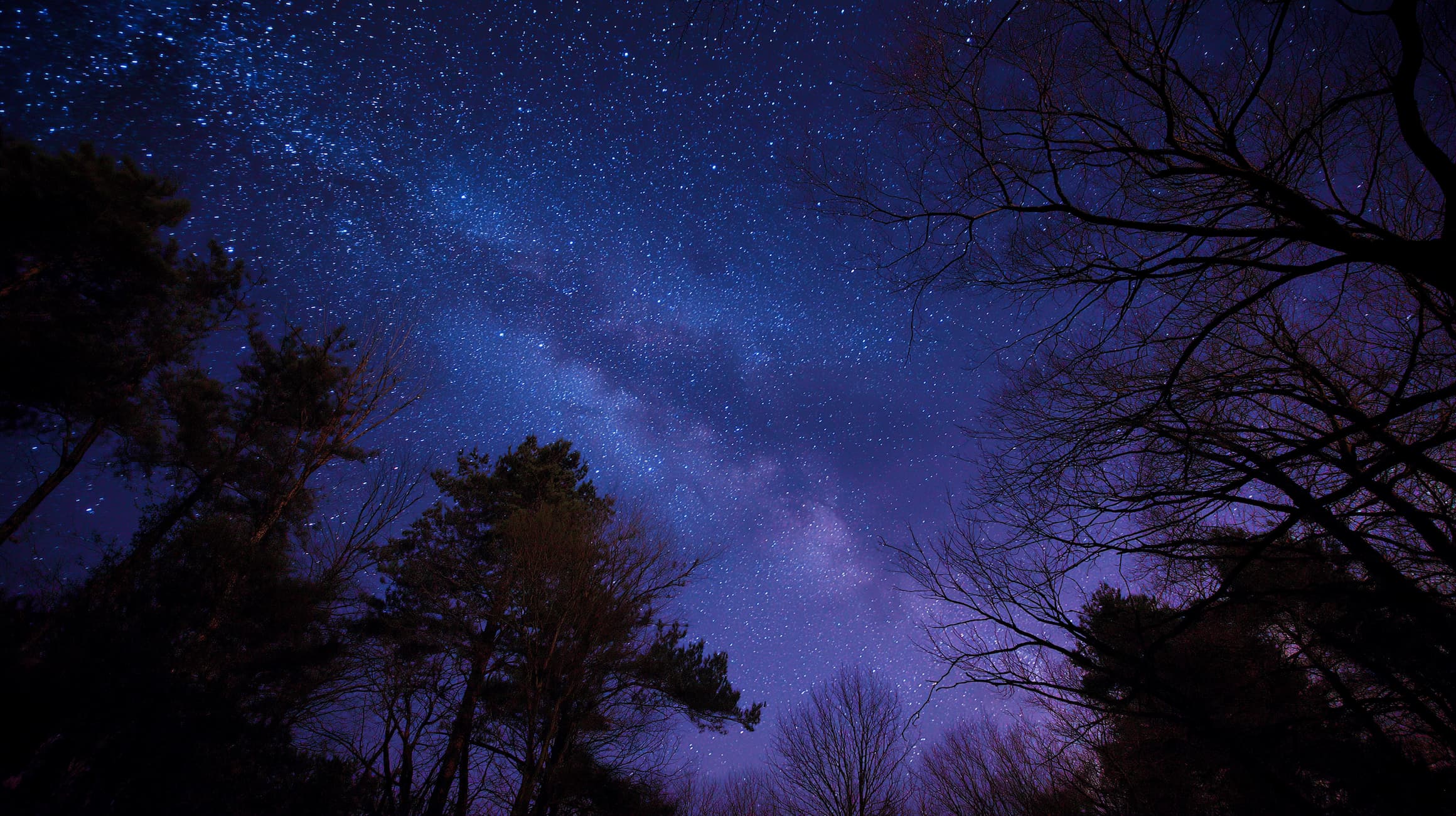
The famous Perseid meteor shower – often the year’s most popular “shooting star” display – is still active through late August, even after its mid-month peak theguardian.com. The Perseids peaked on August 12–13, but bright moonlight during that peak drastically reduced the visible meteors. “The average person under dark skies could see somewhere between 40 and 50 Perseids per hour… [but] you’re probably going to see 10 to 20 per hour or fewer” due to the Moon’s glare, explained Bill Cooke of NASA’s Meteoroid Environment Office nasa.gov. By August 17–18 the Moon is a waning crescent (dimmer than at peak), so observers might catch a modest handful of Perseids per hour under dark skies – including the occasional bright fireball – especially in the pre-dawn hours when meteor activity is highest nasa.gov.
Other minor meteor showers are also contributing a few meteors. For example, the kappa Cygnids (a minor shower that peaked around Aug 14) are still active at a very low level (~1 meteor per hour) ts2.tech. All told, the American Meteor Society estimates that in ideal conditions an observer might see on the order of 15–20 meteors per hour in the hours before dawn this weekend, though moonlight and local light pollution will cut that number down ts2.tech. To maximize your chances, find a safe dark-sky location away from city lights and be patient. “Head out late at night to as dark a location as possible… and wait up to 30 minutes for your eyes to adjust,” advises Dr. Ed Bloomer of the Royal Observatory Greenwich theguardian.com. Remember to avoid looking directly at the Moon – instead, look slightly away from the Perseids’ radiant (in Perseus constellation) so that meteors streaking by are easier to catch with your peripheral vision theguardian.com. Bundle up, get comfortable, and enjoy the quiet cosmic firework show!
Planets on Parade at Dawn: Venus, Jupiter and Mercury Align
Early risers on August 17–18 are treated to a dazzling planetary lineup in the eastern sky before sunrise. The two brightest planets in our sky, Venus and Jupiter, have been shining side-by-side in the pre-dawn hours all month ts2.tech. Just a few days earlier (Aug 11–12) they were in an extremely close conjunction – only about 1° apart (essentially appearing almost merged) science.nasa.gov. By this weekend they have separated slightly, but Venus and Jupiter still form a gorgeous pair low in the east at dawn ts2.tech. Venus blazes high and brilliant (often called the “Morning Star”), while Jupiter sits a bit lower and fainter – though still one of the brightest objects in the morning sky ts2.tech. These two planets rise a couple of hours before the Sun and are impossible to miss if you’re up during twilight ts2.tech. Mark your calendar: in just a few days (on August 19–20), a slim crescent Moon will join Venus and Jupiter, forming a striking triangular grouping in the pre-dawn sky ts2.tech – a beautiful sight for those who continue their skywatching into early next week.
Adding to the dawn show, Mercury is now creeping into view as well. Around this weekend, Mercury makes its first reappearance of the season, emerging very low on the eastern horizon during dawn twilight ts2.tech. As the innermost planet, Mercury never strays far from the Sun and can be tricky to spot. Around August 16–17 it will be extremely low in bright twilight, so you’ll need an unobstructed eastward view and perhaps binoculars to find it ts2.tech. Mercury will gradually get a bit higher and brighter each morning. In fact, on August 19 Mercury reaches greatest western elongation (about 19° away from the Sun) ts2.tech, which means later in the month it will be slightly easier to see – but for now, consider it a challenging bonus target near the horizon.
In summary, here’s the dawn planet parade for Aug 17–18 (visible roughly 1–2 hours before sunrise):
- Venus: The brilliant morning star, shining high in the east before sunrise (about 20–30° above the horizon) science.nasa.gov. It outshines everything except the Moon – you can’t miss it.
- Jupiter: Just to Venus’s lower left, appearing as a bright star in the east. It’s much less bright than Venus but still very prominent in the pre-dawn darkness science.nasa.gov. The two planets are only a few degrees apart, making a beautiful pair.
- Mercury: Very low on the east-northeast horizon during dawn. Around this weekend it sits under 10° high by sunrise science.nasa.gov, so you may only glimpse it in binoculars as a tiny dot against the glow of dawn. Each day it will climb a bit higher.
- Saturn: Not in the eastern sky, but don’t forget to turn west! By early morning Saturn will be low in the southwest, having risen the previous evening. (We’ll discuss Saturn in detail below.)
- Mars: The lone major planet you won’t see at dawn – it’s currently very dim and sinking into the sunset glow after dusk manitobamuseum.ca. Mars won’t reappear in the morning sky until much later this year, so consider it effectively “out of play” right now.
Amazingly, six of the seven classical planets (Mercury, Venus, Mars, Jupiter, Saturn, plus Uranus and Neptune) can be found in the sky during this period if you include the faint ones. In the pre-sunrise hours, the “planet parade” spans from Mercury low in the east all the way across the sky to Saturn setting in the west whenthecurveslineup.com. Uranus and Neptune are also up before dawn – Uranus is near the Pleiades star cluster in Taurus, and Neptune sits near Saturn in Aquarius – but both are too dim to see without optical aid whenthecurveslineup.com. Still, it’s rare to have all major planets (Mercury through Saturn) accessible at once. As one astronomy expert noted, “Beginning [August 17] and continuing for about 10 days, six major planets are visible before sunrise… Mercury rises in brighter twilight, completing the morning display.” whenthecurveslineup.com. So if the weather is clear, take a moment before sunrise to scan the sky and appreciate this planetary alignment – a cosmic tableau featuring our solar system’s neighbors all on stage together.
Saturn Shines All Night (Ringed Jewel Nearing Opposition)
Not to be outdone by the flashy dawn planets, Saturn – the ringed jewel of the night – is putting on its own show throughout the night. In mid-August 2025, Saturn is rising in the east by around 10:00 p.m. local time and will be visible for the rest of the night until dawn ts2.tech. By the predawn hours, look for Saturn low in the western sky (it slowly drifts westward as the night progresses). Saturn is bright enough to see with the naked eye (around magnitude 0.6) and currently sits among the stars of Aquarius (near Capricornus) ts2.tech.
Skywatchers with telescopes or even good binoculars will especially want to catch Saturn now. Saturn’s famous rings are nearly edge-on from Earth’s perspective this year, a geometry that makes them appear thinner than usual ts2.tech. Through a telescope the rings might look like a narrow line slicing around the planet’s equator – a very different sight compared to their wide-open appearance a few years ago. (Saturn’s ring tilt changes over its 29-year orbit, and in 2025 we’re seeing the rings at one of their thinnest angles ts2.tech.) This is a great time to view Saturn, as it heads toward opposition next month. Opposition – when Saturn lies opposite the Sun in our sky and at its closest approach to Earth – occurs on September 21, 2025, which means Saturn’s brightness and visibility are already near their peak ts2.tech. Even now, weeks before opposition, Saturn is a commanding late-night object, rising earlier each evening and reaching high in the southern sky by early morning science.nasa.gov ts2.tech.
On the night of August 16–17, the Moon was at last quarter phase and rose around midnight, appearing not far from Saturn in the sky ts2.tech. By this weekend’s wee hours (Aug 17–18 pre-dawn), the Moon will have moved along, leaving Saturn against a darker sky for prime telescope viewing ts2.tech. If you have clear weather, train a telescope on Saturn late at night – you’ll be rewarded with a golden-colored planet adorned with a delicate ring plane. Even Saturn’s largest moon Titan can be spotted as a speck of light nearby. Saturn’s steady presence high in the dead of night is a treat for night owls and astro-photographers. Don’t miss the chance to admire Saturn’s rings during this time, as they will gradually begin tilting more open in the coming years (and won’t be edge-on again for a long while).
Moon’s Celestial Encounters: Pleiades and Winter Stars
The Moon itself is an active participant in this weekend’s sky show. As mentioned, it reached last quarter phase on Aug 16 and is now a waning crescent, rising after midnight. In the early hours of Saturday, Aug 16, the Moon had a special rendezvous with the Pleiades star cluster (the “Seven Sisters”) in the constellation Taurus. For observers in parts of eastern Asia, this alignment was so precise that the Moon actually occulted (passed in front of) some of the Pleiades’ stars – a rare lunar occultation of this famous star cluster ts2.tech. (For example, in parts of China and Japan on Aug 16, people could watch the Moon cover and then uncover the Pleiades between about 15:20–17:10 UTC ts2.tech.) Even outside the occultation zone, anyone up before dawn on the 16th could see the Moon appearing right next to the Pleiades, a sneak peek of the kind of alignment we usually see in winter months.
By Sunday and Monday morning (Aug 17–18), the waning Moon glides eastward into the predawn sky and continues to tango with prominent stars. In the hours before dawn on Aug 17, the thinning Moon will be positioned amid the bright stars of the winter constellations that are now beginning to rise. “On Aug 17 the Moon will form a line with golden Capella (in Auriga) and reddish Aldebaran (the eye of Taurus)” ts2.tech, creating a striking visual pairing. By Aug 18 pre-dawn, the Moon will have moved further along, shining against the backdrop of stars in Orion and Taurus – for example, it will lie not far from Betelgeuse (Orion’s bright red shoulder star) in the eastern sky ts2.tech. These twinkling stars – Capella, Aldebaran, Betelgeuse, and others – are typically associated with the winter night sky, but they start becoming visible in the early mornings of late summer, offering a preview of the next season’s stars. The Moon’s journey past them this weekend highlights that seasonal transition.
If you’re out watching meteors or planets before dawn, take note of the Moon’s elegant encounters. You’ll see a crescent Moon amid a sprinkle of bright stars, making for great photo-ops. Astrophotography tip: Try to capture the Moon with the Pleiades or with Orion’s stars – use a high ISO and short exposure to catch the stars without overexposing the Moon. Even casual observers will enjoy the view: the Moon plus the Pleiades or plus Orion in one glance is a lovely sight that connects us with the rhythms of the sky. (Just remember, the Moon’s brightness can wash out fainter stars – so binoculars might help bring out the star cluster if the Moon is very close by space.com.) Overall, the Moon’s trek through Taurus this weekend adds another layer of interest to the late-night sky.
Aurora Outlook: Solar Activity and Northern Lights Potential
Lastly, could the aurora borealis make an appearance on Aug 17–18? The answer: possibly, at high latitudes – but only if space weather conditions cooperate. The Sun has been very active in 2025 as we approach the peak of Solar Cycle 25, and eruptions on the Sun can send streams of charged particles toward Earth that ignite auroras. According to NOAA’s Space Weather Prediction Center, around this weekend a solar wind disturbance called a Co-rotating Interaction Region (CIR) was expected to arrive at Earth’s vicinity, potentially stirring up geomagnetic activity earthsky.org. This CIR, combined with a fast solar wind flow from a coronal hole, was forecast to increase geomagnetic conditions to “unsettled” or “active” levels on Aug 17, with even a chance of an isolated G1-class geomagnetic storm (a minor storm) earthsky.org. In practical terms, that means the high-latitude regions (such as Canada, Alaska, Northern Europe, and similar latitudes in the southern hemisphere) had a slight possibility to see some auroral glows on the night of Aug 17 or 18 if the solar wind’s magnetic field orientation turned favorable ts2.tech ts2.tech.
To set expectations: no major aurora displays are guaranteed this weekend, and widespread northern lights across mid-latitudes were not anticipated under these conditions ts2.tech ts2.tech. The official forecast from NOAA was for mostly quiet geomagnetic conditions, with just a hint of a potential uptick late on Sunday Aug 17 into Monday Aug 18 ts2.tech ts2.tech. Essentially, if you live in a far-northern location or somewhere like Scotland or the high U.S. northern states, it could be worth keeping an eye on the northern horizon on the off chance of a faint green glow. Experts noted that minor G1 auroras might develop if the solar wind’s magnetic field tilts southward during that period ts2.tech – a necessary condition for Earth’s magnetosphere to be disturbed. High-latitude skywatchers should remain alert late Sunday night (Aug 17) into early Monday (Aug 18) for any subtle flickers of the aurora low on the horizon ts2.tech. Make sure to find a dark location away from light pollution, and check real-time aurora alerts if available. Even a modest geomagnetic uptick can produce beautiful auroral curtains or pulses for those living under polar skies ts2.tech.
It’s worth noting that we are still near the solar maximum phase of the Sun’s 11-year cycle earthsky.org. That means the Sun is producing many sunspots, flares, and eruptions, so the chance of surprise geomagnetic storms is higher now than a few years ago. NOAA and other agencies continually monitor the Sun, and things can change quickly – a sudden solar flare or Earth-directed CME (coronal mass ejection) could always elevate the aurora prospects on short notice. As of this weekend, though, no major CME was headed our way earthsky.org. The bottom line: significant aurora sightings are not a sure thing on Aug 17–18, but the space weather outlook does hint at a possible minor light show. If you’re in the right location (far north) and have clear dark skies, keep watch for any gentle green or red wisps of light dancing near the horizon. And regardless, it’s always a good idea for aurora enthusiasts to monitor official updates from NOAA’s Space Weather Prediction Center for the latest forecasts ts2.tech.
In summary, the nights of August 17–18, 2025 offer a bounty of celestial phenomena: a continuing meteor shower sprinkling shooting stars, a brilliant parade of planets in the dawn, a crescent Moon mingling with star clusters and constellations, and even a chance for some auroral magic at the edges of the globe. It’s a wonderful reminder of how dynamic our sky can be. So if the weather permits, take some time this weekend to look up! Whether it’s counting Perseids after midnight, marveling at Venus and Jupiter before sunrise, or simply basking under the late-summer stars, there’s something for everyone to enjoy. Clear skies and happy skywatching!
Sources: Official forecasts and expert commentary were gathered from NASA nasa.gov science.nasa.gov, the European Space Agency (ESA), NOAA’s Space Weather Prediction Center earthsky.org, and leading astronomy organizations and observatories (American Meteor Society ts2.tech, Royal Observatory Greenwich theguardian.com, etc.). For further details, see NASA’s What’s Up skywatching newsletter science.nasa.gov science.nasa.gov, the NASA Marshall Space Flight Center Watch the Skies blog nasa.gov, EarthSky and Spaceweather updates on solar activity earthsky.org earthsky.org, and space news outlets like Space.com for event-specific guides space.com. All information is current as of mid-August 2025 and reflects the expected conditions for this cosmic weekend. Enjoy the show!