Today: 21 July 2026
Browse Category

Meteor Showers 12 September 2025 - 8 October 2025

Northern Lights Alert! Solar Storms, Draconid Meteors & a Bright Harvest Moon Dazzle Oct. 8–9, 2025

Northern Lights Alert! Solar Storms, Draconid Meteors & a Bright Harvest Moon Dazzle Oct. 8–9, 2025

A geomagnetic storm watch is in effect, as Earth encounters the debris of two solar eruptions from earlier this month. NOAA’s Space Weather Prediction Center forecasts minor G1-class geomagnetic storms on October 8, with a slight chance they intensify to moderate G2 level people.com. These disturbances are caused by a pair of coronal mass ejections – clouds of charged solar plasma – that launched from the Sun on Oct. 3–4 and are just now arriving at Earth earthsky.org. As a result, skywatchers at high latitudes have an elevated chance to witness the aurora borealis on Oct. 8 and into Oct. 9.
8 October 2025
Northern Lights, Draconid Meteors & Bright Comets – Skywatch Highlights for Oct 7–8, 2025

Northern Lights, Draconid Meteors & Bright Comets – Skywatch Highlights for Oct 7–8, 2025

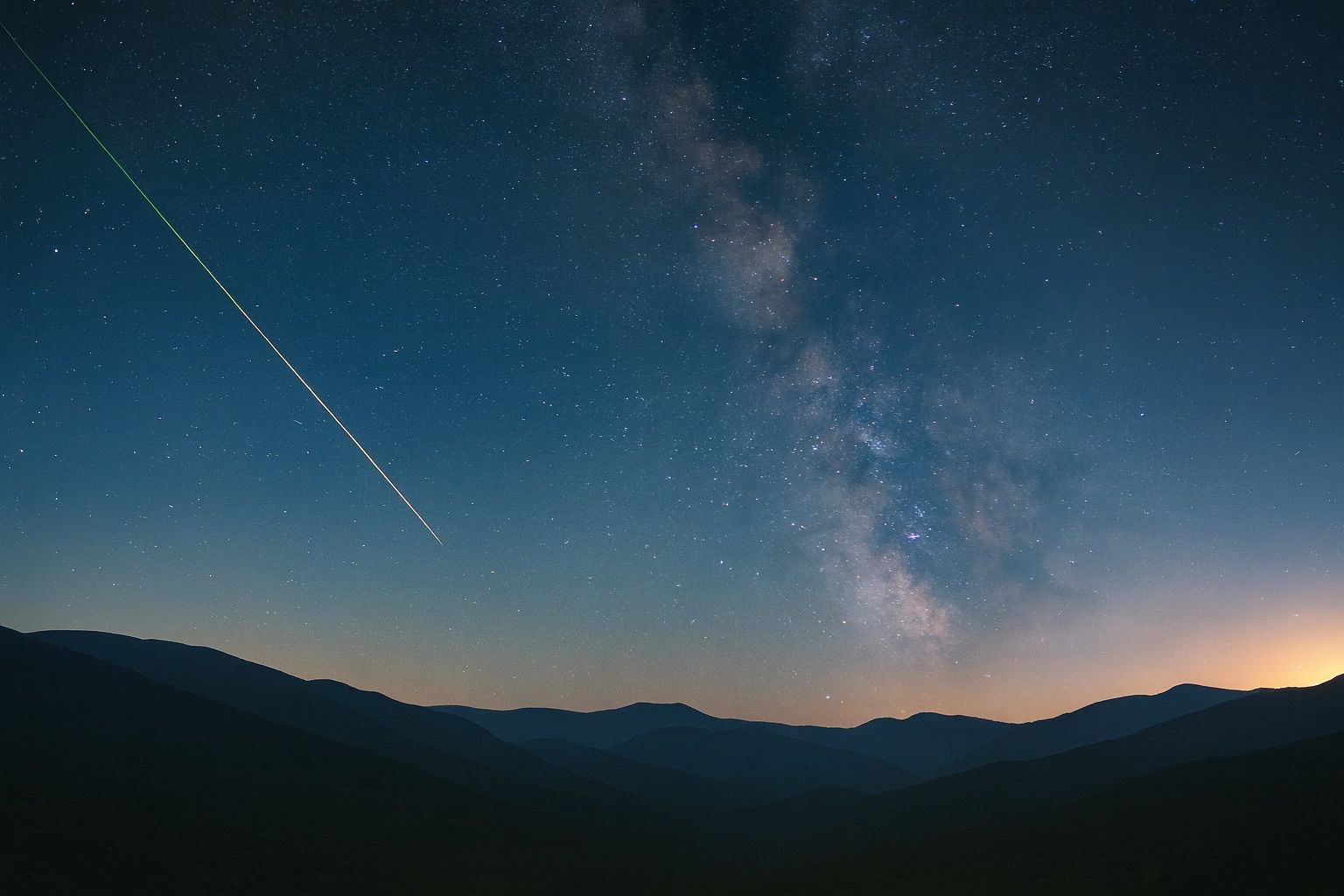
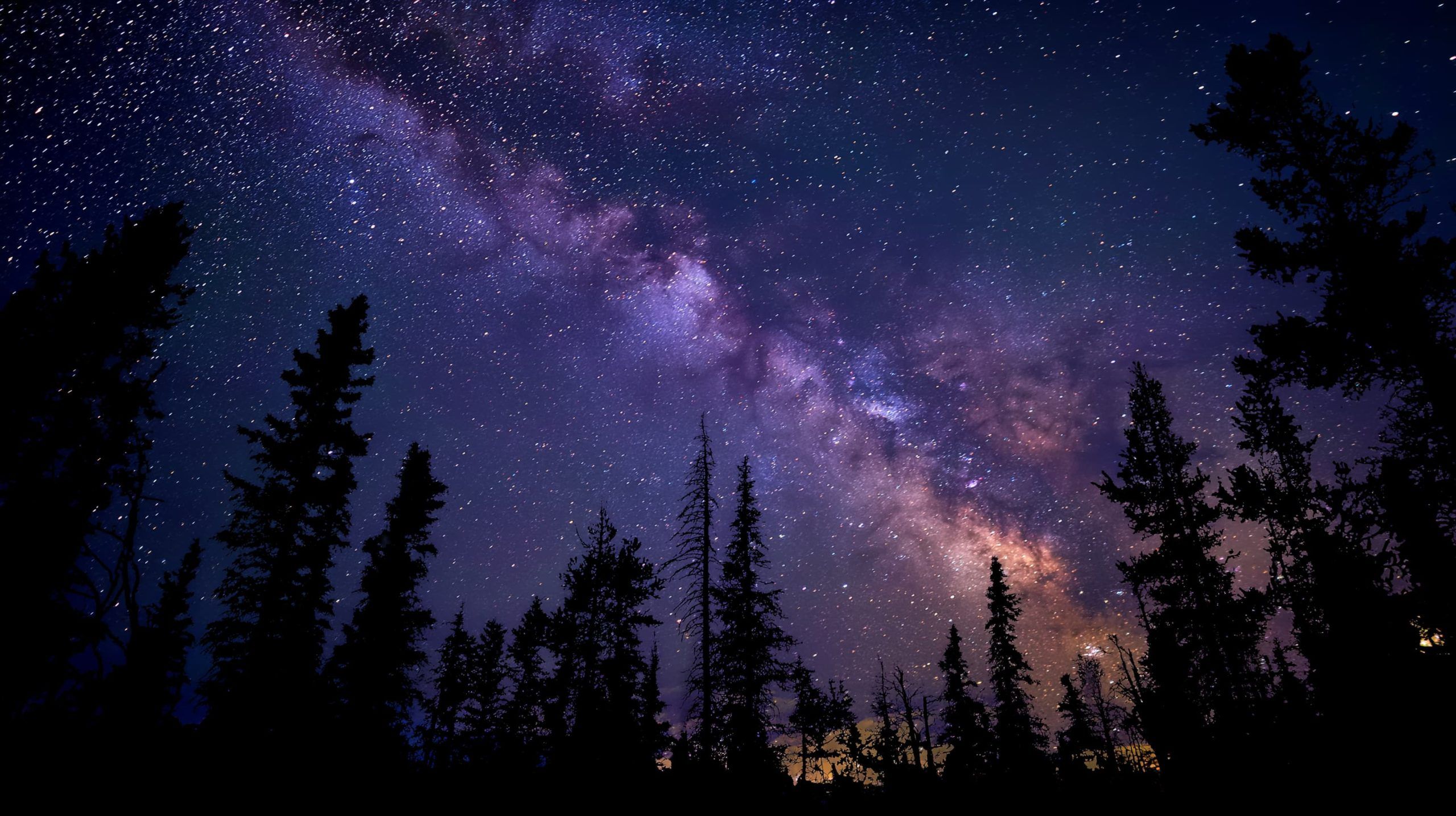
The Draconid meteor shower – a minor but convenient annual shower – is active October 6–10 and is expected to peak on the night of October 8, 2025 livescience.com. The Draconids are so named because their meteors appear to fan out from the head of the constellation Draco, the Dragon, which lies in the northwestern sky after nightfall in October science.nasa.gov livescience.com. Unlike many meteor showers that are best in the wee hours of morning, the Draconids are most easily viewed in the early evening – just after darkness falls – because Draco’s radiant point is highest in the sky at nightfall for mid-northern latitudes livescience.com. This makes the Draconids a favorite for those who don’t want to stay up all night hunting meteors.
7 October 2025
Supermoon, Northern Lights & “Dragon” Meteors: Skywatch Alerts for Oct. 5–6, 2025

Supermoon, Northern Lights & “Dragon” Meteors: Skywatch Alerts for Oct. 5–6, 2025

As we head into the first weekend of October 2025, the night sky is bursting with activity. From an extra-bright full Moon to a flurry of meteors – and even lingering auroras and newfound comets – skywatchers across the globe have plenty to look up for. Here’s a detailed rundown of what to expect on the nights of October 5–6, 2025, including where and when to see each phenomenon, expert insights, and viewing tips from NASA, NOAA, and other authorities.
5 October 2025
Don’t Miss This Weekend’s Cosmic Extravaganza: Supermoon, Saturn Show & Meteor Surprises (Oct 4–5, 2025)

Don’t Miss This Weekend’s Cosmic Extravaganza: Supermoon, Saturn Show & Meteor Surprises (Oct 4–5, 2025)

Saturday, October 4 is International Observe the Moon Night, an annual worldwide event organized by NASA and partners to encourage everyone to look up at our Moon and learn more about it. This year’s celebration has an especially large participation: over 950 events are registered across the Americas, Europe, Asia, and beyond space.com. From science museums and national parks to local astronomy clubs and even elementary schools, organizations will host public Moon observation sessions and educational activities space.com. Many events feature telescopes trained on the Moon’s surface, expert talks, lunar science exhibits, and fun hands-on projects for kids and adults alike.
4 October 2025
Double Meteor Shower Spectacle: Draconid and Orionid Displays Will Light Up October’s Night Sky

Double Meteor Shower Spectacle: Draconid and Orionid Displays Will Light Up October’s Night Sky

The Draconid meteor shower – emanating from the northern constellation Draco – kicks off the month’s skywatching excitement. In 2025 the Draconids are active from October 6 to 10, with peak activity predicted on the evening of October 8 earthsky.org. Unlike most meteor showers which are strongest after midnight, the Draconids are best viewed in the early evening after nightfall earthsky.org. That’s because Draco’s “head,” where the shower’s radiant lies, is highest in the sky in the evening and then sinks lower later at night earthsky.org. So, observers should start looking as soon as darkness falls on Oct. 8 – a rare case of a meteor display that favors prime time viewing.
4 October 2025
Full Moons 2025–2026: Supermoons, Blood Moons & Cultural Celebrations You Can’t Miss

You Won’t Believe This October Surprise: Harvest Supermoon 2025 Rises with Meteor Showers

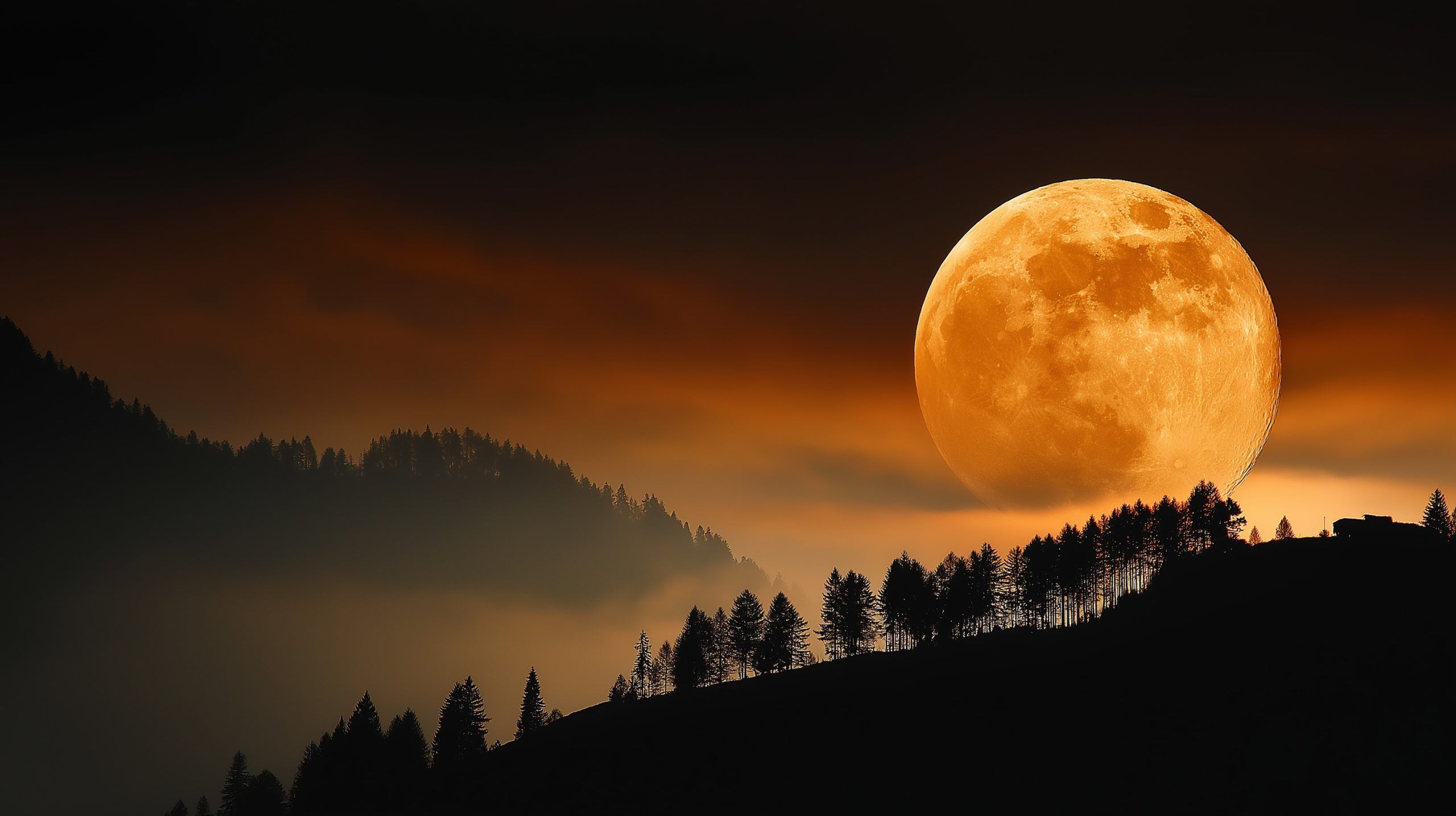
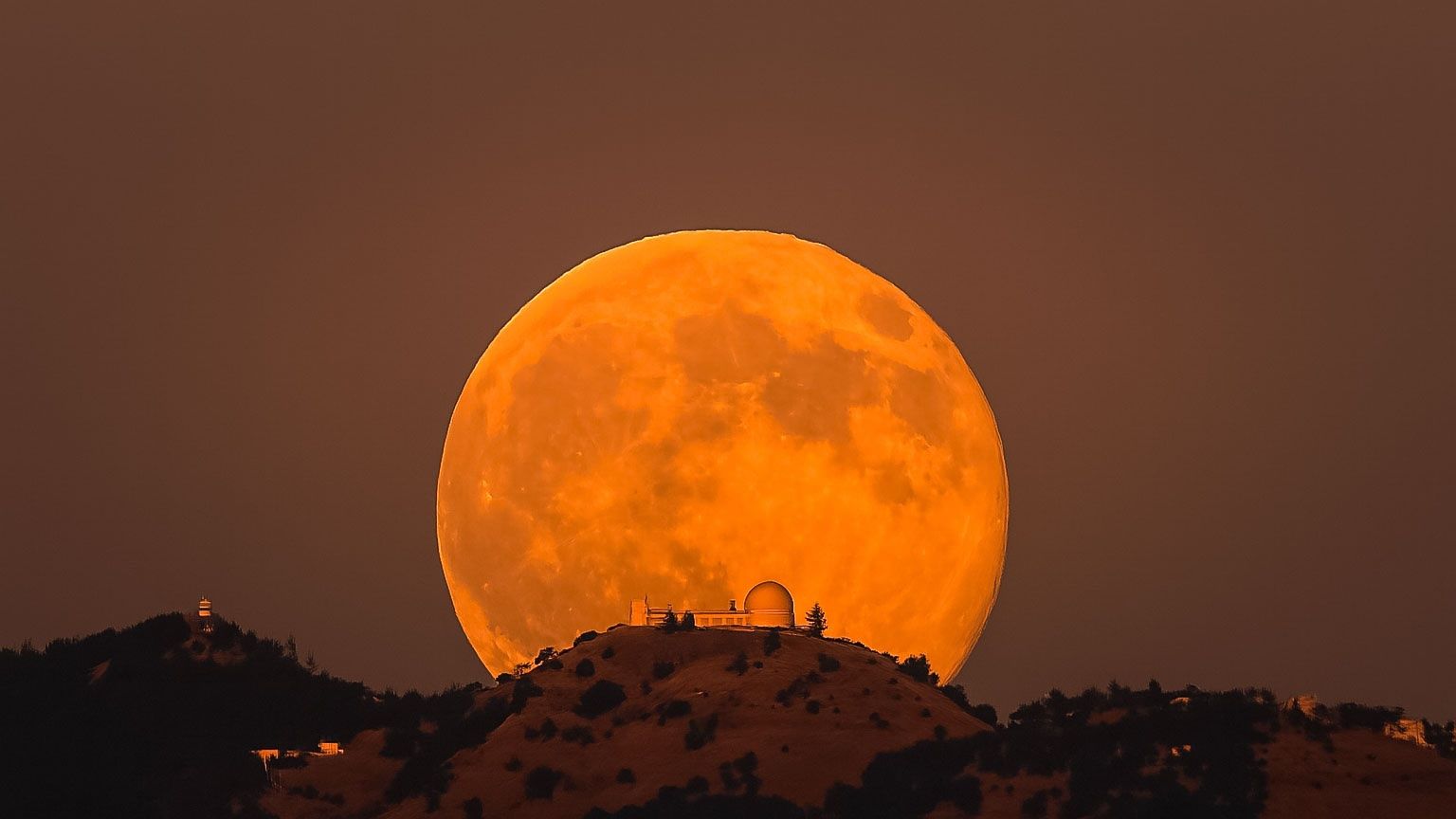
The 2025 Harvest Moon brings a spectacular conjunction of lunar and celestial events. On Oct. 6 the Moon will be full and at perigee, meaning it’s unusually close to Earth livescience.com nationalgeographic.com. NASA explains that when a full moon coincides with perigee, its disk can appear about 30% brighter and 14% larger than average science.nasa.gov. In fact, the 2025 Harvest Moon will be about 224,600 miles from Earth – roughly 10% nearer than a typical full Moon livescience.com. This proximity makes it a supermoon; as NASA notes, “the moon is bigger and brighter because…it’s a supermoon!” on Oct. 6 science.nasa.gov.
4 October 2025
Spectacular October 2–3, 2025 Skywatch Alert: Meteor Showers, Planets & Aurora on the Horizon

Spectacular October 2–3, 2025 Skywatch Alert: Meteor Showers, Planets & Aurora on the Horizon

Early October brings the Draconids and Orionids meteor showers. NASA’s skywatching notes explain that the Draconids will streak through the sky Oct. 6–10 nationalgeographic.com. In a perfect dark sky the Draconids can reach “up to 10 meteors per hour,” but this year a bright full Moon on Oct. 6–7 will drown out most fainter meteors science.nasa.gov. Observers should try to block the Moon if possible.
2 October 2025
Skywatch Alert: Meteors, Auroras & ISS Sighting to Light Up Oct 1–2, 2025

Skywatch Alert: Meteors, Auroras & ISS Sighting to Light Up Oct 1–2, 2025

Early October brings two modest meteor showers. The Orionids, active Sept 26–Nov 7, begin in earnest on Oct 2 amsmeteors.org starwalk.space. NASA notes the Orionids arise from “debris trailing behind Halley’s Comet” and typically yield ~10–20 meteors/hr at peak science.nasa.gov. Meanwhile, the Southern Taurids are underway; these slow meteors from Comet 2P/Encke are rich in bright fireballs amsmeteors.org. Note the sky will be fairly bright around Oct 1–2, so expect only the brightest meteors. NASA’s skywatch tips remind us that the weak Draconids peak Oct 8, so those are better seen after dark Oct 6–9 science.nasa.gov if at all.
1 October 2025
Cosmic Skywatch Alert: Geomagnetic Storms, Shooting Stars & Comets Light Up Late Sep–Early Oct 2025

Cosmic Skywatch Alert: Geomagnetic Storms, Shooting Stars & Comets Light Up Late Sep–Early Oct 2025

NOAA forecasts a Strong geomagnetic storm on Sept 30, 2025. According to SWPC, “G3 geomagnetic storming is expected through 30/1200 UTC due to CME influences” swpc.noaa.gov. This follows an M6.4-class solar flare on Sept 29, which caused an R2-level radio blackout swpc.noaa.gov. Aurora experts note that such storms can power dazzling Northern Lights. The peak storming late Sept 30 means northern skies may glow. “Quiet to active” conditions are forecast after the storm, so Sept 30 is the prime aurora night.
30 September 2025
July 10 2025’s ‘Buck Moon’ Will Be the Farthest‑From‑the‑Sun, Low‑Riding Full Moon of the Decade—Here’s the Exact Time, Best Viewing Tricks & Pro Photo Hacks You Need

October 2025 Sky Spectacular: Harvest Supermoon, Orionid Meteor Shower and Comet Frenzy

October’s full Moon coincides with lunar perigee, making it a supermoon – the largest of 2025 nationalgeographic.com the-independent.com. It is also the Harvest Moon, by definition the full moon nearest the autumnal equinox. However, in 2025 the timing is unusual: unlike most years when the Harvest Moon falls in September, this year it slips into October. Space.com explains that “the full moon of Oct. 6… will also carry the title ‘Harvest Moon’” because it actually lies closer to the Sept 23 equinox than September’s full moon space.com. According to Space.com expert Joe Rao, “October’s full moon will be the largest and brightest Moon of the year,” and the first supermoon since Nov 2024 the-independent.com. This late Harvest Moon is the latest since 1987 the-independent.com.
29 September 2025
Skywatch Alert: Aurora, Meteor Showers & Satellite Sights – What to See Sept 29–30, 2025

Skywatch Alert: Aurora, Meteor Showers & Satellite Sights – What to See Sept 29–30, 2025

Space weather experts agree: late September will be mostly uneventful. NOAA’s SWPC issued a 3-day forecast on Sept 29 predicting only quiet to unsettled geomagnetic conditions services.swpc.noaa.gov. In its rationale NOAA explicitly notes “No G1 or greater geomagnetic storms are expected” on Sept 29–30 services.swpc.noaa.gov. EarthSky’s “Sun News” bulletin echoed this outlook, describing Sept 29–30 as “Quiet to unsettled” as the effects of a coronal-hole high-speed stream wane earthsky.org.
29 September 2025
Incredible Skywatch Weekend: Northern Lights, Meteor Fireballs & Planetary Sights (Sept 27–28, 2025)

Incredible Skywatch Weekend: Northern Lights, Meteor Fireballs & Planetary Sights (Sept 27–28, 2025)

Space weather officials are on alert for auroras this weekend. A large coronal hole on the Sun has rotated into an Earth-facing position, sending a stream of fast solar wind toward Earth. According to NOAA’s Space Weather Prediction Center, this “weak enhancement in the solar wind” is forecast to arrive and push geomagnetic activity to unsettled or even active levels, with a chance of minor G1 storms space.com. In practical terms, that means the Northern Lights could strengthen on the nights of Sept. 27–28. If the disturbance reaches G1 levels, auroras may become visible farther south than usual – perhaps into the northern continental US and Scotland under dark skies space.com. High-latitude regions are most likely to see auroral displays, especially around local midnight when geomagnetic activity typically peaks.
27 September 2025
Cosmic Sky Show: Northern Lights, Shooting Stars & Space Spectacles Dazzle Sept. 26–27, 2025

Cosmic Sky Show: Northern Lights, Shooting Stars & Space Spectacles Dazzle Sept. 26–27, 2025

After a geomagnetically active equinox week, Earth’s magnetosphere is settling down for now. A few days ago, skywatchers as far south as Alberta were treated to vibrant auroral shapes thanks to a high-speed solar wind stream spaceweather.com. As of Friday, Sept. 26, that solar wind has slackened, and NOAA’s Space Weather Prediction Center forecasts quiet geomagnetic conditions in the near term earthsky.org. Any auroras tonight will likely be confined to the high Arctic latitudes – think northern Canada, Alaska, Greenland, or Arctic Scandinavia – and probably faint at that space.com.
26 September 2025
Equinox Auroras, Mystery Fireballs & Planetary Spectacles (Sept 23–24, 2025 Skywatch Alert)

Equinox Auroras, Mystery Fireballs & Planetary Spectacles (Sept 23–24, 2025 Skywatch Alert)

The autumnal equinox on Sept 22 didn’t just mark the start of fall – it also enhanced Earth’s aurora activity. Around the equinox, Earth’s tilted magnetic field lets more solar particles in, an effect scientists call the “equinox effect” people.com. This year lived up to that reputation: NOAA’s Space Weather Prediction Center had forecast minor geomagnetic storms from Sept 21 through 23, meaning the northern lights could be seen much farther south than usual during that period people.com. Indeed, auroras “crashed the equinox party” this week, delighting skywatchers in parts of the northern U.S. and Europe with rare light displays people.com.
23 September 2025
Rare Meteor Shower, Auroras & Planetary Spectacles: Skywatch Alert (Sept 17–18, 2025)

Rare Meteor Shower, Auroras & Planetary Spectacles: Skywatch Alert (Sept 17–18, 2025)

Chi Cygnids – a Rare 5-Year Meteor Shower: The headline event is the chi Cygnid meteor shower, a newly confirmed minor shower that appears to produce enhanced activity roughly every five years earthsky.org foxweather.com. First noticed after an outburst in 2015, the Chi Cygnids have shown bumps in meteor counts in 2010, 2015, 2020, and now 2025 earthsky.org. NASA/SETI astronomer Peter Jenniskens and colleagues detected increased meteors from this source in late August, suggesting a peak was likely around September 13–15, 2025 foxweather.com.
17 September 2025
Skywatch Alert: Rare Meteor Shower, Auroras, and Planetary Spectacles on Sept 16–17, 2025

Skywatch Alert: Rare Meteor Shower, Auroras, and Planetary Spectacles on Sept 16–17, 2025

One of the most intriguing sky events this week is the Chi Cygnid meteor shower, an unusual, recently discovered meteor display. First noticed in 2015 by NASA astronomer Peter Jenniskens and colleagues, the Chi Cygnids have shown a pattern of increased activity every 5 years earthsky.org earthsky.org. This year’s return was expected to climax around September 13–15, 2025 earthsky.org earthsky.org, and indeed low-light cameras detected a flurry of slow-moving meteors from this source in recent days earthsky.org earthsky.org. The Chi Cygnid radiant lies in the constellation Cygnus, near the star Eta Cygni amsmeteors.org. Fortunately, Cygnus is almost directly overhead by mid-evening for mid-northern latitudes, so these meteors can be spotted as soon as it gets dark amsmeteors.org earthsky.org.
16 September 2025
This Weekend’s Sky Spectacle: Rare Meteor Outburst, Auroras Dance & Planets Align (Sept 15–16, 2025)

This Weekend’s Sky Spectacle: Rare Meteor Outburst, Auroras Dance & Planets Align (Sept 15–16, 2025)

Skywatchers are buzzing about the Chi Cygnid meteor shower, a rare meteor display that appears to flare up about every five years. First noticed during a surprise outburst in 2015, the Chi Cygnids have shown heightened activity in 2010, 2015, 2020, and now 2025 earthsky.org. Astronomers report that this modest shower has been “showing increased activity this week” and could peak around the nights of September 13 to 15, 2025 earthsky.org. The most probable window for any burst of meteors is September 14–16 amsmeteors.org, so the evenings of the 15th and 16th are prime time to watch.
15 September 2025
Skywatch Alert: Rare Meteors, Aurora Glow & Planetary Parade Light Up Sept 13–14, 2025

Skywatch Alert: Rare Meteors, Aurora Glow & Planetary Parade Light Up Sept 13–14, 2025

If you’re scanning for meteors this weekend, temper your expectations – but a rare treat is on the menu. The Chi Cygnid meteor shower is peaking around the night of September 13–14. Unlike prolific showers, the Chi Cygnids are a mystery shower that flares up only every five years, and 2025 is one of those special years earthsky.org. Even at peak, they are subtle: perhaps ~1–2 meteors per hour at best under dark skies earthsky.org. What makes them noteworthy is their character – these meteors are unusually slow-moving, creeping across the sky at “only” ~15 km/s, which makes them easier to catch with the naked eye earthsky.org. They radiate from the constellation Cygnus, meaning you don’t have to wait until midnight – you can start watching soon after darkness falls. Veteran meteor observer Robert Lunsford notes that patience is key for minor showers; if you snag even one Chi Cygnid, you’ve got “bragging rights” for witnessing this oddball event earthsky.org earthsky.org!
13 September 2025
Cosmic Show This Weekend: Rare Meteors, Planet Parade & More (Sept 12–13, 2025)

Cosmic Show This Weekend: Rare Meteors, Planet Parade & More (Sept 12–13, 2025)

“We’re in a stargazer’s sweet spot,” writes Mark Laurin, an astronomy guide known as “Astro Mark.” “The September sky is full of magic… the night air is still comfortable but with a mere hint of wispy chill” aspentimes.com. Indeed, the nights of September 12–13, 2025 promise a cornucopia of celestial sights. From rare meteors and bright planets to ghostly auroras and satellite flybys, there’s plenty to delight skywatchers worldwide during this period. The following is an up-to-date guide to all the notable sky events and phenomena you can observe on these dates, with expert insights on how to catch them.
12 September 2025
Go toTop