Today: 30 June 2026
Browse Category

NYSE:I 23 June 2025 - 3 September 2025

From Satellite Struggles to Starlink: Tuvalu’s Internet Revolution

From Satellite Struggles to Starlink: Tuvalu’s Internet Revolution

Tuvalu is a Polynesian microstate of about 10,000 people spread across nine coral atolls. Until recently, its internet infrastructure consisted solely of satellite links – there were no subsea fiber cables, and even regional microwave links to neighbors were absent due to the vast ocean distances. All international and inter-island data traveled via satellite, terminating at earth stations in Funafuti and smaller VSAT terminals on outer islands en.wikipedia.org prepaid-data-sim-card.fandom.com. This satellite dependency made Tuvalu’s internet expensive, bandwidth-constrained, and prone to outages. For most of the 2010s, Tuvalu’s connectivity was extremely limited. In 2012, the total bandwidth for the entire country was only 512 kbps uplink and 1.5 Mbps downlink en.wikipedia.org – essentially a single slow broadband connection shared by everyone. Even by 2016, total capacity was under 80 Mbps prepaid-data-sim-card.fandom.com. This bottleneck meant that basic web browsing was sluggish and data-intensive activities were nearly impossible. Internet access was described as high-cost and limited, contributing to Tuvalu’s status as “one of the least connected countries in the world” as of 2019scoop.co.nz.
Fueling the Future: Inside the $8 Billion In-Orbit Satellite Servicing Boom by 2034

Fueling the Future: Inside the $8 Billion In-Orbit Satellite Servicing Boom by 2034

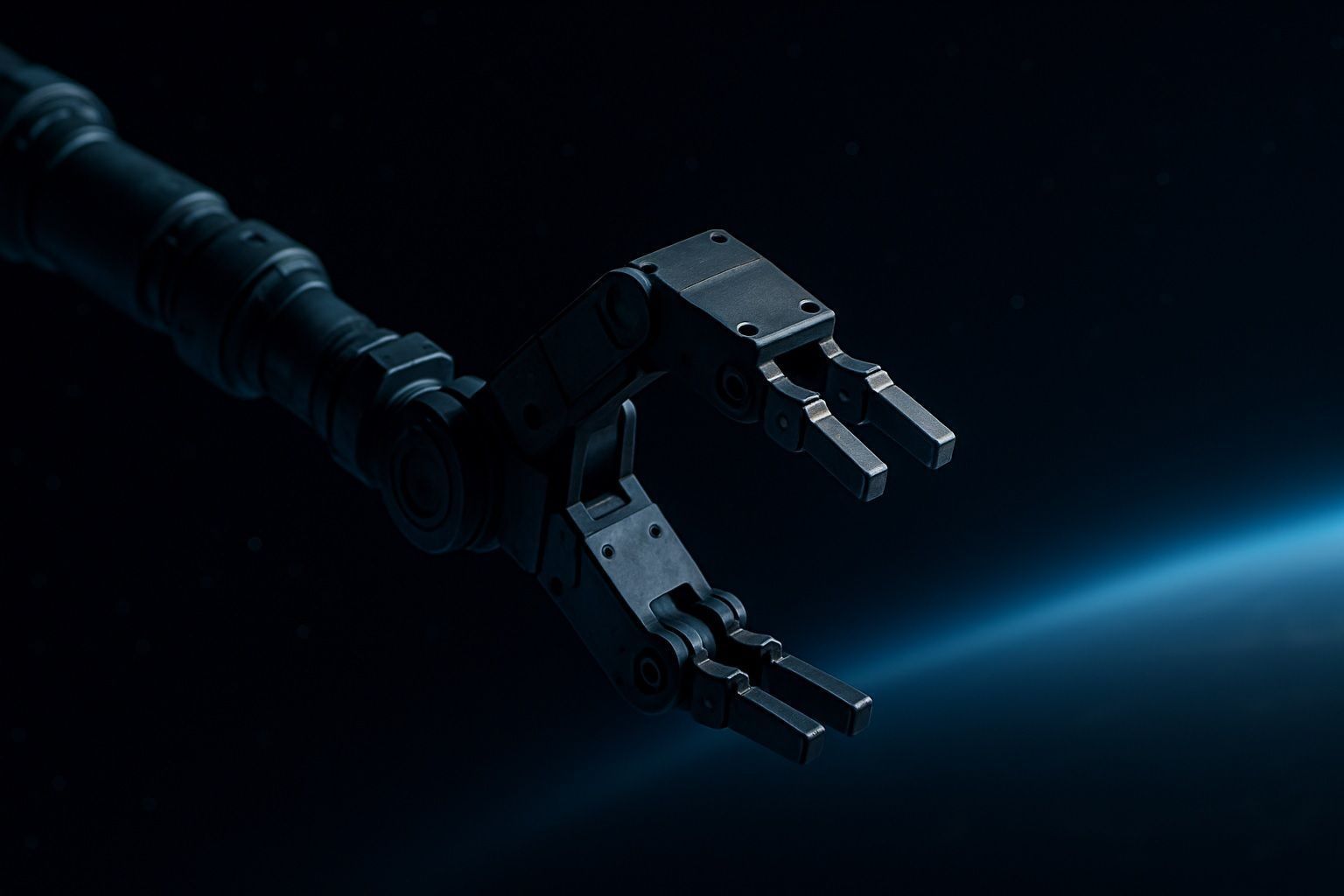
The In-Orbit Servicing market – focused on extending satellite life and refueling spacecraft – is poised for explosive growth over the next decade. Valued at roughly $2.7 billion in 2024, this market is projected to triple to around $8 billion by 2034, reflecting a robust CAGR of ~11–12% Gminsights. Driving this boom is the surging demand to prolong the lifespan of costly satellites and to manage the NewSpace surge of thousands of satellites with on-orbit maintenance, refueling, and debris mitigation services. Governments and commercial operators alike are investing heavily: the U.S. Department of Defense and NASA are funding refueling and servicing demos, while companies like Northrop Grumman, Astroscale, and Orbit Fab have proven technologies that literally give satellites a new lease on life Globenewswire. Key industry players have raised hundreds of millions in capital to build “space gas stations” and robotic servicing vehicles, reflecting strong investor confidence Techcrunch. Despite technical and regulatory challenges, in-orbit servicing is rapidly transitioning from experimental missions to a viable sector of the space economy. By 2025–2034, in-orbit life extension and refueling services are expected to move from niche proof-of-concepts to routine operational services, unlocking cost savings, new revenue streams, and improved sustainability for satellite operators.
Stock Market Today

  • IT Shares Weigh on Sensex, Nifty; Markets Eye U.S.-Iran Talks
    June 30, 2026, 11:30 AM EDT. Indian indexes slipped Tuesday, pulled down by weaker IT stocks. The Nifty ended 80.50 points lower at 23,865.75, while the Sensex lost 249.70 at 76,478.67. Traders pointed to 24,000 as near-term resistance for Nifty, with 23,800 important on the downside. Nifty IT, Media, and PSU Bank sectors were under the most pressure, but MidCap and SmallCap shares rose. Maruti Suzuki, Titan, and Bajaj Finance posted gains. Many investors held back before the expected U.S.-Iran meeting in Doha, a geopolitical event markets are watching closely.
Go toTop