Today: 3 April 2026
Browse Category

Technology 6 June 2025 - 12 June 2025

The Digital Desert: Inside Equatorial Guinea’s Struggle for Internet Access

The Digital Desert: Inside Equatorial Guinea’s Struggle for Internet Access

Internet penetration in Equatorial Guinea rose from 2% in 2010 to about 60% by 2023, but fixed broadband subscriptions remain low. Mobile data cost $49.70 per GB in 2021, dropping to $20–$25 after a 2022 price cut. The government banned unauthorized satellite communications in August 2024, weeks after an internet blackout on Annobón island. The World Bank urged telecom reforms and investment in digital skills.

12 June 2025
Inside Ecuador’s Digital Frontier: Internet Access, Inequality, and Satellite Solutions

Inside Ecuador’s Digital Frontier: Internet Access, Inequality, and Satellite Solutions

Fixed broadband reached about 15% of Ecuador’s population by December 2022, with 2.75–2.9 million accounts. Mobile penetration stood at 97.8% as of May 2023, with 17.8 million users. In 2022, 20,242 km of fiber-optic cable was installed, and the Mistral undersea cable was activated to boost international bandwidth. Urban internet access remains higher than rural, with 70.1% of urban households connected versus 38% in rural areas.
Timor-Leste’s Internet Evolution: Bridging the Digital Divide in 2025

Timor-Leste’s Internet Evolution: Bridging the Digital Divide in 2025

Timor-Leste landed the TLSSC submarine cable to Australia in June 2024, aiming to cut bandwidth costs by up to 50% when fully online in mid-2025. Starlink launched nationwide service in December 2024. Internet users dropped to 486,000 (34.5% of the population) in January 2025 after revised estimates. Fixed broadband remains below 2% of households, with mobile data speeds among the world’s slowest.
11 June 2025
Bandwidth Wars: The High-Stakes Battle for High-Throughput Satellite Dominance (2025–2035)

Bandwidth Wars: The High-Stakes Battle for High-Throughput Satellite Dominance (2025–2035)

Global high-throughput satellite (HTS) capacity is forecast to rise from 15.4 Tbps in 2022 to 62.7 Tbps by 2026, with non-geostationary satellites expected to supply 90% of capacity by the late 2020s. Platforms like SES-17 and Boeing 702X use digital, reconfigurable payloads to deliver broadband, aviation, and consumer services. Ka-band GEO and LEO HTS now provide in-flight connectivity on thousands of aircraft.
Sky Is No Limit: Global Satcom Market Set to Soar Through 2035

Sky Is No Limit: Global Satcom Market Set to Soar Through 2035

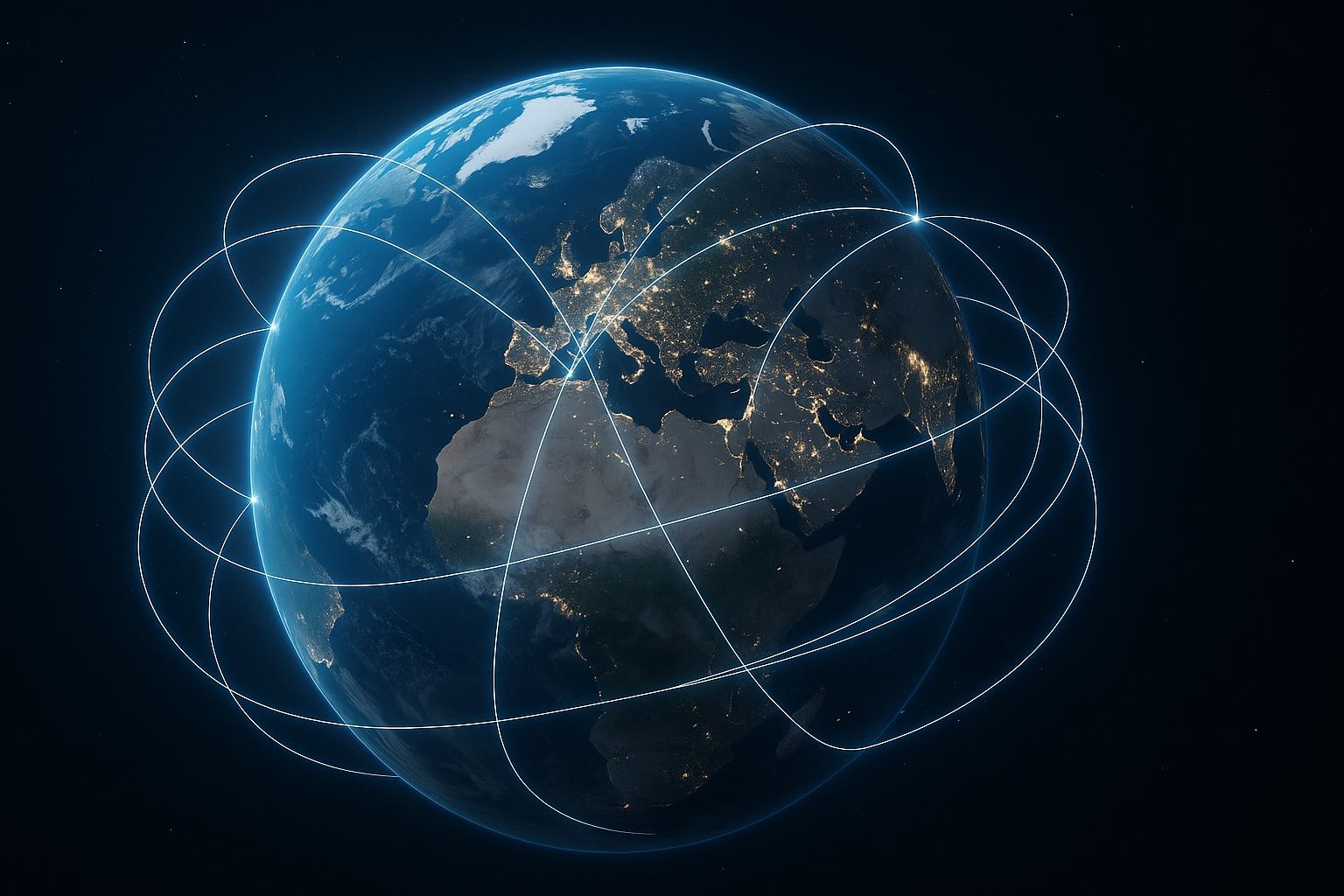
The global space economy hit $415 billion in 2024, with commercial satellite activities making up $293 billion. Active satellites jumped from 3,300 in 2020 to over 11,500, driven by mega-constellations from firms like SpaceX and OneWeb. Government space spending reached $135 billion, with $73 billion for defense. Regulators are addressing space debris, tracking over 36,000 objects larger than 10 cm.
No Signal: The Shocking Digital Divide in the DRC and the Race to Connect Millions

No Signal: The Shocking Digital Divide in the DRC and the Race to Connect Millions

About 27% of people in the Democratic Republic of the Congo used the internet in early 2024, leaving around 75 million offline. As of 2025, only 9,361 km of fiber had been installed, far below the 50,000 km target. In March 2024, the government secured $500 million from the World Bank and French Development Agency to expand access for 30 million more people. Orange DRC and Vodacom DRC plan to build up to 2,000 solar-powered towers by 2030.
Sky Scanners: How SAR Imaging Satellites Are Redefining Earth Observation

Sky Scanners: How SAR Imaging Satellites Are Redefining Earth Observation

About 75% of Earth is hidden from optical satellites by clouds or darkness at any time. Synthetic Aperture Radar (SAR) satellites like Sentinel-1, RADARSAT, TerraSAR-X, COSMO-SkyMed, ICEYE, and Capella Space provide high-resolution, all-weather, day-and-night imaging. ICEYE and Capella now offer sub-meter resolution and rapid delivery. NASA/ISRO’s NISAR mission is set to launch in 2025 with dual-band SAR.
fldksafljads

Satellite Phones: Comprehensive Global FAQ

Iridium operates 66 LEO satellites at 780 km, offering true global coverage and 0.1–0.2 second latency; its Extreme 9575 handset costs about $1,400. Inmarsat uses 3–4 GEO satellites for near-global service, with IsatPhone 2 priced around $1,000. Thuraya covers 160 countries with two GEO satellites; XT-LITE costs $650. Several countries, including China and India, ban or restrict satphones.
Satellite Internet FAQ

Satellite Internet FAQ

Traditional GEO satellite internet, such as HughesNet and Viasat, sends data 22,000 miles to orbit, resulting in 600–800 ms latency. Starlink uses low-Earth orbit satellites, offering 50–200 Mbps download and 20–40 ms latency. HughesNet and Viasat impose data caps; Starlink does not. Weather can disrupt service, though Starlink dishes may include heaters to melt snow.
Satellite Technologies FAQ

Satellite Technologies FAQ

Sputnik 1 became the first artificial satellite in 1957, followed by the U.S. Explorer 1 in 1958. As of 2025, more than 11,000 active satellites orbit Earth, with Starlink accounting for a large share. The first accidental satellite collision happened in 2009. Geostationary satellites remain fixed over the equator, while low-Earth-orbit networks like Starlink offer lower latency internet.
Where Satellite Phones Are Illegal?

Where Satellite Phones Are Illegal?

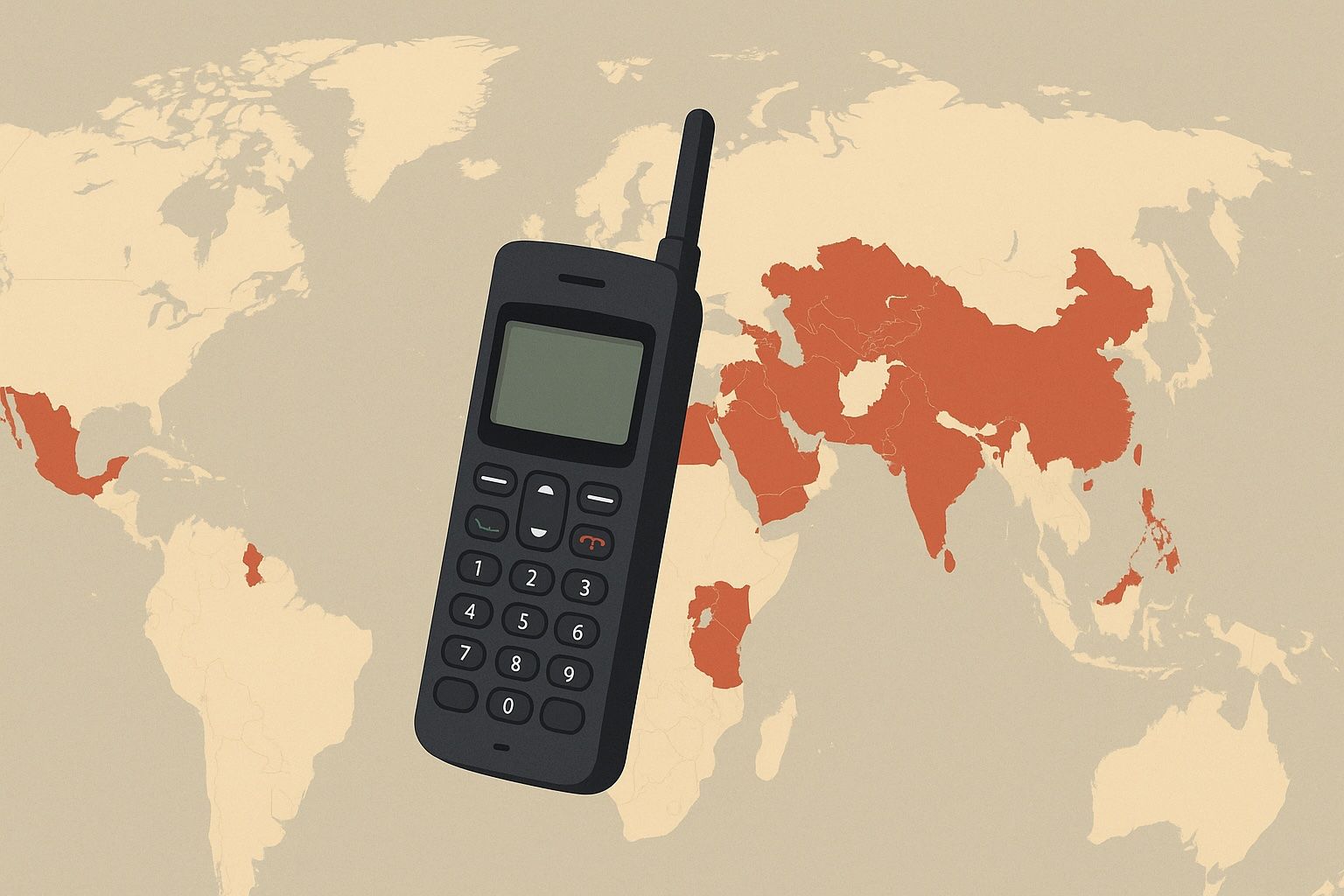
Bangladesh, Chad, Turkmenistan, and Myanmar ban satellite phones, with possession punishable by arrest. North Korea and China prohibit unauthorized devices, requiring registration or surrender, and may detain violators. India, Russia, Sri Lanka, and Mauritius allow satellite phones only with government approval and licensing. Enforcement ranges from confiscation to imprisonment.
6 June 2025
Eyes in the Sky: How Satellites Are Revealing Our Changing Climate

Eyes in the Sky: How Satellites Are Revealing Our Changing Climate

Radar altimeter data from satellites since 1992 show global mean sea level has risen about 10 centimeters, or 3.3 millimeters per year. Arctic summer sea ice extent has dropped 12% per decade since the 1980s. GRACE missions report Greenland and Antarctica are losing hundreds of billions of tons of ice annually. Over 150 Earth observation satellites now track climate indicators worldwide.
6 June 2025
Chad’s Digital Desert: The Shocking Truth Behind the Country’s Internet Revolution

Chad’s Digital Desert: The Shocking Truth Behind the Country’s Internet Revolution

About 2.74 million people in Chad use the internet in 2025, just 13% of the population. Mobile subscriptions stand at 14.5 million, with most internet access via mobile networks. Starlink launched broadband service in late 2024, offering speeds up to 150 Mbps for $50 a month. The government targets nationwide coverage by end-2025 and seeks $30 billion in investment to expand broadband and electrification.
Everything You Never Knew You Needed to Know About Differential and Precise Point Positioning

Everything You Never Knew You Needed to Know About Differential and Precise Point Positioning

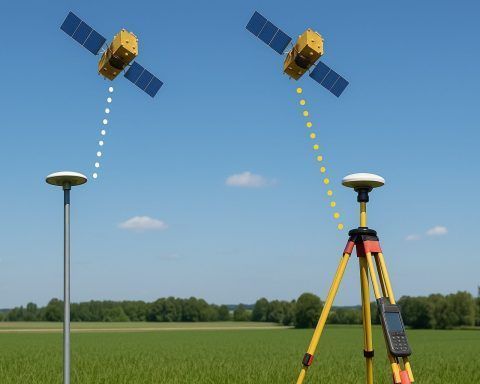
RTK delivers centimeter-level accuracy in real time when the base is within 10–20 km, while PPP provides similar accuracy globally but requires minutes to converge. John Deere’s StarFire system improved from 10 cm to 5 cm accuracy using dual-frequency GPS+GLONASS. Galileo HAS began global decimeter-level PPP corrections in 2023. The u-blox ZED-F9P module enables centimeter-level positioning for drones and robots at low cost.
Internet Access in Cape Verde: Current Status and Outlook

Internet Access in Cape Verde: Current Status and Outlook

About 73.5% of Cape Verde’s population, or roughly 387,000 people, were internet users in early 2025. More than 600,000 mobile cellular connections were active, exceeding the population, with 91% broadband-capable. Fixed broadband speeds averaged 19.8 Mbps down and 12 Mbps up by early 2025. Starlink launched in late 2024, and mobile data costs fell 88% from 2022 to 2023.
6 June 2025
Global Navigation Showdown: How GPS III, Galileo, BeiDou & GLONASS Upgrades Will Change How You Navigate

Global Navigation Showdown: How GPS III, Galileo, BeiDou & GLONASS Upgrades Will Change How You Navigate

SpaceX launched the GPS III satellite Katherine Johnson in 2025, part of a modernization delivering triple the accuracy and stronger anti-jamming. Galileo reached 27 satellites by late 2024, targeting 30 by end-2025, with its HAS service offering 20 cm horizontal accuracy since 2023. BeiDou-3 provides real-time positioning with 16 cm horizontal accuracy. Russia’s GLONASS-K2, set for 2025, aims for 0.3 m accuracy by 2030.
1 194 195 196 197 198 200

Stock Market Today

  • TKO Group Launches $1 Billion Share Buyback Program
    April 3, 2026, 3:56 PM EDT. TKO Group Holdings Inc. (NYSE:TKO) announced a $1 billion share repurchase plan, including an $800 million accelerated share repurchase (ASR) with Morgan Stanley and a 10b5-1 trading plan of up to $200 million. The ASR entails an initial delivery of over 3.1 million Class A shares, with final totals based on average price during the agreement, expected to conclude by June. This initiative nearly uses the full $2 billion authorization previously approved. The 10b5-1 plan will begin after the ASR completes, allowing further repurchases. TKO operates in sports entertainment with segments like UFC, WWE, and IMG, plus merchandising video games and apparel. The company highlights disciplined capital allocation aimed at enhancing shareholder value.
Go toTop