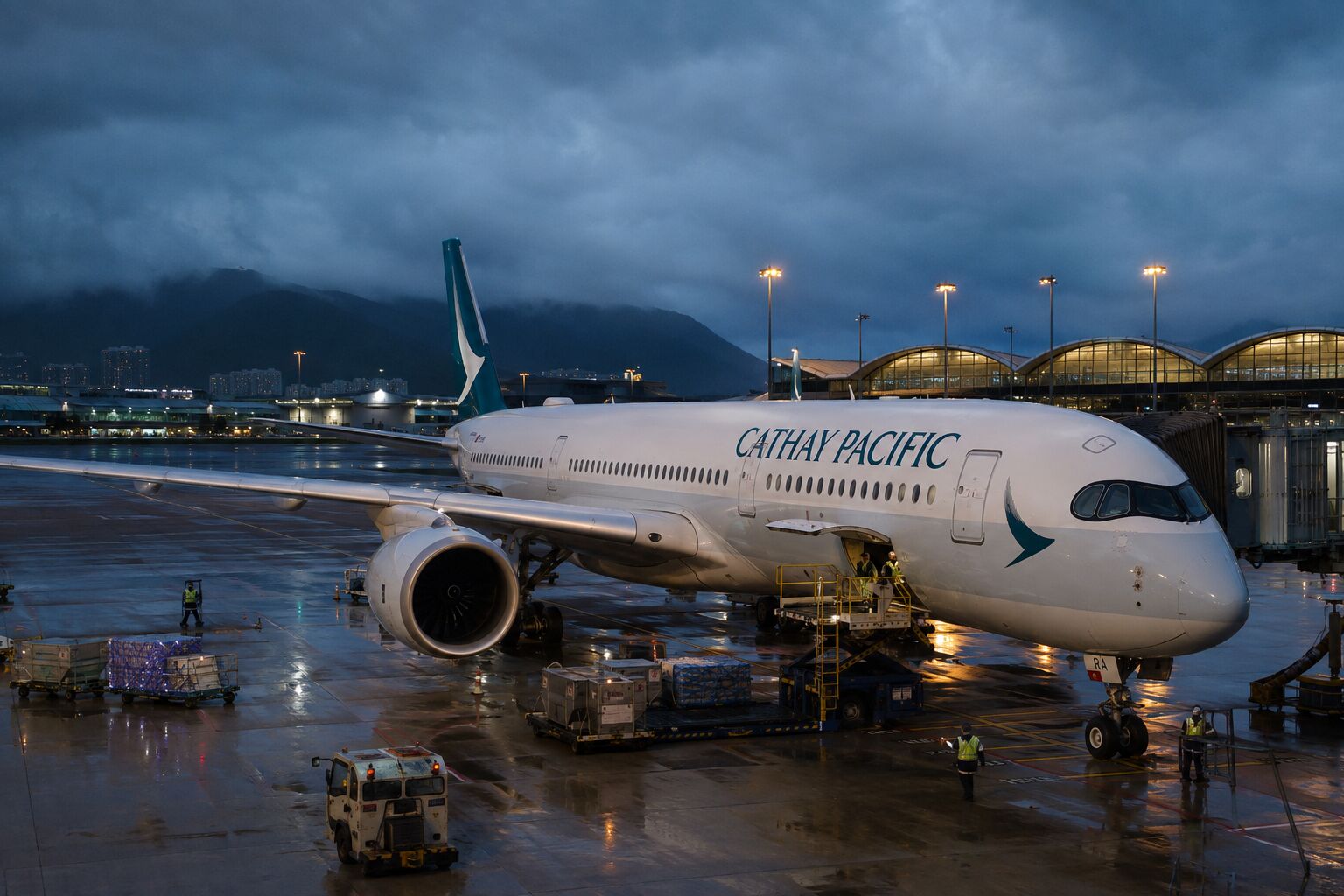

HONG KONG, September 5, 2026, 9:29 p.m. HKT — Cathay Pacific Airways HKG:0293 has extended its Dubai and Riyadh passenger-flight suspension through November 30. The stock still gained 0.6% on Friday. Investors appear more worried about fuel than two dormant routes.
The new date adds about five weeks to Cathay’s last restart plan. Yet the shares closed at HK$14.42, only 4.8% below their August 6 peak, a muted response that fits the company’s limited direct exposure.
Cathay’s Friday notice cancelled both services through November. Passengers may rebook, reroute or seek refunds. The carrier gave no estimate of revenue or refund costs.
The restart moved five weeks
Cathay has kept both passenger routes suspended since March
Schedule history and frequencies: Cathay’s earlier service notice. New endpoint: September 4 update.
The old schedule contained one daily Dubai flight and four weekly Riyadh flights. DBS Research described that exposure as limited in March. Cathay had shifted aircraft toward London and Zurich.
That redeployment softens the lost-route arithmetic. It does not erase refund costs or operational friction, while widebody aircraft cannot be moved instantly when bookings already exist.
Cathay recovered from the week’s low
Hong Kong daily closes since the post-results peak
The September 4 route update arrived during Friday trading. The shares finished higher, after touching their period low two sessions earlier.
As of . Unadjusted daily closes and volume: Yahoo Finance.
Friday’s gain followed a sharp rebound on Thursday. Volume reached 31.2 million shares.
The raw closing price remains below HK$15.14, reached after interim results.
The route decision is therefore a warning, not a fresh earnings collapse. Fuel has the broader reach because every passenger and cargo flight absorbs that cost.
Chair Guy Bradley made the pressure explicit in August. Cathay’s jet-fuel costs were “almost doubling from the first quarter to the second quarter,” he said. The Middle East conflict drove that increase.
Fuel moves more of the profit model
HSBC’s September sensitivity case versus Cathay’s first-half buffer
Sensitivity and estimates: HSBC analysis reported September 4. Actual results and liquidity: Cathay investor relations.
First-half attributable profit rose to HK$6.2 billion from HK$3.7 billion. The number included HK$1 billion of non-recurring gains. Airlines and subsidiaries contributed HK$4.9 billion.
Demand supplied a cushion. DBS analyst Jason Sum wrote that “volume, load factor and yield moved higher together” across the businesses. Cathay Pacific passenger revenue rose 26.3% to HK$43.2 billion.
Cargo revenue advanced 23.9% to HK$13.8 billion. Its yield climbed 18.1%. Technology shipments helped, while fuel surcharges passed part of the cost to customers.
Analysts still see upside, with caveats. HSBC kept a Buy rating and HK$16.50 target on September 4. That sits 14.4% above Friday’s close, before dividends.
DBS carries a Buy rating and HK$18 target. It expects surcharge and fare repricing to recover more fuel expense later this year. Its target implies 24.8% upside, but neither estimate guarantees a return.
Risks: Another fuel spike could overwhelm better yields. Refunds may grow if the suspension extends again. A rapid regional normalisation could also unwind the transfer traffic now flowing through Hong Kong.
The Hong Kong market reopens Monday. Watch fuel prices first, then booking strength and cargo yields. The suspended routes matter; the cost of flying everywhere matters more.