
NEW YORK, August 10, 2026, 18:12 EDT
- Ceribell increased its 2026 revenue forecast to a range of $114 million-$117 million, following a 33% rise in second-quarter sales.
- The number of active hospital accounts increased to 712, compared to 680 at the end of March.
- Gross margin increased to 92%, though this result reflected a one-off benefit from a tariff refund.
- The GAAP net loss increased by 41% to $19.3 million, with operating expenses rising at a quicker pace than revenue.
CeriBell, Inc. NASDAQ:CBLL lifted its 2026 revenue outlook on Monday following a 33% increase in second-quarter sales to $28.1 million, helped by onboarding new hospitals and higher utilization at current sites.
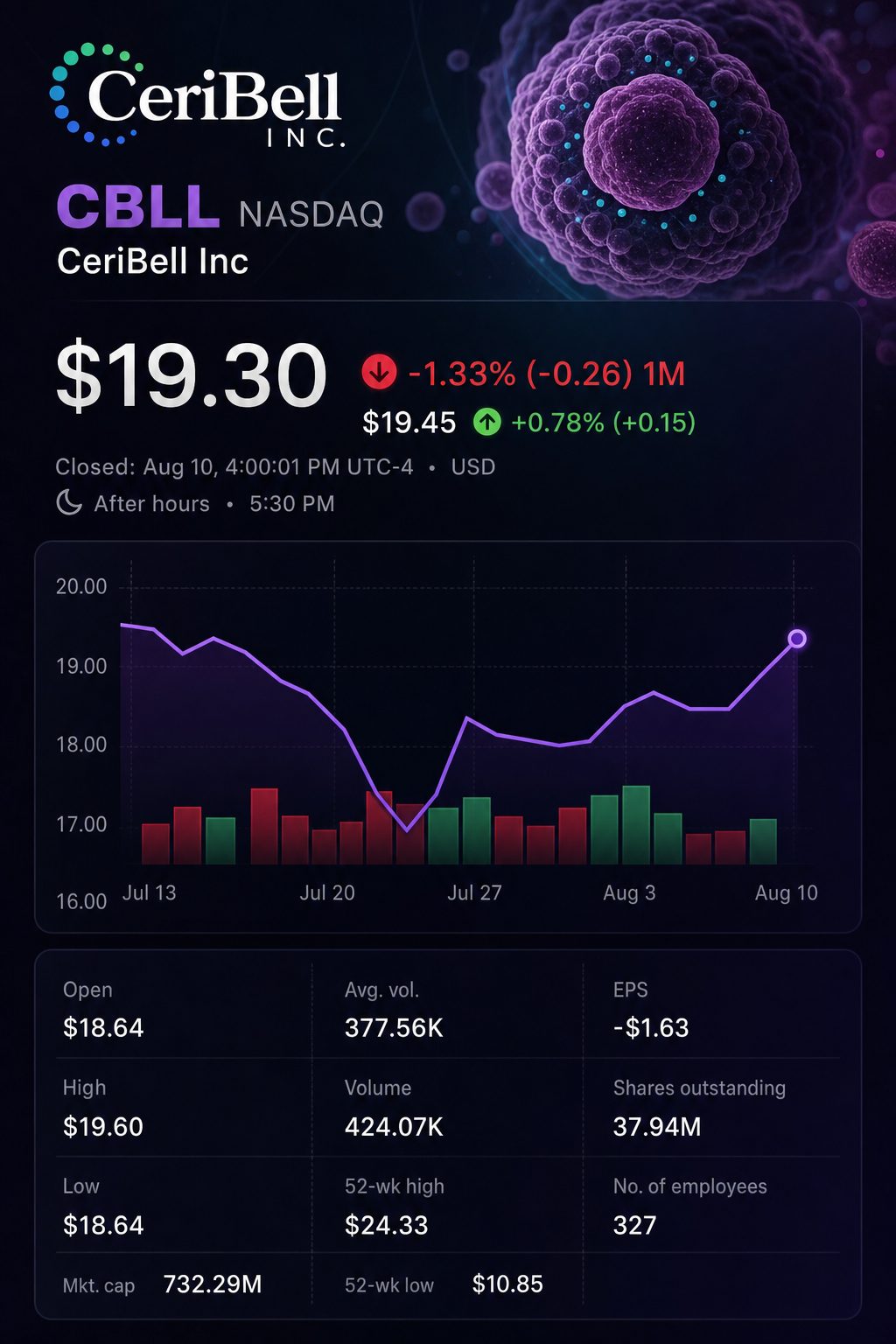
Growth remains strong, but so do expenses. Operating costs increased by 37%, while GAAP net loss expanded by 41% to $19.3 million. Investors are now looking for account growth to deliver operating leverage.
The 92% gross margin warrants scrutiny. It reflects refunds of tariffs paid under the International Emergency Economic Powers Act, a one-off benefit Ceribell did not specify.
| Q2 measure | 2026 | 2025 | Year-on-year change |
|---|---|---|---|
| Total revenue | $28.1 million | $21.2 million | up 33% |
| Product revenue | $21.2 million | $15.9 million | up 33% |
| Subscription revenue | $6.9 million | $5.3 million | up 30% |
| Operating expenses | $45.9 million | $33.6 million | up 37% |
| GAAP net loss | $19.3 million | $13.6 million | up 41% |
| Adjusted EBITDA loss | $9.8 million | $10.0 million | 2% improvement |
The figures in the table are based on Ceribell’s own disclosures. Percentage shifts in net loss and adjusted EBITDA are derived from unrounded numbers provided in the company’s statement. Adjusted EBITDA figures do not factor in stock-based compensation or patent litigation expenses.
Sequentially, trends improved. Revenue rose 6% compared to the previous quarter. The number of active accounts went up by 32, and the adjusted EBITDA loss decreased by $1.3 million.
| Operating measure | Q2 2026 | Q1 2026 | Sequential change |
|---|---|---|---|
| Revenue | $28.1 million | $26.5 million | Up 6% |
| Active accounts | 712 | 680 | Increase of 32, or 4.7% |
| Gross margin | 92% | 87% | Improved by 5 percentage points |
| Adjusted EBITDA loss | $9.8 million | $11.2 million | Reduced by $1.3 million |
| Cash and marketable securities | $129.3 million | $141.2 million | Decreased by $11.9 million |
Ceribell’s May filing provides the first-quarter figures for comparison. The Q2 margin reflects the impact of the tariff refund, making the five-point improvement an incomplete indicator of ongoing performance.
Product sales continued to drive performance, accounting for about three-quarters of revenue during the quarter. Subscriptions made up the remainder, climbing 30% and delivering a steadier revenue stream as the installed base increased.
Jane Chao, co-founder and CEO, said the figures indicate “adoption accelerating across both new and existing accounts.” Growth in active accounts backs this statement, although revenue per account may fluctuate depending on usage. Ceribell Q2 results
Management raised its outlook for the second consecutive quarter, setting the new midpoint at $115.5 million. This figure is $2.5 million higher than the midpoint from February, suggesting growth of nearly 30%.
| 2026 guidance date | Revenue range | Midpoint | Implied annual growth |
|---|---|---|---|
| February 24 | $111 million-$115 million | $113.0 million | 25%-29% |
| May 11 | $112 million-$116 million | $114.0 million | 26%-30% |
| August 10 | $114 million-$117 million | $115.5 million | 28%-31% |
Ceribell’s three earnings reports provide the basis for the progression. The most recent figures reflect preliminary projections rather than confirmed revenue.
The underlying margin benefited from manufacturing. Ceribell reported that gross profit rose due to cost cuts and its Vietnam operation. The reported margin was further boosted by the tariff refund.
During the quarter, cash declined by $11.9 million. In August, Ceribell secured $60 million in committed credit, which consists of a $30 million term loan and a $30 million revolving credit facility, along with an additional $25 million available at the lender’s option.
Reimbursement could outweigh the importance of the credit facility. The Centers for Medicare & Medicaid Services approved a New Technology Add-On Payment for Ceribell’s delirium monitor, which takes effect October 1. Recent FDA clearances added new algorithms and updated its next-generation hardware platform.
The reimbursement verdict arrived last week. Attention now turns to implementation. Company leadership is set to appear at Canaccord’s growth conference on August 12, where investors could look for improved margin clarity and further information regarding delirium uptake.
Wall Street maintains a broadly positive stance, though views vary. Recently released targets span from $17 to $30. Some of these estimates were issued before the most recent quarter and could be revised when analysts refresh their forecasts.
| Firm and analyst | Recommendation | Target | Latest cited date |
|---|---|---|---|
| Canaccord Genuity Group Inc. (TSE:CF), William Plovanic | Buy | $25 | May 12, 2026 |
| TD Cowen, parent Toronto-Dominion Bank NYSE:TD | Buy | $29 | April 15, 2026 |
| BTIG, Marie Thibault | Buy | $30 | January 28, 2026 |
| JPMorgan Chase & Co. NYSE:JPM, Robbie Marcus | Overweight | $17 | November 5, 2025 |
| Raymond James Financial, Inc. NYSE:RJF, Jayson Bedford | Strong Buy | $19 | October 21, 2025 |
The recommendation table reflects the most recent analyst actions reported by MarketBeat. In comparison, a different S&P Global poll of eight analysts shows a Strong Buy consensus with an average price target of $26.86. Methods vary.
Risks: Ceribell continues to operate at a loss, with decreasing cash levels and potentially volatile litigation expenses. Hospital sales cycles take time. Obtaining reimbursement and new clearances may not quickly drive uptake.
The next measure for valuation is operating leverage. Consistently achieving a margin below the tariff-supported 92%, along with ongoing account expansion and a reduced loss, would serve as more compelling proof than a further guidance raise on its own.
Related articles: Artificial Intelligence