
Key facts (Nov 5, 2025 and the last few days)
- Ban: Beijing has ordered state‑funded data centers to use only domestically made AI chips, with projects under 30% complete told to remove foreign chips or cancel purchases; later‑stage builds will be decided case‑by‑case. The guidance covers Nvidia’s H20 and even higher‑end B200/H200 parts (though those are already restricted from direct export to China).
- Scale: AI data‑center projects in China have drawn $100B+ in state support since 2021, magnifying the real‑world impact of the new rules.
- Market share shock: Nvidia’s China AI‑accelerator share has fallen from ~95% (2022) to ~0%, according to the company, underscoring the market reset.
- The “carrot”: cheap power for domestic chips. Provinces including Gansu, Guizhou and Inner Mongolia are offering up to 50% electricity discounts to AI data centers that deploy Chinese chips (e.g., Huawei, Cambricon). Foreign‑chip deployments are excluded. Reports cite ~¥0.40/kWh (~$0.056) target pricing. Financial Times+1
- Washington’s stance: The White House said this week the U.S. will not allow Nvidia’s “Blackwell” chips to be sold to China “at this time,” echoing President Trump’s comments that the most advanced GPUs will be reserved for U.S. buyers. Reuters+1
- Stocks today: In U.S. trading (about 10:45 UTC), Nvidia (NVDA) $198.69 (-3.8%), AMD $250.05 (-3.6%), Intel $37.03 (-6.2%); China internet names were mixed: Alibaba $164.30 (-2.0%), Baidu $124.99 (+3.1%). Broader AI names sold off globally on valuation jitters.
What happened — and why it matters
Beijing’s new line in the sand. China has issued guidance requiring any AI data center that receives state funding to deploy only domestic AI chips. Officials have told data centers that are less than 30% complete to rip out foreign accelerators or cancel pending procurements. Projects further along will be reviewed case‑by‑case. The directive, described by sources to Reuters, is among China’s most assertive steps to localize critical compute amid on‑off trade tensions and export controls with Washington.
Who’s covered. The order spans Nvidia’s H20—the highest‑spec part the company can legally offer in China—and also references even more powerful B200/H200 chips (currently barred from export), which have nonetheless been obtainable through gray channels. This closes a policy loophole for state‑funded builds and points the upgrade path toward Huawei, Cambricon, MetaX, Moore Threads and Enflame.
The energy “subsidy bridge.” A day earlier, the Financial Times reported that Chinese provinces are slashing electricity costs by up to half for AI data centers if they use China‑made chips—a targeted incentive that excludes Nvidia/AMD deployments. Tom’s Hardware, citing the FT, adds that Gansu, Guizhou and Inner Mongolia are dangling power rates around ¥0.40/kWh (~$0.056) and even cash incentives that can defray significant portions of first‑year opex. The policy addresses a practical problem: domestic AI accelerators still lag U.S. parts on performance‑per‑watt, raising energy costs for operators that swap out Nvidia silicon. Financial Times+1
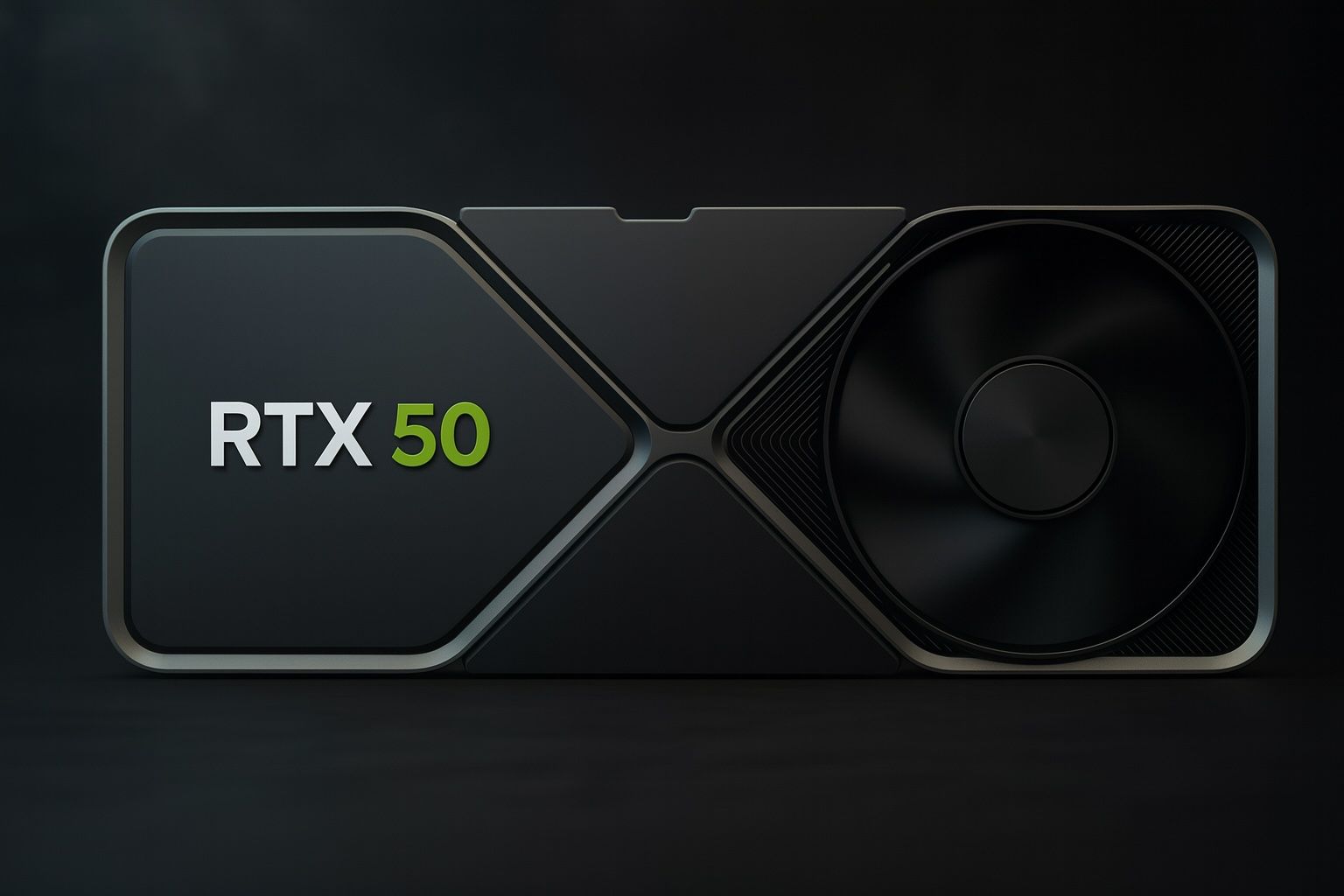
Washington hardens, too. On Tuesday, the White House made clear that Nvidia’s Blackwell—the company’s most advanced AI platform—won’t be licensed to China “at this time.” “As for the most advanced chips, the Blackwell chip, that’s not something we’re interested in selling to China at this time,” spokeswoman Karoline Leavitt said. President Donald Trump had similarly told reporters that “we’re not talking about the Blackwell,” even as the administration has intermittently weighed scaled‑down variants for allies. Reuters+1
Nvidia’s read‑through. CEO Jensen Huang last week said he hopes the firm can “return to China” eventually—but conceded Nvidia now expects “zero” market share there and warned it would be “foolish to underestimate Huawei.” The new Chinese guidance appears to cement that stance—at least in state‑funded infrastructure. Reuters
Winners, losers and the road ahead
Winners (near‑term): Chinese chip vendors and state‑aligned clouds. The ban directly carves out market share for China’s AI‑accelerator makers. Coupled with power subsidies, it lowers TCO and nudges ByteDance/Alibaba/Tencent and provincial projects onto Ascend/Cambricon platforms—especially in inland regions with cheaper power and available land. However, software‑ecosystem lock‑in remains a headwind: developers comfortable with CUDA have been slow to migrate to domestic toolchains.
Losers (near‑term): foreign AI‑chip suppliers—especially Nvidia. Nvidia already assumes near‑zero China share; today’s guidance makes regaining state‑funded demand much harder. AMD and Intel face the same policy wall, though their China data‑center exposure is smaller. Bottom line: China’s $100B+ state‑backed data‑center wave since 2021 will increasingly channel orders to homegrown silicon.
What to watch next.
- Enforcement creep: today’s rule targets state‑funded projects. If provincial or central authorities extend it to private builds, the foreign TAM in China shrinks further.
- Gray‑market clampdowns: Reuters notes B200/H200 parts are accessible via unofficial channels—expect tighter scrutiny.
- Software parity and power budgets: subsidies can narrow operating‑cost gaps, but developer tooling and HBM supply constraints will shape real‑world adoption curves.
- U.S. export posture: the Blackwell line appears off‑limits to China for now; any rules on downgraded variants will be pivotal.
Market reaction and prices (intraday, ~10:45 UTC)
- Nvidia (NVDA): $198.69 (‑3.8%)
- AMD: $250.05 (‑3.6%)
- Intel: $37.03 (‑6.2%)
- Alibaba (BABA): $164.30 (‑2.0%)
- Baidu (BIDU): $124.99 (+3.1%)
- Super Micro Computer (pre‑market): −9% after an outlook miss added to sector jitters.
Global tech weakness reflects AI‑valuation fatigue and profit‑taking as well as policy uncertainty.
A veteran strategist captured the mood: it’s a “classic position‑unwind and profit‑taking day,” a “healthy” reset rather than full‑blown panic. — Charu Chanana, Saxo. Investing.com
Outlook: policy, profits and power
For U.S. chipmakers (NVDA, AMD, INTC).
- Base case (next 3–6 months): China contributes little to no data‑center growth as state projects hard‑pivot to domestic parts. Revenue engines remain U.S./ally hyperscalers, where capex plans still run into the hundreds of billions for AI infrastructure. Expect headline‑driven volatility around export licensing and China demand proxies.
- Upside risks: faster Blackwell/MI‑series ramps at U.S. clouds; easing component bottlenecks (notably HBM) improving shipment linearity.
- Downside risks: tougher U.S. export restrictions, European capex wobbles, or a deeper AI‑bubble valuation correction knocking multiples.
For China’s platforms (BABA, BIDU, Tencent) and chipmakers.
- Base case: Subsidized power narrows the performance‑per‑watt penalty of domestic accelerators, improving TCO for training/inference at scale in subsidized regions. Migration costs (hardware, frameworks, model optimization) remain the constraint, but policy tailwinds are now decisive for state‑linked workloads.
- Watch: speed of toolchain maturity (e.g., Huawei’s CANN stack), inland data‑center build‑outs, and any extension of the domestic‑only rule beyond state‑funded projects.
Geopolitical overlay. U.S. officials have drawn a bright line around top‑end GPUs. As the White House put it this week: “not…selling [Blackwell] to China at this time.” That keeps China focused on self‑reliance—a trajectory accelerated by today’s ban and power subsidies. Reuters
Expert voices (selected)
- Karoline Leavitt, White House: “[Blackwell is] not something we’re interested in selling to China at this time.” Reuters
- Jensen Huang, Nvidia: “We’re not talking about the Blackwell [for China] … It would be foolish to underestimate Huawei.” Reuters
- Charu Chanana, Saxo: “Classic position‑unwind and profit‑taking … healthy, not panic.” Investing.com
Context and related developments
- How we got here: A ratcheting cycle of U.S. export controls on advanced chips and compute (tightened again in 2025) and China’s drive for localization in core tech.
- Previous Chinese measures: discouraging purchases of Nvidia’s H20; showcasing state data centers built on 100% domestic accelerators; and 2023 restrictions on Micron products in critical infrastructure.
Sources & further reading
- Reuters exclusive on the ban and implementation details (projects <30% complete, H20/B200/H200 coverage, gray‑market references; $100B+ tenders; Nvidia share data).
- Financial Times on power subsidies for data centers using domestic AI chips; provinces and discount magnitude.
- Tom’s Hardware summary of the FT reporting (provinces, ~¥0.40/kWh target, operator incentives).
- Reuters on the Blackwell decision and Trump’s remarks.
- Market snapshot and sector sell‑off context (Reuters live coverage, Super Micro update).
- Yahoo Finance/Reuters feed of the exclusive for additional context.
Note: This report includes real‑time price references as of ~10:45 UTC on Nov 5, 2025. Market conditions can change quickly. Figures and quotes are attributed to their original outlets as linked above. This article does not constitute investment advice.