
Key facts (updated Nov. 5, 2025):
- China’s space agency has postponed the Shenzhou‑20 crew’s landing, citing a suspected hit from tiny orbital debris; risk analysis is underway and no new return date is set.
- Both Shenzhou‑20 and its relief ship Shenzhou‑21 are docked to Tiangong, with a formal in‑orbit handover completed earlier this week.
- Back‑up options exist: if Shenzhou‑20 is deemed unsafe, China can return the outgoing crew on Shenzhou‑21 or roll a standby Long March‑2F/Shenzhou vehicle for an emergency pickup.
- First known debris‑related delay for a Shenzhou return; a previous Shenzhou return was delayed by weather, not debris.
- Who’s on board: Shenzhou‑20’s crew is Chen Dong (commander), Chen Zhongrui and Wang Jie; Shenzhou‑21’s arriving trio includes Zhang Lu, Wu Fei and Zhang Hongzhang.
- Market watch (midday Nov. 5, local exchange time): China Spacesat (600118) ~¥43.0; China Satcom (601698) ~¥21.9; China Aerospace International (0031.HK) ~HK$0.55. Details and context below.
What happened and what we know
China’s Manned Space Agency (CMSA) said Shenzhou‑20’s return, originally scheduled for Wednesday, Nov. 5, is postponed after the spacecraft was “possibly hit by tiny bits of space debris.” An impact analysis and risk assessment are in progress; no revised landing time has been announced. Reuters
The outgoing Shenzhou‑20 crew has already completed a handover with the newly arrived Shenzhou‑21 team aboard the Tiangong space station. The in‑orbit changeover took place earlier this week, and both ships remain docked as engineers evaluate Shenzhou‑20’s condition.
Why this is significant
Reuters notes this is the first time a Shenzhou return has been delayed due to debris, underscoring the growing hazards in low Earth orbit. (A previous Shenzhou delay involved weather at the landing site.
China’s domestic coverage and independent analysts stress that contingencies are routine: if inspections show elevated risk for Shenzhou‑20, Shenzhou‑21 can ferry the outgoing trio home, and a standby Long March‑2F/Shenzhou could be rolled out from Jiuquan if needed. As space commentator Yu Jun (“Steed’s Scarf”) put it, “Shenzhou‑22 and the Long March‑2F are in ‘emergency duty’ mode and ready to bring our astronauts home safely if needed.” Reuters
The crews
- Shenzhou‑20 (April–November 2025): Chen Dong, Chen Zhongrui, Wang Jie. Chen Dong holds China’s records for cumulative time in space and number of spacewalks.
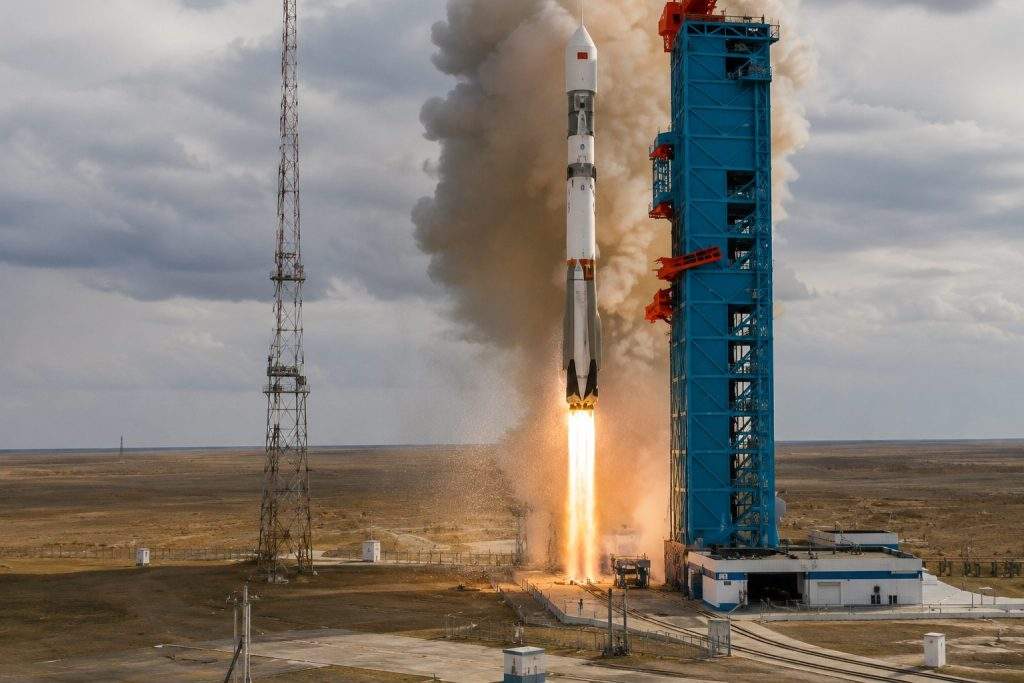
- Shenzhou‑21 (arrived Oct. 31–Nov. 1 timeframe): Zhang Lu, Wu Fei, Zhang Hongzhang; their flight achieved a notably fast launch‑to‑dock profile.
The debris problem, in context
The backlog of junk in orbit has become a systemic risk. “47,000 objects on orbit — 47,000 that can hit 46,999 — that’s a big math problem,” U.S. Space Force leaders have warned, noting that many smaller hazards can’t even be tracked. National Defense Magazine
Recent incidents illustrate the stakes:
- June 2024: A defunct Russian RESURS‑P1 satellite shattered into >100 pieces, forcing ISS astronauts to shelter in their spacecraft.
- Nov. 2021: A Russian ASAT test created a large debris field; the ISS took precautions and subsequently performed multiple avoidance maneuvers.
- 2022–2023: Russia’s Soyuz MS‑22 suffered a coolant leak most likely from a micrometeoroid strike; Russia launched a replacement vehicle and the affected crew’s return was delayed.
China, the U.S., Europe and others have all grappled with debris management; Beijing has previously complained to the U.N. about avoidance maneuvers, while critics point to China’s 2007 ASAT test and long‑lived fragments. The policy conversation is shifting toward space‑traffic coordination, shared tracking databases, and debris‑mitigation technologies.
What happens next aboard Tiangong
Until the risk review is complete, two return pathways remain most likely:
- Nominal plan: Clear Shenzhou‑20 to undock and land at the Dongfeng site once engineers certify it is safe.
- Plan B: If inspectors are unconvinced, use Shenzhou‑21 to bring the outgoing crew home and/or launch a standby Shenzhou for pickup. China keeps an emergency Long March‑2F/Shenzhou on hot standby for such contingencies.
Expert and official voices
- CMSA (via Xinhua): The return is “postponed due to a suspected impact from tiny space debris,” with “analysis and risk assessment” underway. Spacepolicyonline
- Yu Jun (prominent aerospace explainer): “Shenzhou‑22 and the Long March‑2F … are in ‘emergency duty’ mode and ready to bring our astronauts home safely if needed.” The Guardian
- U.S. Space Force: “47,000 objects on orbit … that’s a big math problem,” highlighting the tracking and collision‑avoidance challenge. National Defense Magazine
Market reaction and the road ahead for investors
Snapshot prices (Nov. 5, 2025):
- China Spacesat (600118.SS) ~¥43.03 (intraday range ~¥41.86–¥43.57; 52‑week range ~¥23.87–¥45.59). The stock has surged in recent months amid sector momentum.
- China Satcom (601698.SS) ~¥21.86 (intraday range ~¥21.30–¥21.92; 52‑week range ~¥17.36–¥28.29).
- China Aerospace International (0031.HK) ~HK$0.55 (day range ~HK$0.53–0.56).
How this news could move the sector (near‑term scenarios):
- Base case (benign inspection): If CMSA clears Shenzhou‑20 within days, headline risk fades and investors may refocus on Tiangong’s steady cadence (supportive to 600118/601698 given ongoing payloads, satellite services).
- Operational delay (use Shenzhou‑21): A swap‑ship return would be operationally manageable but highlights vulnerability to debris; defense/satellite names could see two‑sided volatility—initial jitters offset by expectations for more shielding, tracking, and replacement orders.
- Low‑probability stress (emergency launch): A standby Shenzhou call‑up would signal material damage—typically a risk‑off impulse for Chinese human‑spaceflight contractors, but potentially bullish for debris‑mitigation and tracking plays globally as policy and budgets tighten.
Medium‑term view: The debris narrative is structurally supportive for spending on shielding, surveillance, and on‑orbit servicing. That backdrop has already benefited select Chinese satellite suppliers in 2H25. Still, position sizing should reflect binary event risk tied to CMSA’s damage assessment and the timing of the crew’s safe return. (This is market commentary, not investment advice.
Broader backdrop: Tiangong’s fast rotations and expanding research
Shenzhou‑21’s quick launch‑to‑dock and the accelerated crew rotation reinforce China’s intent to keep Tiangong continuously staffed for science, technology and station upkeep—work that increasingly includes debris protection and risk‑reduction tasks.
What to watch in the coming days
- CMSA updates on the impact assessment and any hardware inspections of Shenzhou‑20.
- Independent tracking notes from space‑situational‑awareness groups and any conjunction reports related to Tiangong’s orbit. (General background on tracking loads and past debris events linked above.
- Market tone for China’s satellite/aerospace names as clarity emerges around the return plan.
Timeline (recent)
- Oct. 31–Nov. 1 (BJT): Shenzhou‑21 launches and docks for a six‑month expedition; crews begin handover.
- Nov. 4: CMSA says Shenzhou‑20 will return Nov. 5 after handover.
- Nov. 5: CMSA postpones Shenzhou‑20’s return due to suspected debris impact; risk analysis underway.
Sources & further reading
- Official/Primary: CMSA statement via Xinhua and CGTN; Reuters wrap‑up with operational contingencies.
- On‑orbit handover & crew details: SpacePolicyOnline, People’s Daily/China Daily.
- Debris‑risk context & prior incidents: Reuters, NASA, National Defense Magazine.
- Shenzhou‑21 launch & fast docking: Space.com.
- Equities data: Investing.com, Reuters (HK), MarketScreener.