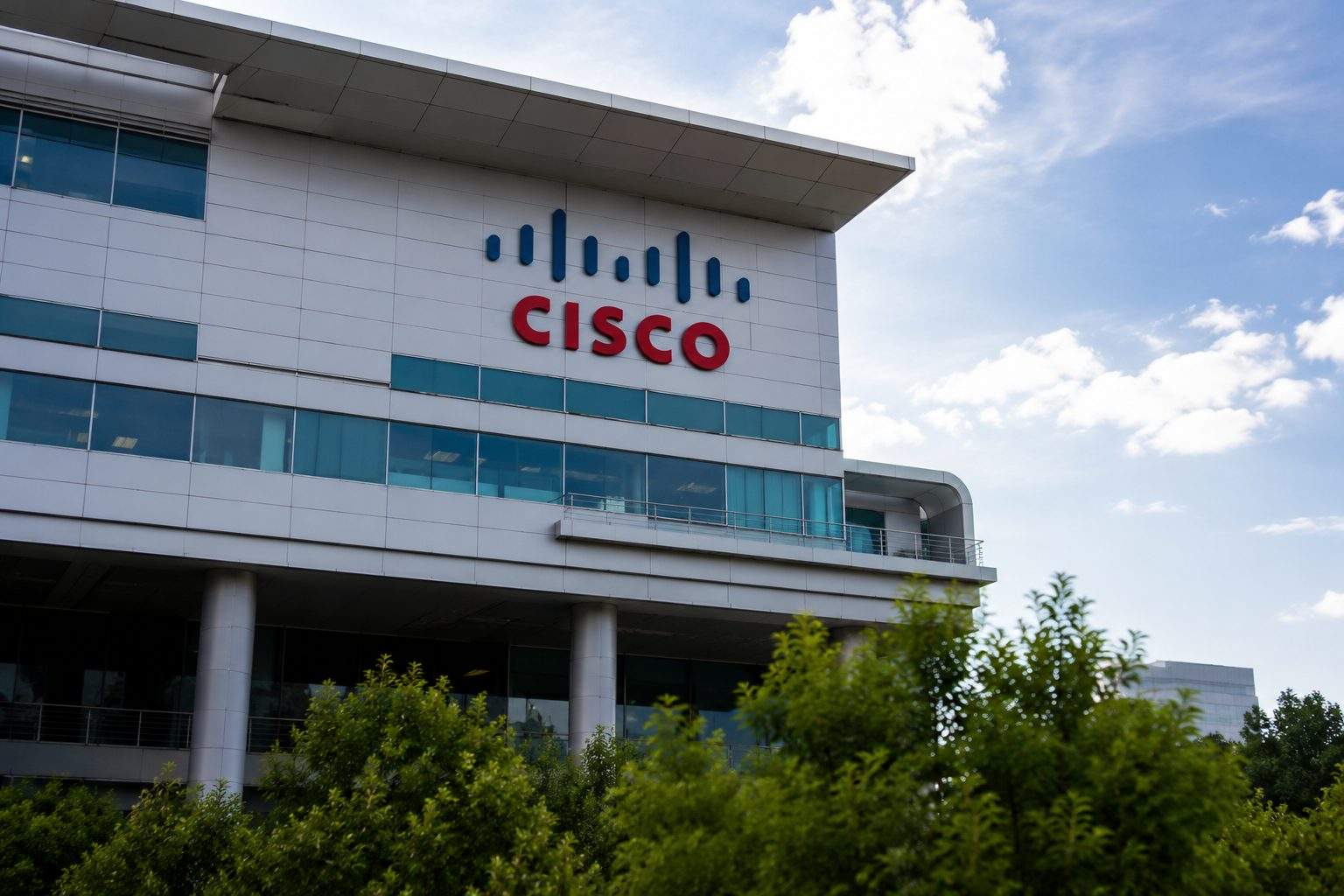
NEW YORK, July 26, 2026, 14:22 EDT — U.S. markets have closed trading for the day.
Cisco ended Friday at $114.17, rising 1.25% on the day, and advancing 2.0% over the week.
The stock outperformed the Nasdaq’s weekly gain by 4.1 percentage points, even though trading volume was low.
Fourth-quarter revenue is projected at $16.82 billion, with adjusted earnings expected to reach $1.17 per share, according to initial consensus estimates.
Cisco Systems NASDAQ:CSCO closed Friday at $114.17, marking its fourth consecutive advance. The share price climbed 2.0% over the past week, while the Nasdaq Composite slipped 2.1%.
The 4.1-point spread serves as the key indicator for investors. It suggests that Cisco operates as a lower-multiple haven in the event of an AI-driven market decline.
Trading volumes did not confirm the move. The average turnover was 16.0 million shares, roughly 33% less than the stock’s recorded average volume.
This undermines the argument for a renewed institutional re-rating. Cisco’s quarterly dividend of $0.42 is scheduled for payment on July 22, providing an income element.
The valuation gap is still significant. The comparison relies on closing prices from July 17 and July 24, and it also takes into account the latest trailing price-to-earnings ratios.
Cisco lagged behind its peers throughout the week, but on Friday, the trend switched, with Cisco shares climbing while Arista and Broadcom declined.
Cisco’s core performance is more robust than its traditional networking reputation implies. Revenue for the fiscal third quarter climbed 12% to a record $15.8 billion.
Networking revenue increased by 25%. Product sales rose 17%. Services declined 1% and security remained unchanged.
AI-driven demand led to the quickest increase. Cisco secured $5.3 billion in hyperscaler AI infrastructure orders by the end of the third quarter.
The company increased its annual order goal to $9 billion. Networking orders climbed above 50%, and orders for data-centre switching advanced over 40%.
Direxion’s Ryan Lee referred to the development as “hyperscaler capex spilling downstream.” This sheds light on Cisco’s ability to remain stable even as chip stocks lost ground. Reuters
Margins provide a counterpoint. Adjusted gross margin declined to 66.0%, compared with 68.6% in the same period a year ago.
Cisco is still trading 12.4% under its peak on June 4. While this decline suggests potential for a rebound, it also indicates that investors are being cautious.
Cisco projects revenue for the fourth quarter between $16.7 billion and $16.9 billion. The company expects adjusted earnings per share in the range of $1.16 to $1.18.
The outlook factors in projected impacts from existing tariff policies. Early consensus aligns closely with the midpoint of guidance.
The initial external tests are scheduled this week. The Federal Reserve will convene on July 28-29, and data for second-quarter GDP and June inflation will be released on July 30.
Earnings reports from major cloud companies are set to provide fresh insight into data centre investment trends. If capital spending guidance strengthens, it would back Cisco’s updated target for AI-related orders.
Risks: Low trading volume exposes the rally to potential pullbacks. Cisco faces risks from margin compression, stagnant security sales and a possible shock from elevated rates, all of which could erode its valuation buffer.
TechStock² • EXTENDED COVERAGE
Further analysis
Editorial insight
How is Cisco stock positioned ahead of the market opening on Monday?
As markets did not open on Sunday, the last confirmed price is from Friday's close. Cisco ended at $114.17, up 1.25% for the session. Over the week, shares rose around 2.0% while the Nasdaq declined 2.1%. The stock remains down 12.4% from its 52-week high of $130.37 set on June 4.
Does the current valuation reflect significant anticipated AI expansion?
Cisco’s share price on Friday was 26.7 times the midpoint of its projected adjusted EPS for FY2026. The company forecasts adjusted EPS between $4.27 and $4.29, up from $3.81 the previous year, equivalent to roughly 12.3% annual growth. The multiple may narrow if there are significant misses in orders or margins. The figure is based on company projections, not a revised analyst consensus.
Is Cisco on track to achieve $9 billion in hyperscaler AI orders within this fiscal year?
Cisco recorded $1.9 billion in the third quarter and $5.3 billion over the first nine months. To meet its $9 billion target, Cisco needs to generate an additional $3.7 billion in the final quarter alone, requiring a Q4 figure about 95% above the third quarter. The company reported five new design wins and more than $1 billion in Acacia orders. Still, large hyperscaler orders can vary significantly between reporting periods.
Which figures set the bar for August earnings?
Cisco forecasts fiscal Q4 revenue in the range of $16.7 billion to $16.9 billion, with the midpoint indicating an increase of around 14.5% compared to the same period last year. For adjusted EPS, Cisco projects $1.16 to $1.18, representing estimated year-on-year growth of about 18.2%. The company expects its Q4 adjusted gross margin to fall between 65.5% and 66.5%. Cisco will hold its next quarterly earnings call on August 12 at 4:30 p.m. Eastern. Expectations remain elevated.
Is Cisco's main vulnerability now its gross margins?
Adjusted gross margin for Q3 declined by 260 basis points to 66.0%. Product margin was down 330 basis points year-on-year to 64.3%. Cisco attributed the margin pressure to changes in product mix and rising memory expenses. The Q4 guidance suggests only limited margin recovery from the Q3 level. Inventory stood at $4.7 billion, with inventory purchase commitments at $16.0 billion. These commitments are aligned with projected demand, but create greater exposure should demand patterns change.
Does demand extend sufficiently past major AI clients?
Product orders increased by 35%, or 19% when hyperscaler customers are excluded. Orders from enterprise customers were up 18%, and public-sector orders improved by 27%. Orders for campus networking products grew by over 25% compared with a year earlier. Orders for data-center switching were up more than 40%. Year to date, Neocloud, sovereign, and enterprise AI customers have brought in approximately $900 million. Cisco reported a total pipeline of about $3 billion across these customer segments. While growth is broad-based, hyperscalers remain the main driver for the headline order figure.
Has Splunk enhanced Cisco’s software portfolio at this stage?
Annual recurring revenue climbed 2% to $31.2 billion in the third quarter. Software revenue grew by approximately 1%, reaching nearly $5.7 billion. Security revenue held steady, while Observability revenue advanced by 3%. Cisco said Splunk’s transition to cloud is lowering near-term recognized revenue. The firm anticipates over 1,000 additional Splunk customer logos in FY2026. Standalone revenue for Splunk was not reported, making direct evaluation challenging.
To what extent do dividends and share buybacks provide support?
Cisco distributed $2.9 billion to shareholders in the third quarter, comprising $1.7 billion in dividends and $1.3 billion through share buybacks. The quarterly dividend of $0.42 equates to a 1.47% annualized yield based on Friday’s closing price. The company retains $9.6 billion under its current share repurchase authorization. Share repurchases in the third quarter were executed at an average price of $80.28 per share, below the stock’s Friday close. Each dollar spent on buybacks now cancels fewer shares.
What factors might impact Cisco shares in the coming week?
Cisco will hold its next quarterly call on August 12. Microsoft, Meta, Amazon and Apple are set to release results over the next week. Microsoft, Meta and Amazon could influence views on hyperscaler networking demand. The Federal Reserve announces its policy decision on Wednesday and is widely expected to leave rates unchanged. As of late Friday, futures indicated a 38% likelihood of a quarter-point hike. Reports on GDP, inflation and consumer sentiment may impact Treasury yields as well. That probability is subject to rapid change.
Michał Rogucki is a senior markets reporter at TechStock² covering listed technology companies, macroeconomic data and policy developments affecting global equities. He graduated from Humboldt University of Berlin and previously worked in investment research and market analysis.