
OAKLAND, California, September 5, 2026 at 4:25 a.m. PDT — The Clorox Company NYSE:CLX closed Friday at $93.06, down 1.3%. The decline came one session after regulators announced a 6.3 million-unit cleaner recall.
The bottle count is enormous. The first stock-market response was not. That contrast turns a consumer alert into a more precise investor question: can Clorox keep the problem contained?
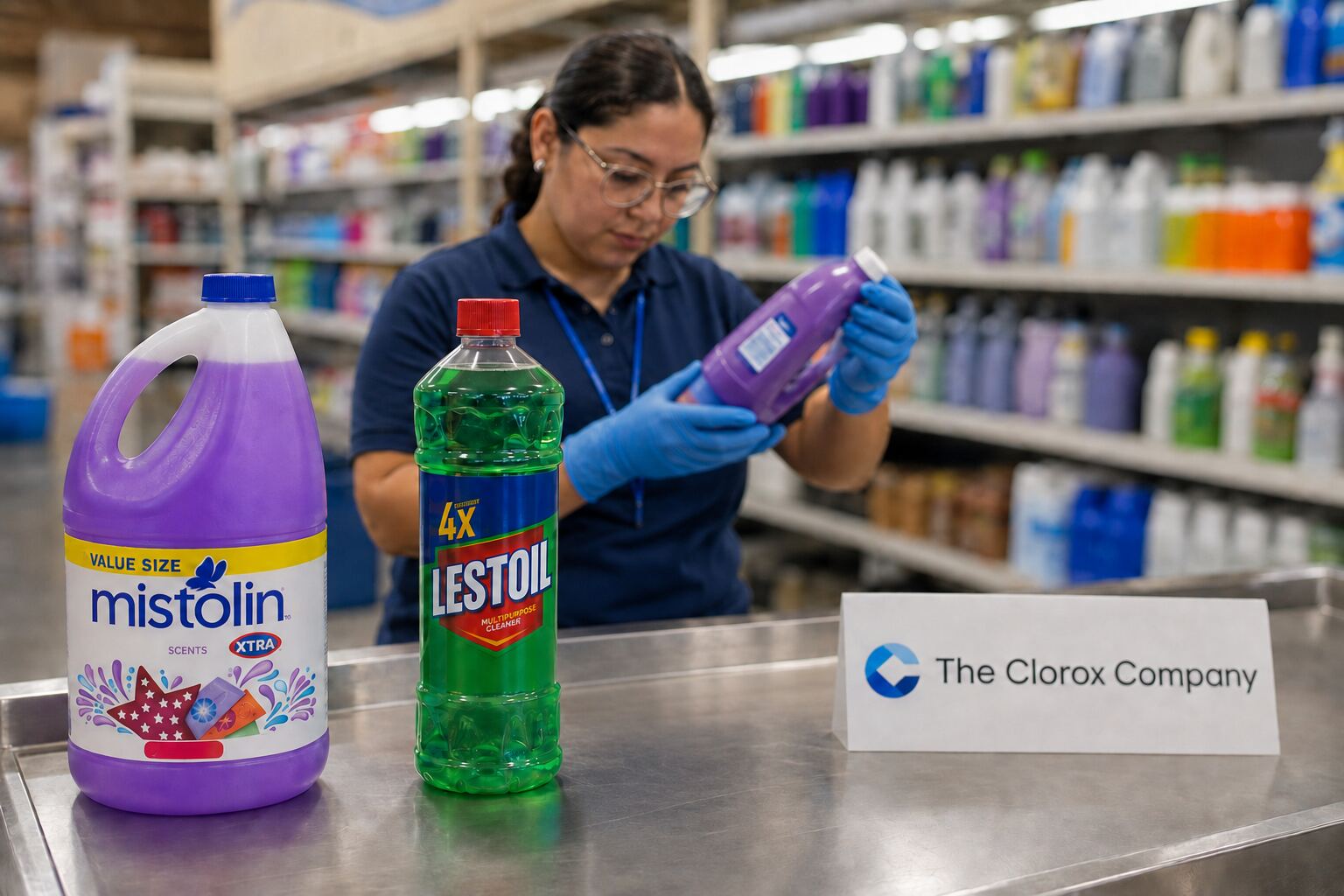
So far, the known perimeter is unusually clear. The U.S. Consumer Product Safety Commission says only scented Mistolin and Lestoil cleaners sold in Puerto Rico and the U.S. Virgin Islands are affected. No injuries have been reported.
A large recall on a small map
The regulator has defined the product perimeter. The financial perimeter remains open.
Known
Not disclosed
ESTIMATED CHARGENo figureClaim rates, inventory recovery, average refund and any insurance offset remain unknown.
Recall scope and remedy: U.S. Consumer Product Safety Commission, September 3, 2026.
The agency says the products may contain Pseudomonas aeruginosa. Exposure can cause serious infections in people with weakened immune systems or external medical devices. Healthy immune systems are usually unaffected, according to the notice.
The affected date codes begin with “PR01” and end between 25091 and 26168. That corresponds to production from April 1, 2025 through June 17, 2026. Bottle sizes range from 28 to 128 fluid ounces.
Consumers can claim a full refund with a receipt. Without one, Clorox offers the manufacturer’s suggested retail price. The regulator did not provide the price mix, expected claim rate or current channel inventory.
That missing information matters more than a quick multiplication exercise. Treating every bottle as a paid claim would create a dramatic estimate, but not a defensible one. Clorox has not announced a provision.
The trading path supplies another useful boundary. CLX had already fallen from $104.93 on August 25 to $94.27 by September 2. Most of the recent decline therefore predates the recall notice.
The shares were falling first
Clorox daily closes; the recall marker separates chronology from attribution
As of . Daily closes: Yahoo Finance. Notice date: CPSC.
On September 3, the stock actually gained two cents. Friday’s loss followed on lighter volume than Monday’s sharp selloff. The data cannot isolate a recall effect, but it does reject the idea that the whole nine-session slide came from this event.
The pre-existing burden is visible in Clorox’s latest accounts. Fiscal 2026 sales fell 5% to $6.72 billion. Adjusted earnings per share dropped 28%, while operating cash flow declined 38% to $612 million.
The disclosed strain is elsewhere
Fiscal 2026 shows what already weighs on the investment case
Reported figures and non-GAAP reconciliation: Clorox’s August 3 results filed with the SEC.
Fourth-quarter gross margin fell 520 basis points to 41.3%. Lower volume, acquisition accounting, raw-material costs and logistics all contributed. That leaves less room for a quality-control surprise, even if the first charge proves modest.
Chair and Chief Executive Linda Rendle already expects “continued cost volatility and a value-seeking consumer.” That statement preceded the recall by one month. The new issue adds an execution test, not a new macro thesis.
Management forecasts fiscal 2027 net sales growth of 13% to 14%. The GOJO acquisition supplies about 9.5 percentage points. Organic sales should rise 3.5% to 4.5%, with more than 3.5 points coming from an easier ERP comparison.
Adjusted EPS guidance spans $5.70 to $6.00. The $5.85 midpoint trails the $5.97 analyst estimate cited by Reuters using LSEG data. A material recall charge could pressure that gap, although Clorox has not changed guidance.
The constructive reading rests on containment. Two territories, named scents, a defined production window and zero reported injuries give Clorox a workable retrieval path. Prompt refunds may also limit reputational damage.
The adverse path begins with expansion. More lots, new geographies, illnesses or a plant-wide remediation would change both cost and brand risk. Product-liability claims could also arrive after the initial notice.
U.S. markets are closed for the weekend and Monday’s Labor Day holiday. Trading resumes Tuesday. A wider notice before then would meet CLX in one opening move.
For now, 6.3 million describes bottles, not dollars. Friday’s muted response says the market sees that distinction. The next disclosure must show whether Clorox can preserve it.